


There's a hill in Ibadan where a lot of Nigerian art history has happened. In 1967, the artist and architect Demas Nwoko, a member of the Mbari Club, began building New Culture Studios on Oremeji Hill. He made it to be a haven for the artistic soul: a studio, home and amphitheatre that is still, nearly six decades later, a work in progress. This November, that hill becomes home to one of the most ambitious solo exhibitions of the season.
Àdúrà Lẹ́rẹ̀ is a site-specific sculptural installation by Nigerian-British artist and designer Orry Shenjobi. Its subtitle is A Prayer in Three Acts. The title means "there is reward in prayer", and for Shenjobi, that's not a metaphor. She has said that prayer is the foundation of everything.
The exhibition opens to the public on 12 November 2026 and runs until 12 May 2027.
Where It Came From
The project began with Shenjobi's late grandmother, a Catholic woman whose faith shaped how she lived every day. It also comes from Shenjobi's own mixed heritage, which is Yoruba, Benin and Sierra Leonean. She has described the work as arriving through roughly two years of visions and research.
She started by writing personal prayers. Then she researched Yoruba and Benin symbols to find a way to give those prayers a physical form. In February 2026, a residency at New Culture Studios gave her space to dig into Ibadan's history in the archives, and a body of work that had been forming for years finally came together.
She works between Lagos and London, and she has a lovely way of describing the difference. Lagos, she says, has a very loud heartbeat. It pushes ideas into motion. London is where she reflects and refines.
Shenjobi is a multidisciplinary artist and product designer, and the founder of Studio ỌRRY, a creative production studio based between the two cities. She works across photography, film, painting, sculpture, installation and design. She studied Product Design at the University of Leeds and has an MA in Social Innovation and Sustainable Futures from the University of the Arts London, and her work sits between design research, material exploration and social consciousness.
Àdúrà Lẹ́rẹ̀ is a new and ambitious branch of that practice, where traditional Nigerian craft meets her product design work. In her words:
"As my practice has developed, I have become increasingly interested in what we inherit, what we preserve and what we choose to build from it. I look at how stories, materials, objects, images and ways of making can carry memory and meaning, while also taking on new forms."
A Prayer in Three Acts
The exhibition is curated by Anthony Ogochukwu Agbapuonwu, whose practice focuses on heritage, indigenous knowledge systems and African philosophy, with Tobi Alexandra Falade as assistant curator. It unfolds in three parts.
Act I · Ibadan, A Cultural Renaissance. The first act looks at Ibadan's history and cultural context, drawing on the archival research Shenjobi did during her residency.
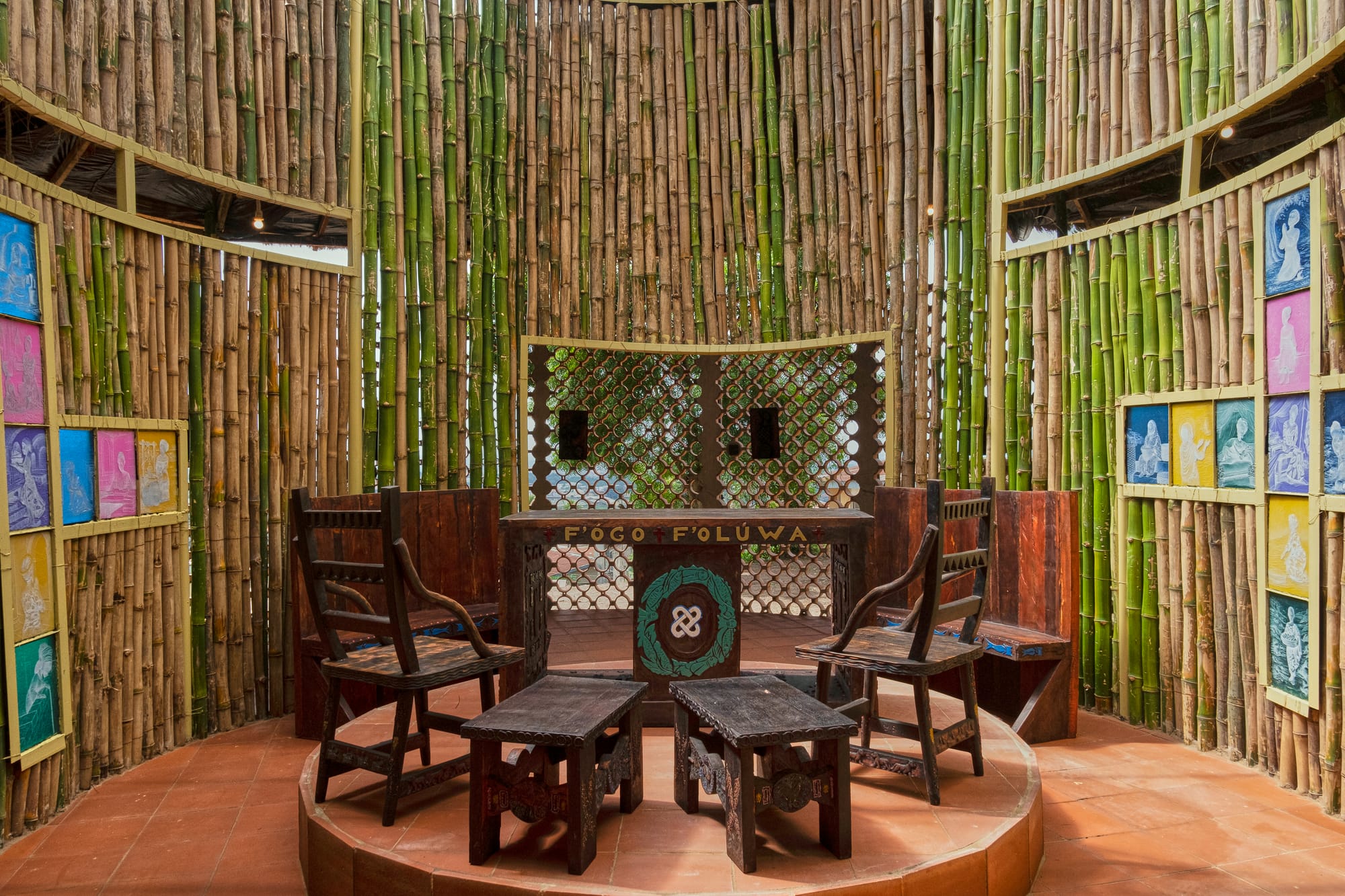
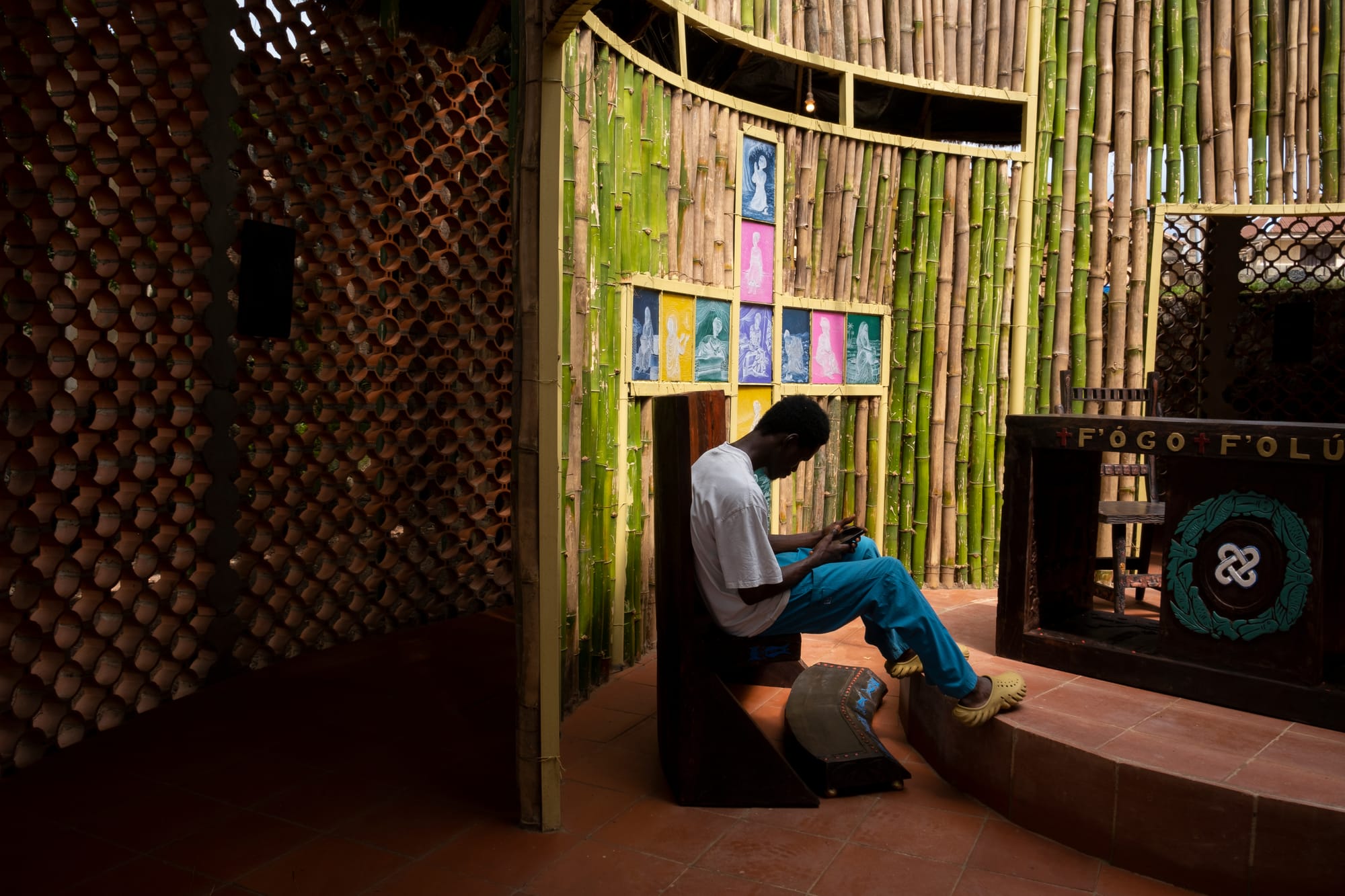
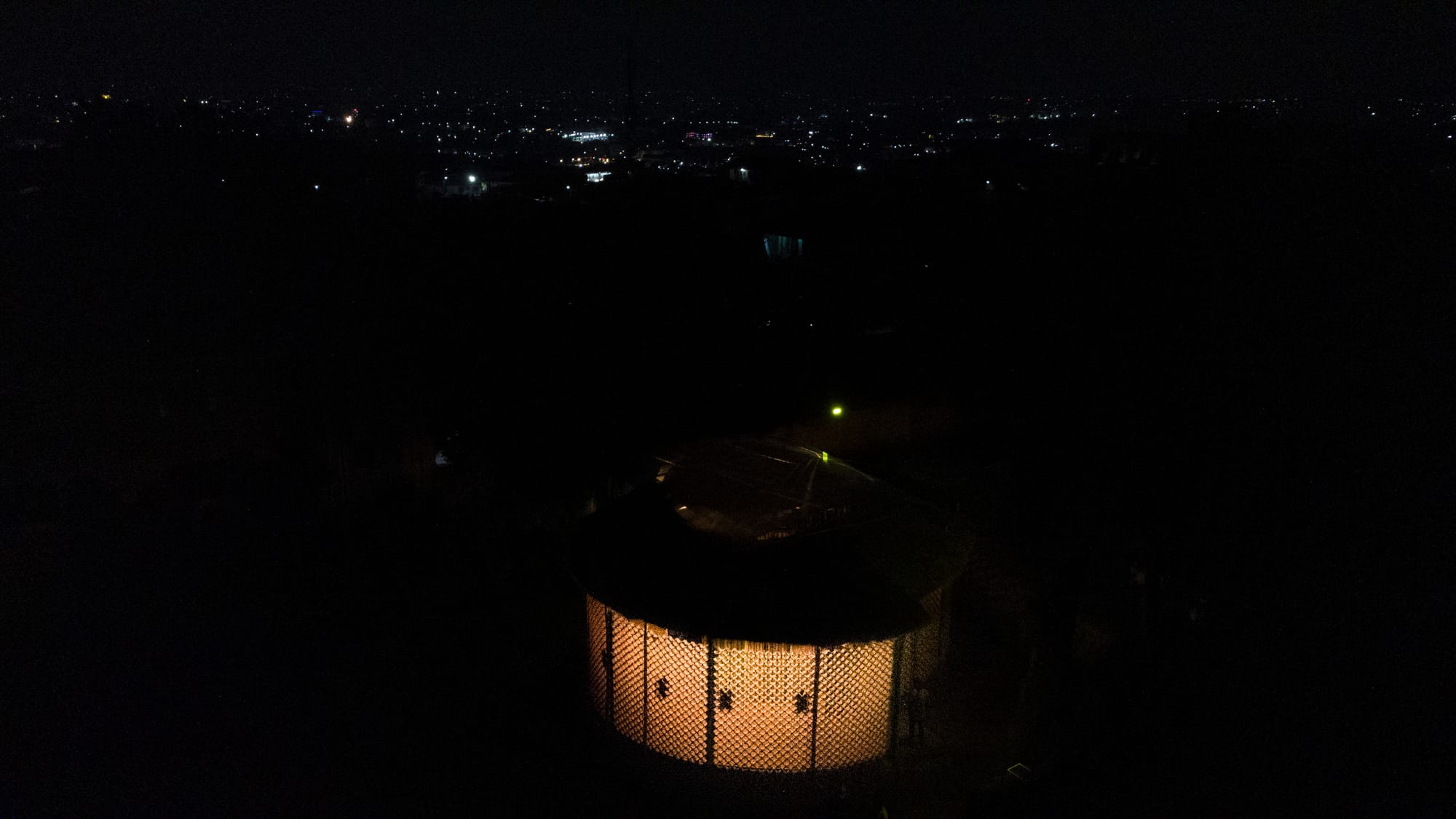
Act II · Ancestral Communion. The heart of the show is The Bamboo Dome, a hilltop structure built specifically to house the work, with a circular breeze-block fence and an inner sanctuary made of bamboo. It blends Yoruba and Benin design traditions with Catholic architectural space, and its architecture is inspired by Demas Nwoko's own Dominican Chapel in Ibadan, still one of the most remarkable buildings in Nigeria. Shenjobi sees The Dome not as a neutral display space but as part of the work itself: it holds the pieces, and it creates a new space for them.
Act III · Design as a Living Memory. The final act is about co-creation, inherited methods and locally sourced materials, and about how traditional knowledge can shape how we design and build now.
The Objects
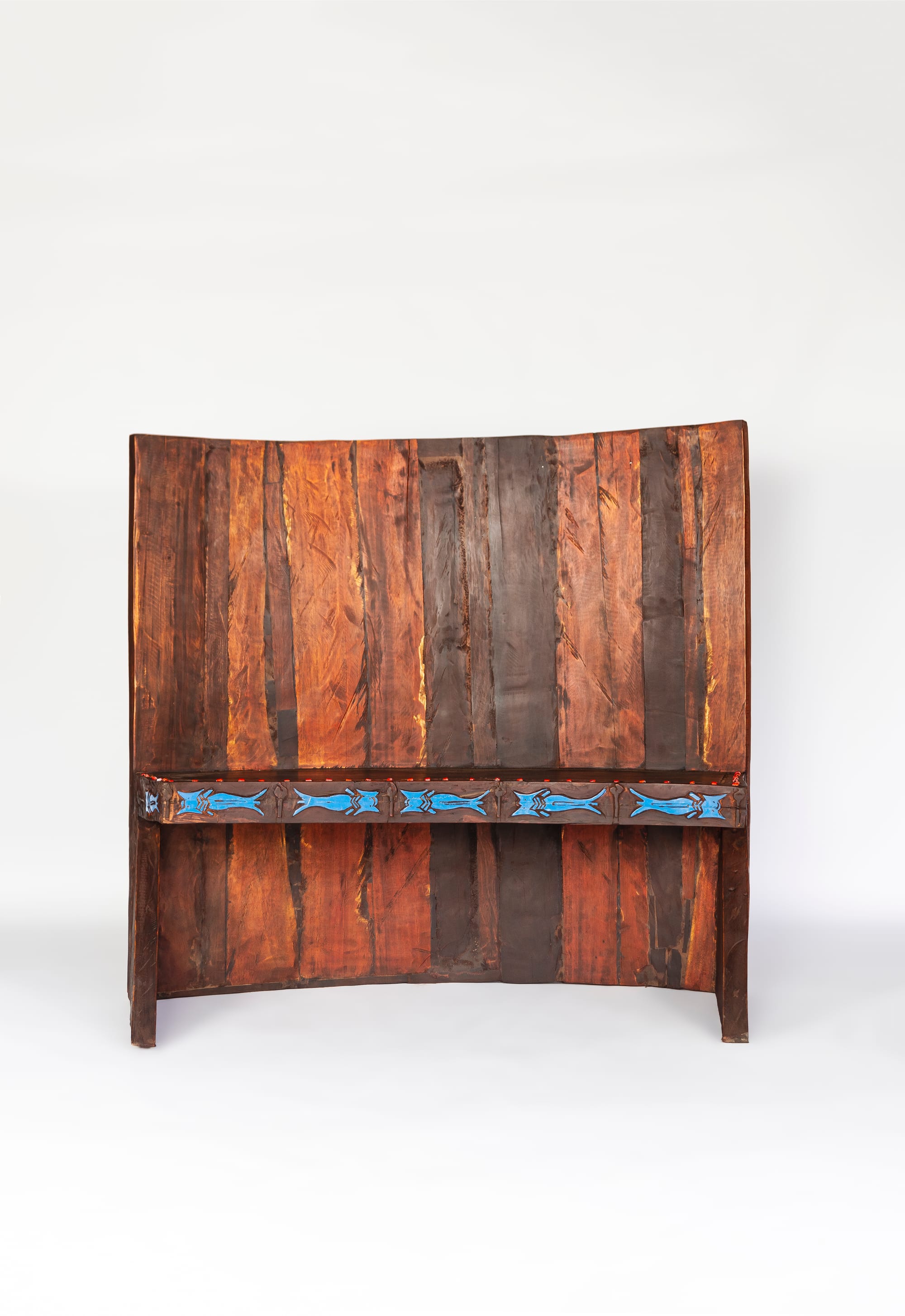
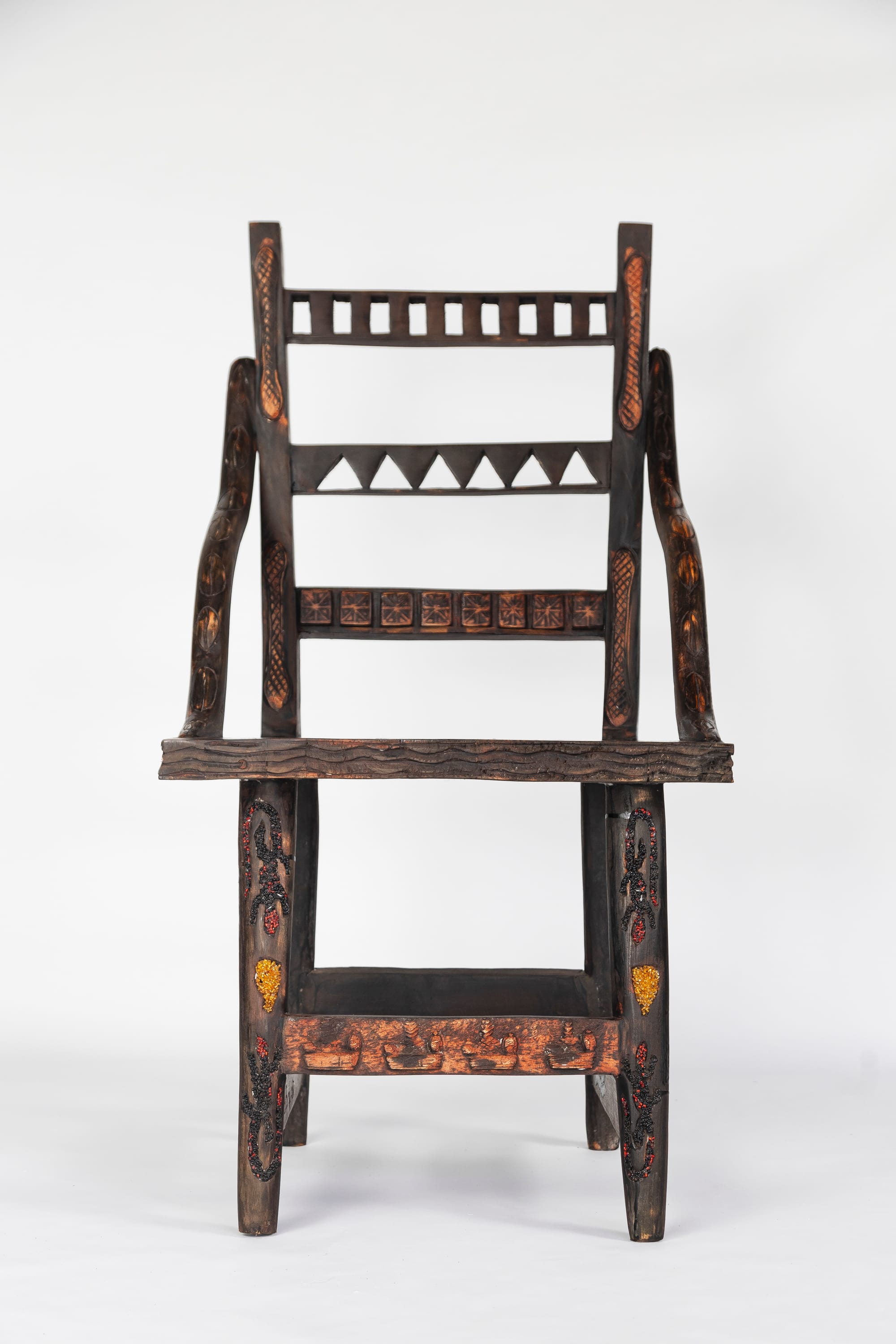
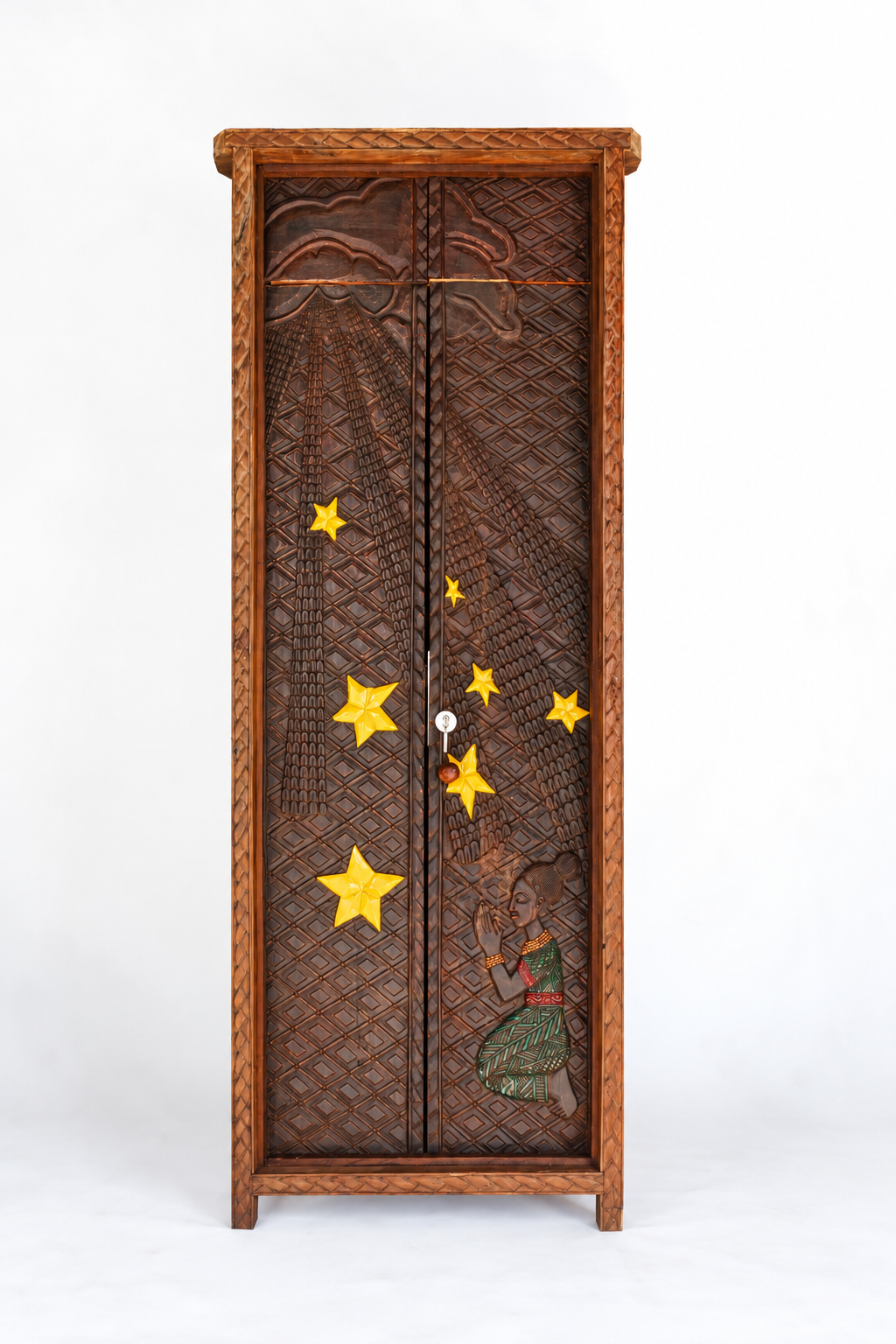
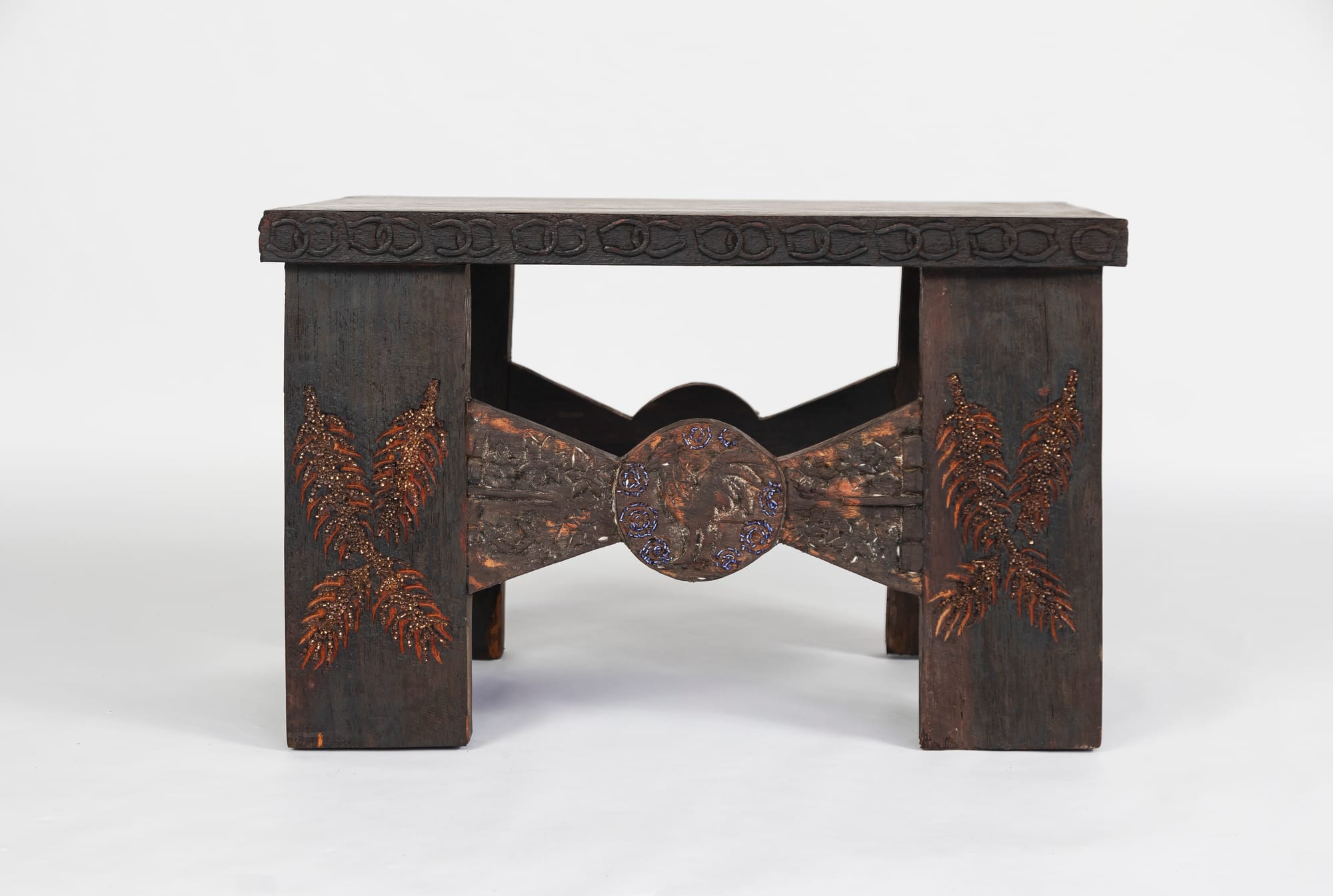
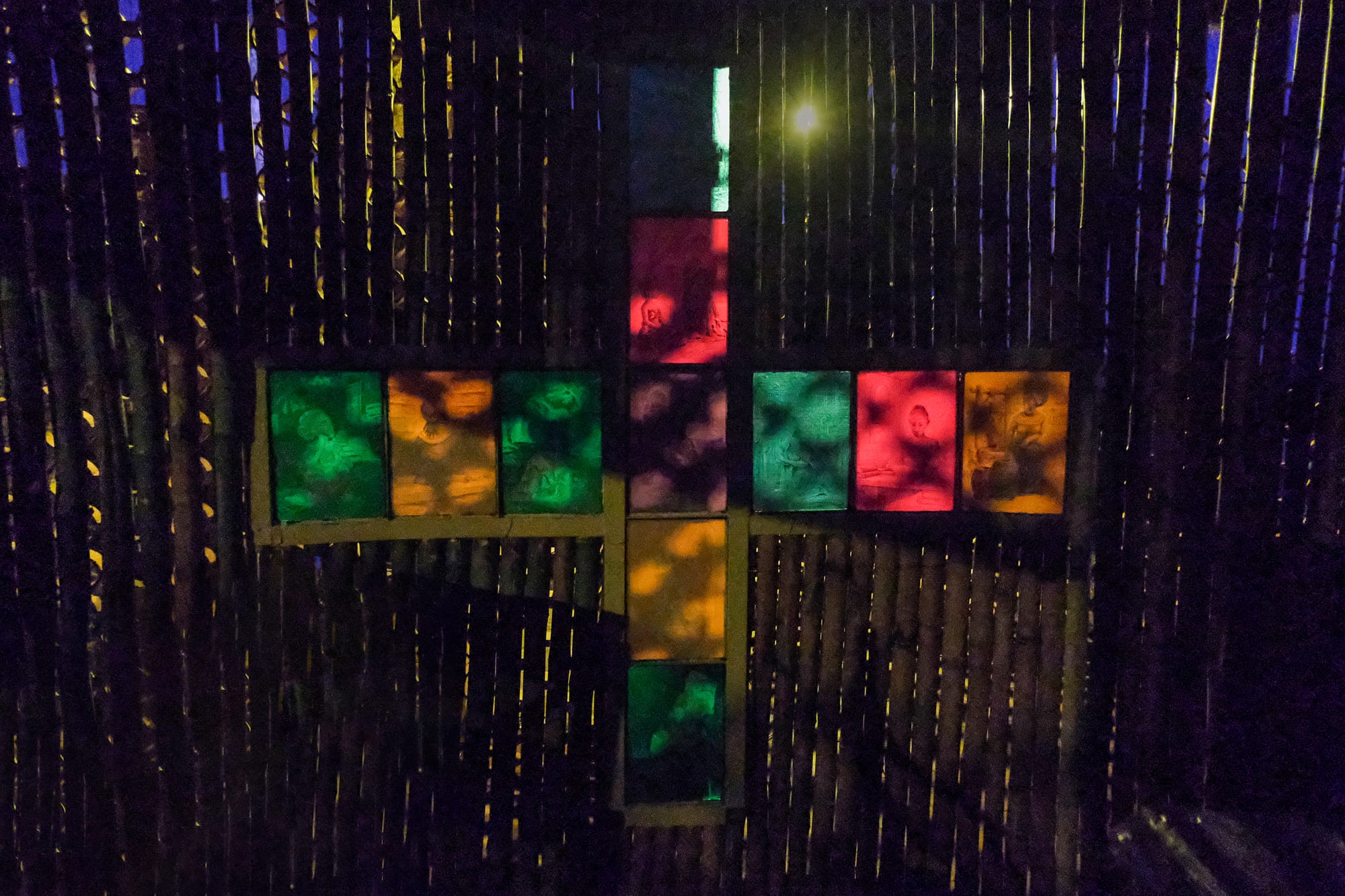
The works read almost like the furniture of a church, or a home, or a shrine. There's The Table of Living Devotion, made between 2024 and 2026. There are chairs, stools, a bench and kneelers, with names like Chair of Resting in Divine Assignment, Stool of Preparation and Bench of Posture and Presence. There's The Door of Transition and Honour, a monumental carved wooden portal. There are fourteen Stations of the Cross, carved with indigenous symbols and motifs, and a series of hand-engraved stained glass panels titled Women of the Bible.
Alongside them in The Dome are bronze works and photography. Across the whole installation, the work takes in collage, painting, craft, glasswork, sculpture, sound, scent and image, with traditional techniques that honour Yoruba and Benin carving.
Sustainability is at the heart of it. Shenjobi made these pieces with traditional carvers from Benin and Ibadan, using inherited methods and locally sourced materials, and she brought in local artisans, makers, writers, musicians and curators along the way. Her Nigerian-British heritage is built into the materials themselves. The exhibition argues that Nigerian design systems are not relics. They are viable, future-facing ways of making things, and a way to push back against the slow erasure of traditional practices by changing how we gather.
One thing to know before you go: despite the Stations of the Cross and the kneelers, The Dome isn't meant to be a religious or sacred space. Shenjobi doesn't prescribe how visitors should behave inside it. What it is, she says, is the physical form of a prayer from her late grandmother, and an open invitation to sit within it.
Why It Matters
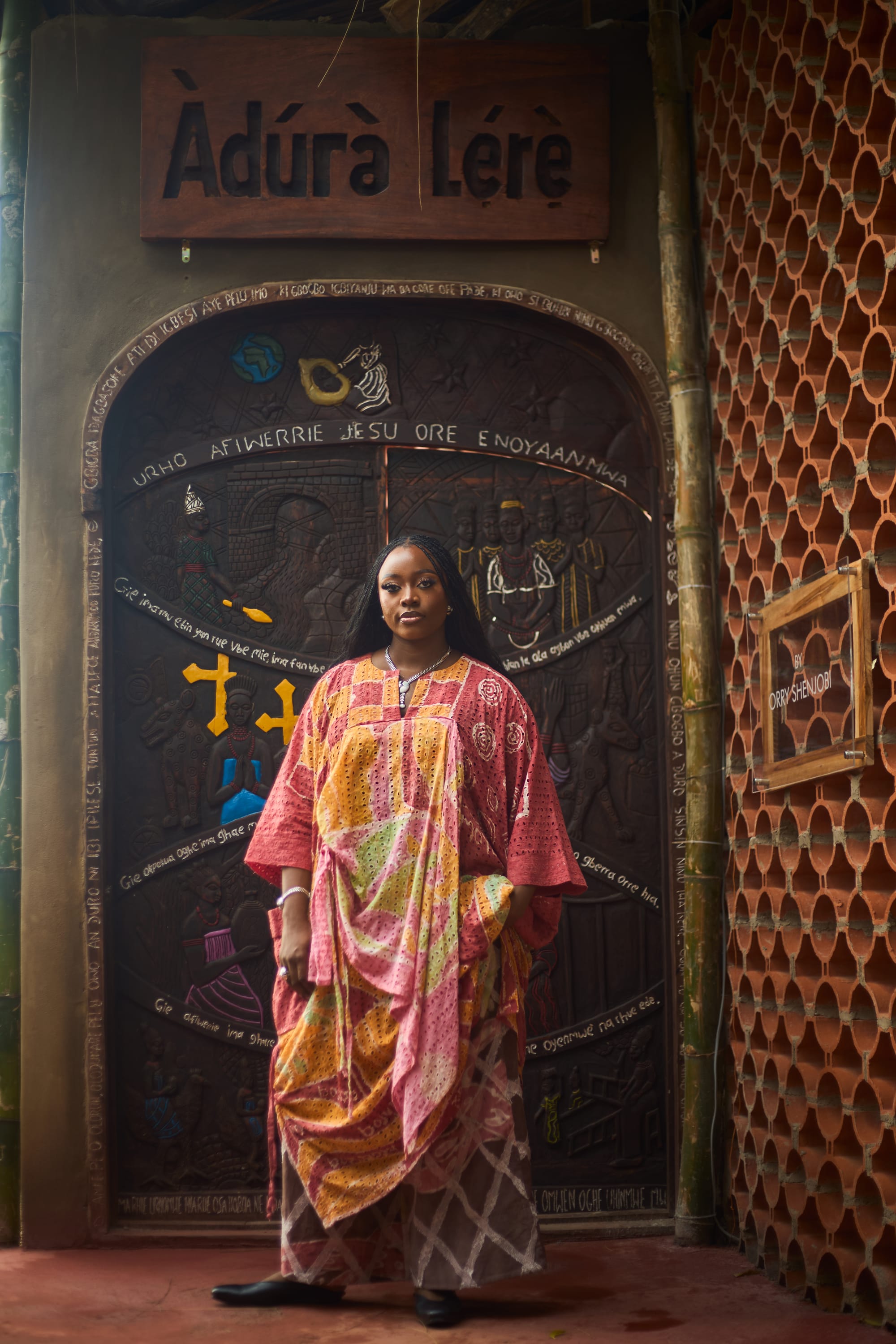
It would be easy to see a show like this as nostalgic. It isn't. Shenjobi frames preservation as evolution, not copying. She has said plainly that culture is not static, and that traditions have to be carried forward in changing forms to stay meaningful. She also says craftsmanship is inherent to us as a people, and that Nigerian creatives should be shaping the global conversation, not just responding to it.
That's what makes Àdúrà Lẹ́rẹ̀ feel so timely this season. At ART X Lagos, the big question was how we carry what we inherit into what comes next. In Ibadan, on Demas Nwoko's hill, Orry Shenjobi has built one possible answer, out of wood, bamboo, glass and prayer.
Preview Week and What's On
The exhibition is presented with OBIDA, and its preview week runs from 7 to 13 November, with satellite and on-site events. During Lagos Art Week, Shenjobi also brought a satellite installation to the 5th floor of the National Theatre in Iganmu as part of CANEX WKND 2026, with walkthroughs on 5 November. Over its six-month run, the exhibition will also host a public programme of artist talks, readings, book launches, workshops and film screenings.
Date | Event |
|---|---|
Sat 7 Nov | Collector's Preview, Day 1, with exhibition tour |
Sun 8 Nov | Collector's Preview, Day 2, with city tour |
Mon 9 Nov | VIP / Government Preview, with exhibition tour |
Wed 11 Nov | Collector's Preview, by appointment |
Thu 12 Nov | Public opening, with In Conversation: Artist × Curators |
Fri 13 Nov | Àdúrà Lẹ́rẹ̀ × GIDA Journal public book signing |
Fri 13 Nov | Ìjó Yáá, public evening launch party |
Where: New Culture Studios, 34 Adeola Crescent, off Sobande Avenue, Ibadan (look out for Louisville Nursery & Primary School) When: 12 November 2026 – 12 May 2027
With six months to see it, there's no excuse. Make it a day trip from Lagos, or better, a weekend.



Member discussion