


In Twi, efie means home. It is a small word that carries a lot: where you come from, who claims you, what you carry with you when you leave.
Since 2021, a Ghanaian family has been building that idea into a gallery in Dubai. Founded by brothers Kwame and Kobi Mintah alongside their mother, Valentina, Efie specialises in artists from Africa and its global diaspora. Its first permanent space opened in 2022, giving the family a base for its ambition to connect African artists with the Middle East and audiences further afield.
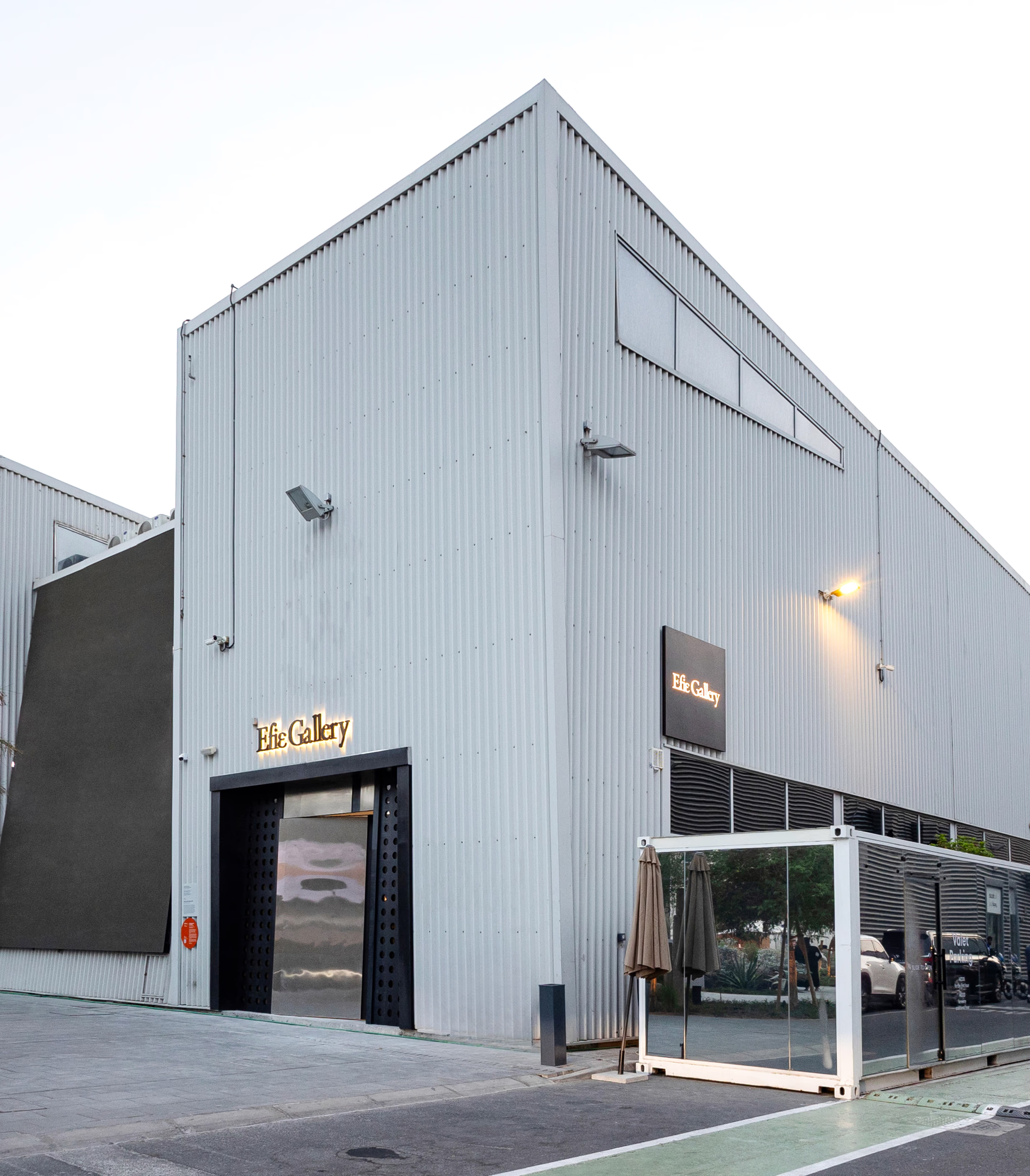
In 2025, the gallery moved from Al Khayat Avenue to Alserkal Avenue in Al Quoz. This year it marks its fifth anniversary, and it has become one of the most important addresses for contemporary African art outside the continent.
For co-founder Kwame Mintah, the name describes what the family hoped the gallery could become.
“When we started Efie, we wanted to create a space that felt genuinely rooted in a sense of home, not simply a gallery representing artists of African origin, but a place where artists, ideas and communities could gather and develop over time. ‘Efie’ gave us a language for that. Home is not necessarily a fixed geography; it can be something you carry with you, something you build elsewhere.”
That idea has taken on particular meaning in Dubai, a city whose residents come from many different places.
“Being in Dubai has made that idea particularly meaningful. It is a city shaped by people from many different places, and Efie has become a meeting point between Africa, the Middle East and the wider world. That sense of hospitality informs everything we do, from the relationships we build with artists to the way people encounter the gallery. We want people to feel they can spend time here, return, and form their own relationship with the space.”
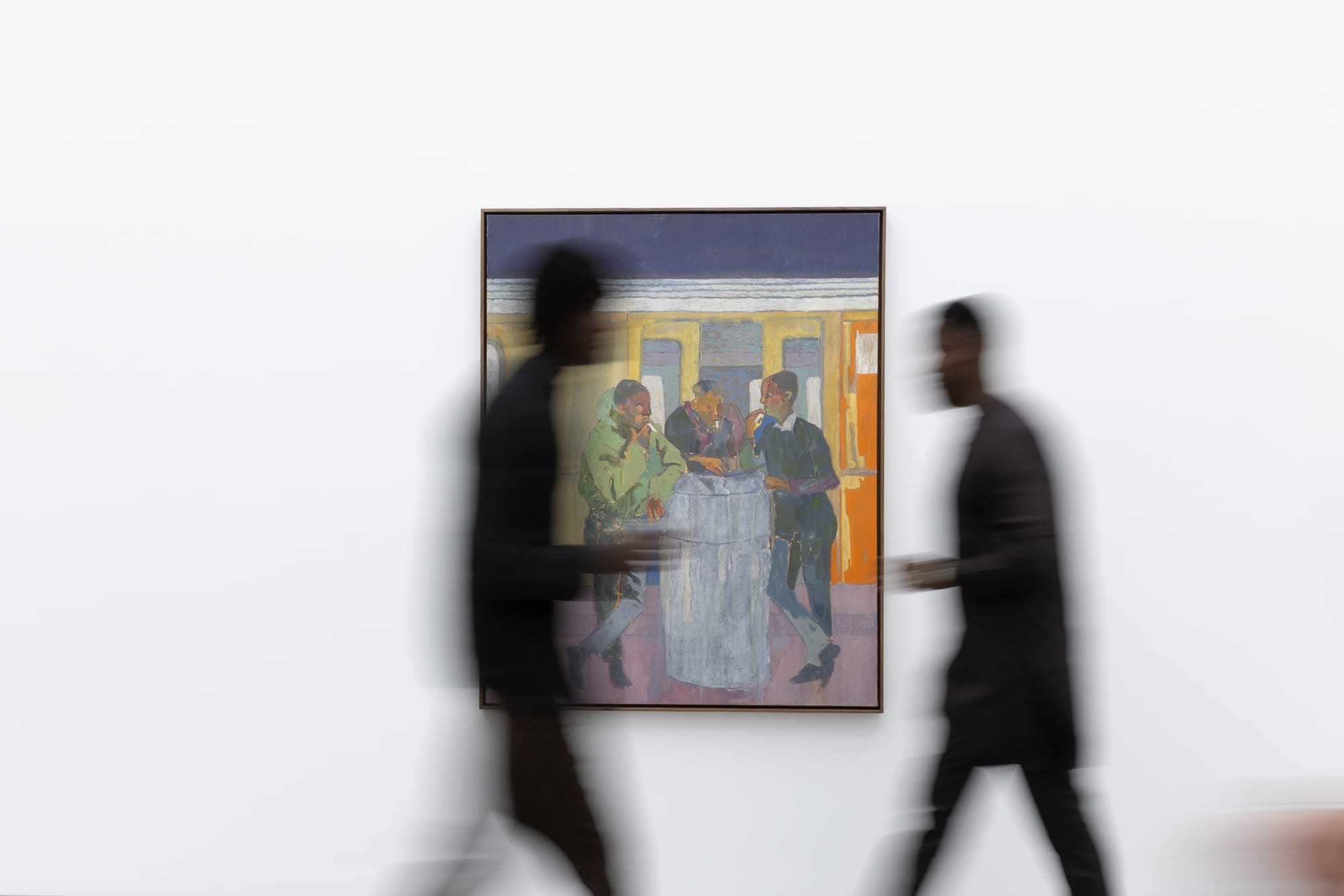
That idea takes shape through a roster that includes El Anatsui, Aïda Muluneh, Abdoulaye Konaté, María Magdalena Campos-Pons and Slawn, alongside Maggie Otieno and Yaw Owusu. These artists work across different generations, places and forms, from photography and textile installations to sculpture and painting. Seen together, their practices offer audiences a broad introduction to African and diasporic art, with room for individual approaches and concerns.
Supporting those practices also involves work beyond the exhibition floor. Efie runs a residency programme that creates opportunities for artists to collaborate with local institutions, artists and community members. It gives the gallery another way to support the development of work and the relationships around it.
“For us, representation has never simply meant putting work on walls. It means building careers and creating the conditions for an artist’s practice to be understood with the depth it deserves.”
“That can involve residencies, publications and research, but also introducing artists to museums, curators and collections, supporting institutional acquisitions and commissions, and creating opportunities for their work to enter conversations beyond the gallery. Dubai gives us an interesting position from which to do that because we are working between regions rather than from within one established centre.”
The aim is a relationship that continues beyond any single show.
“Ultimately, the aim is longevity. An exhibition lasts a few months; our responsibility to an artist should extend much further than that.”
Beyond the Exhibition Walls
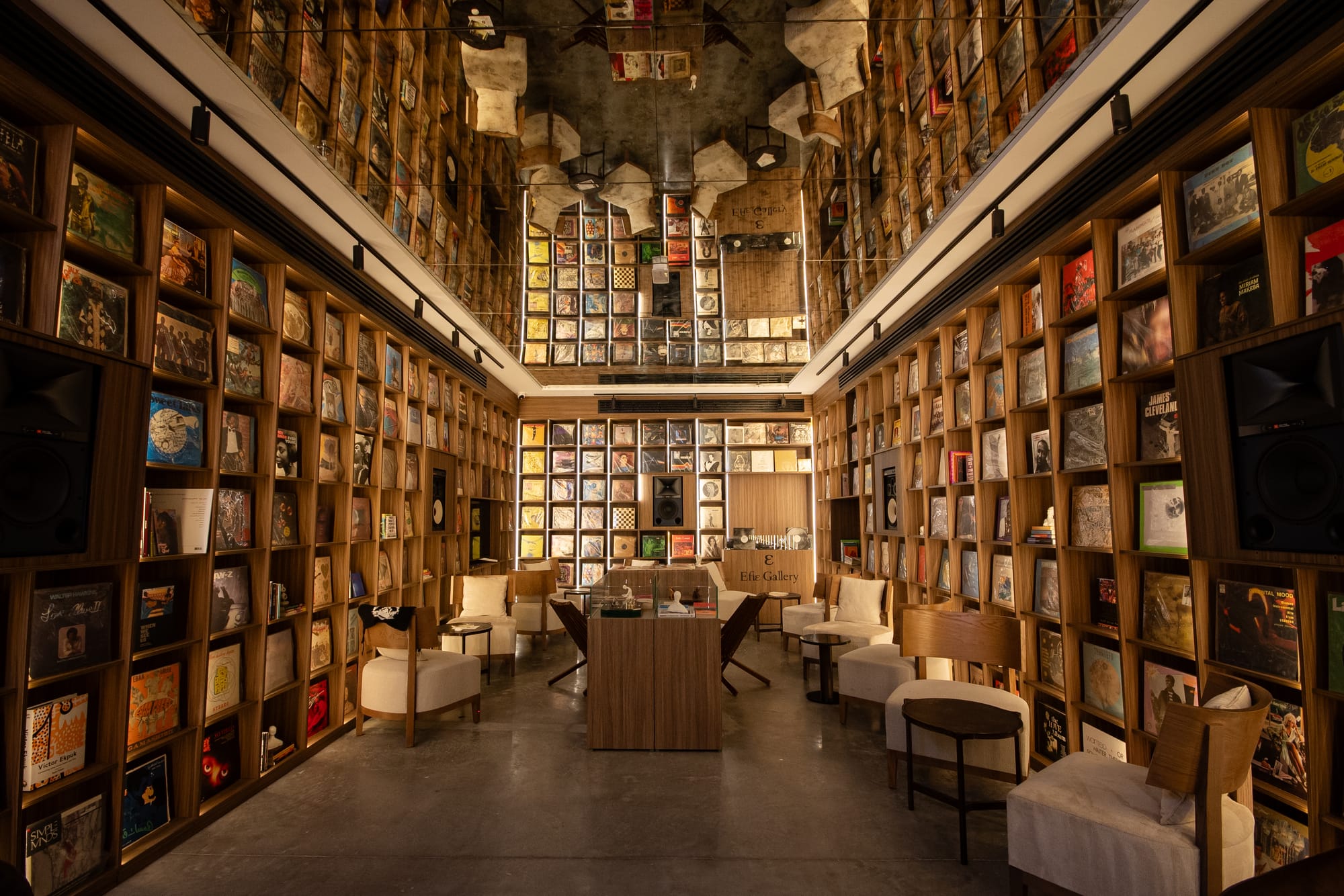
At Efie Gallery, an exhibition can be the beginning of a longer visit. There are artworks to spend time with, but also records, a café and a public library. Together, they offer several ways into the space, whether you arrive following an artist's work or simply looking for somewhere to read and listen.
The gallery's wider cultural programme gives visitors reasons to return between exhibitions. Its Rekord Gallery combines a café with a hi-fi listening room, housing the founders' collection of more than 2,000 original vinyl and shellac records from the 1940s to the present. The collection brings music from around the world into the gallery, making listening part of the experience of being there.
Efie is also home to Bootleg Griot, an independent public library initiative in residence. The collaboration extends to film: screenings in 2026 have included Losing Ground, Lizard, Killer of Sheep, Alazar and My Father's Shadow. Books and cinema sit alongside the visual art programme, opening up further ways to encounter stories and discuss them with others.
For Mintah, these additions have helped the gallery become “somewhere you inhabit rather than simply visit.”
“The listening room grew naturally from our interest in music and its relationship to the histories we explore through the visual arts. The café extends that sense of hospitality, while Bootleg Griot creates another space for conversation, exchange and storytelling. Together, they allow people to experience Efie at a different pace.”
They also give visitors several ways to find their way into the programme.
“Someone might come for an exhibition and stay for a record, a coffee or a conversation. Equally, someone might arrive through music and encounter an artist they had never known before. That movement between disciplines is important to us. Culture rarely exists in isolation, and we never wanted the gallery to behave as though it did.”
Now showing: Maggie Otieno
Sojourner: The Difference Is the Same · 23 September to 13 November 2026
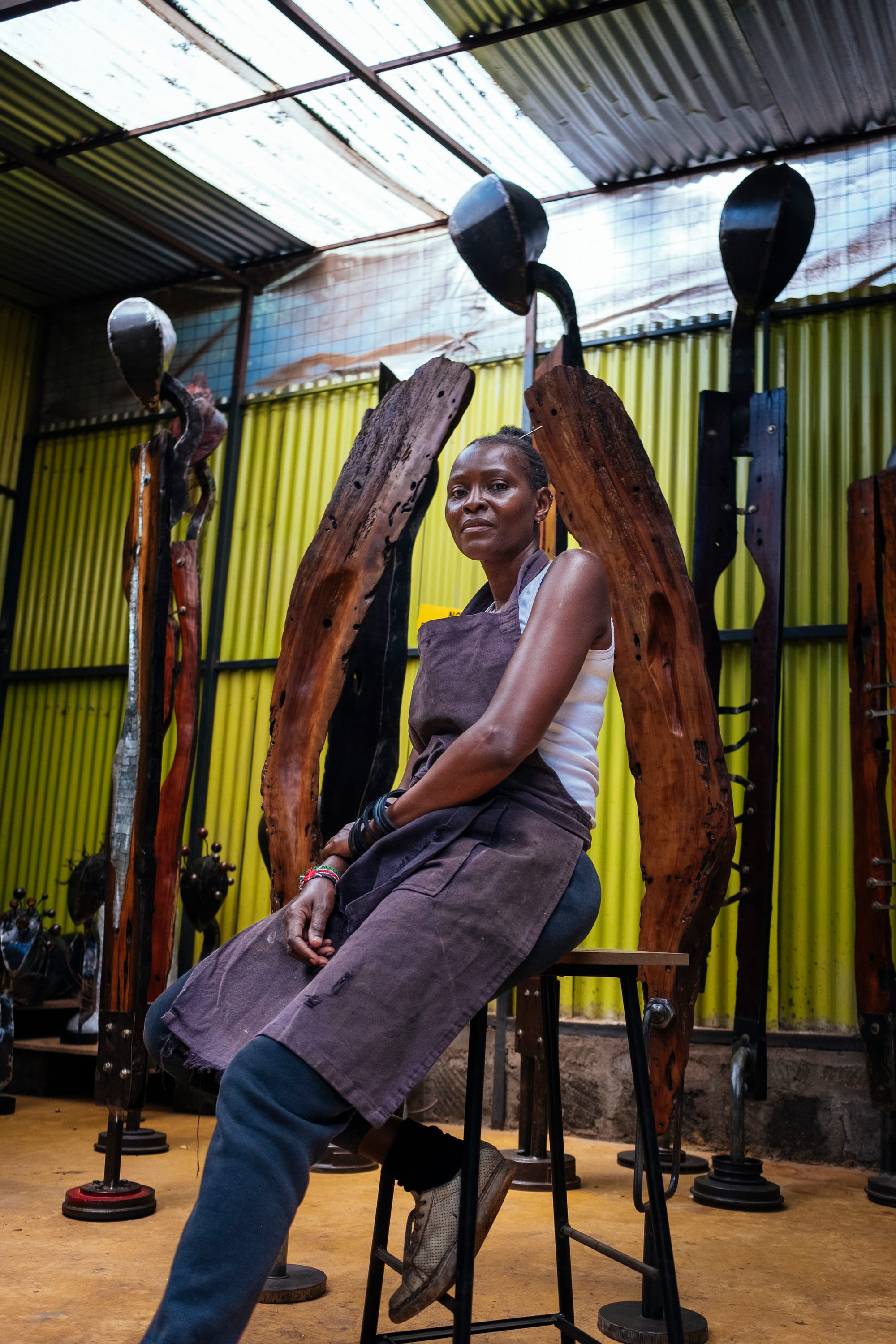
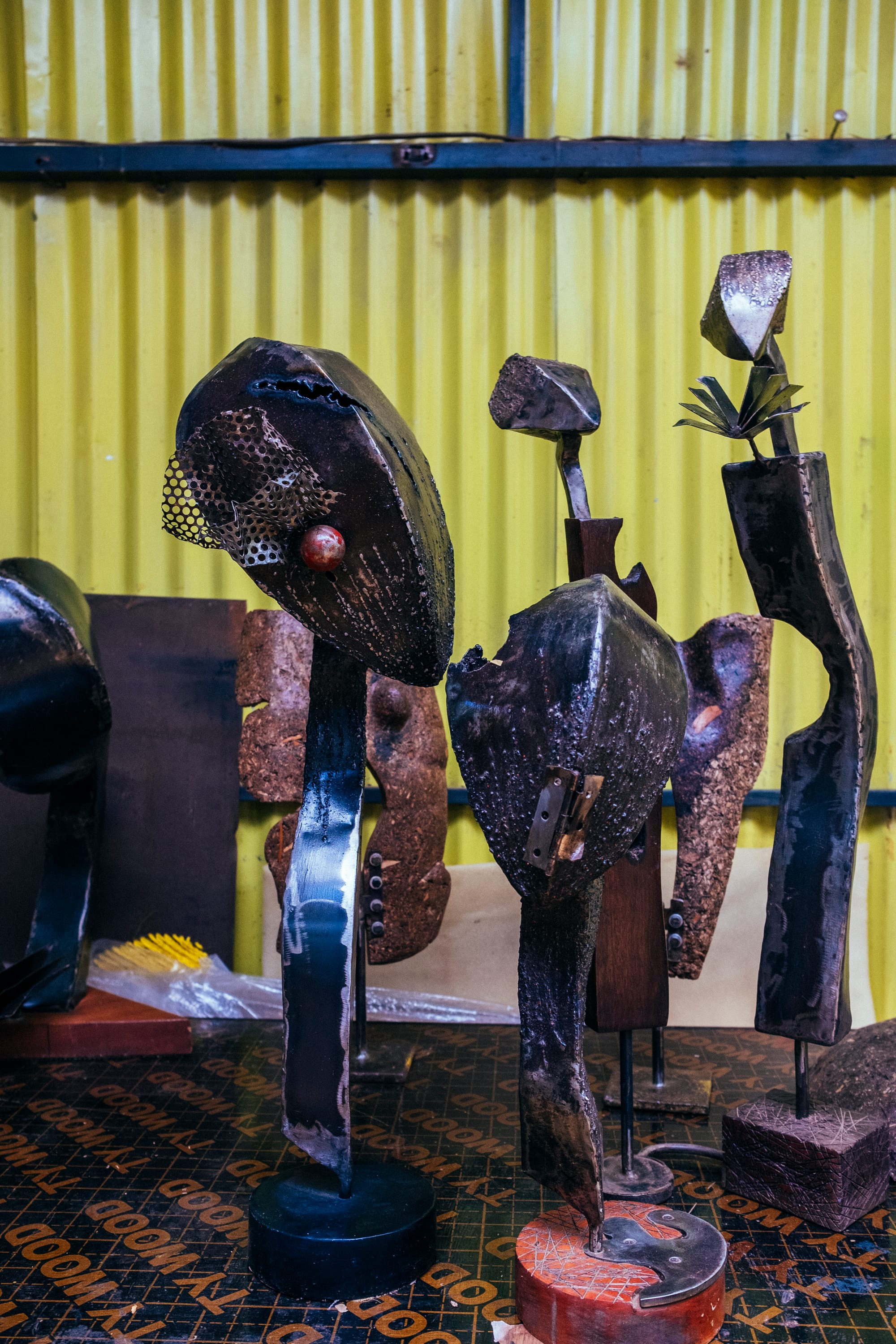
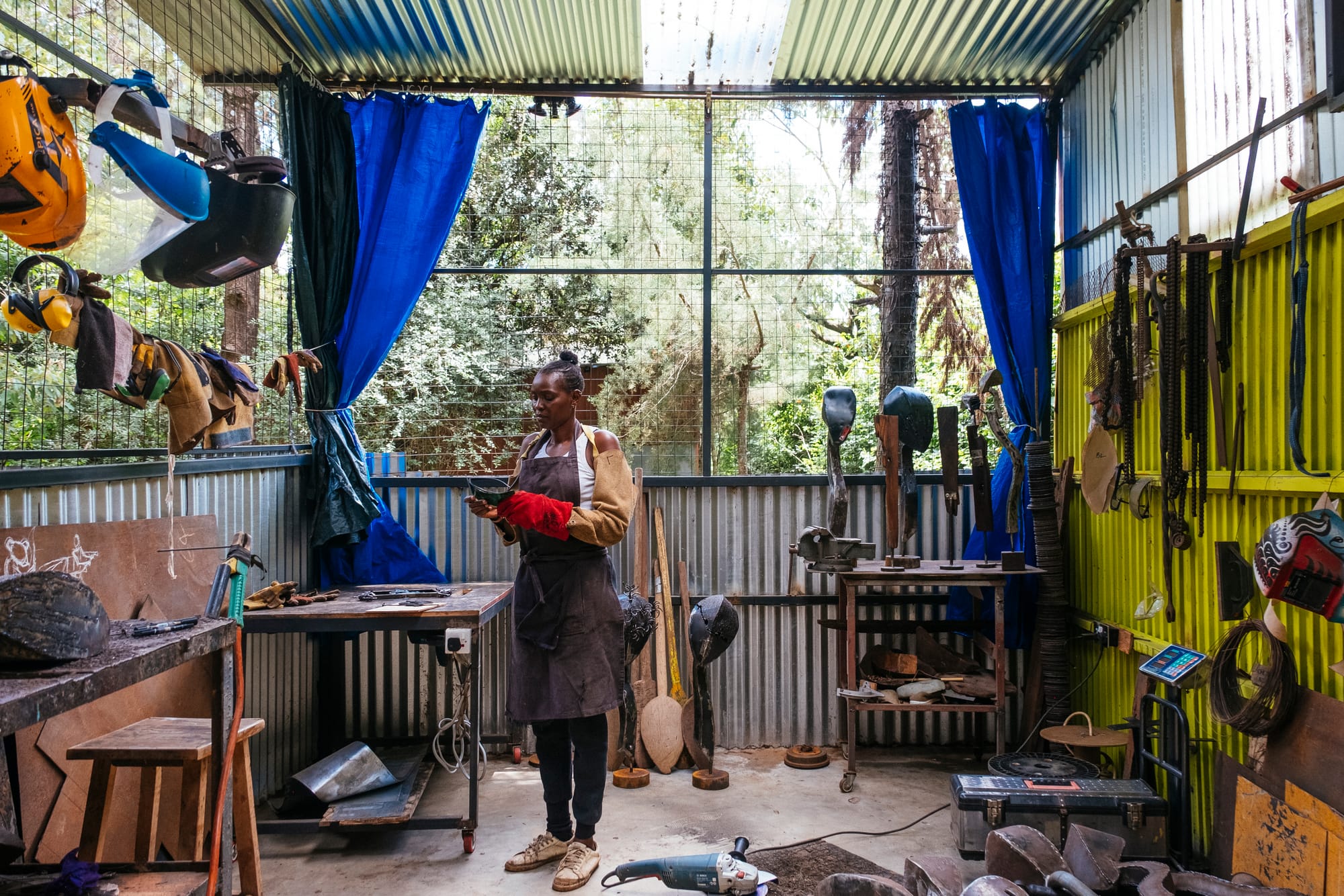
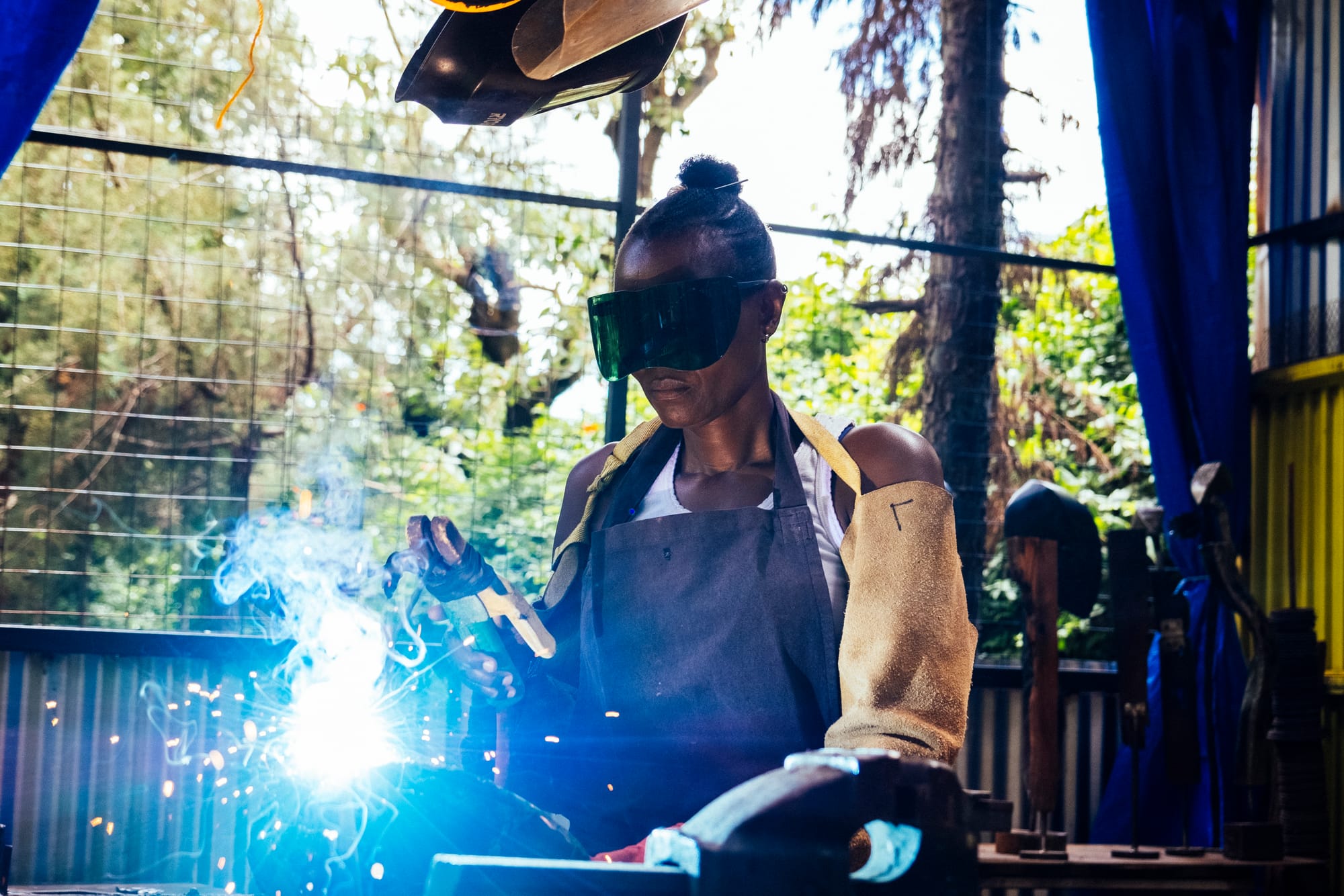
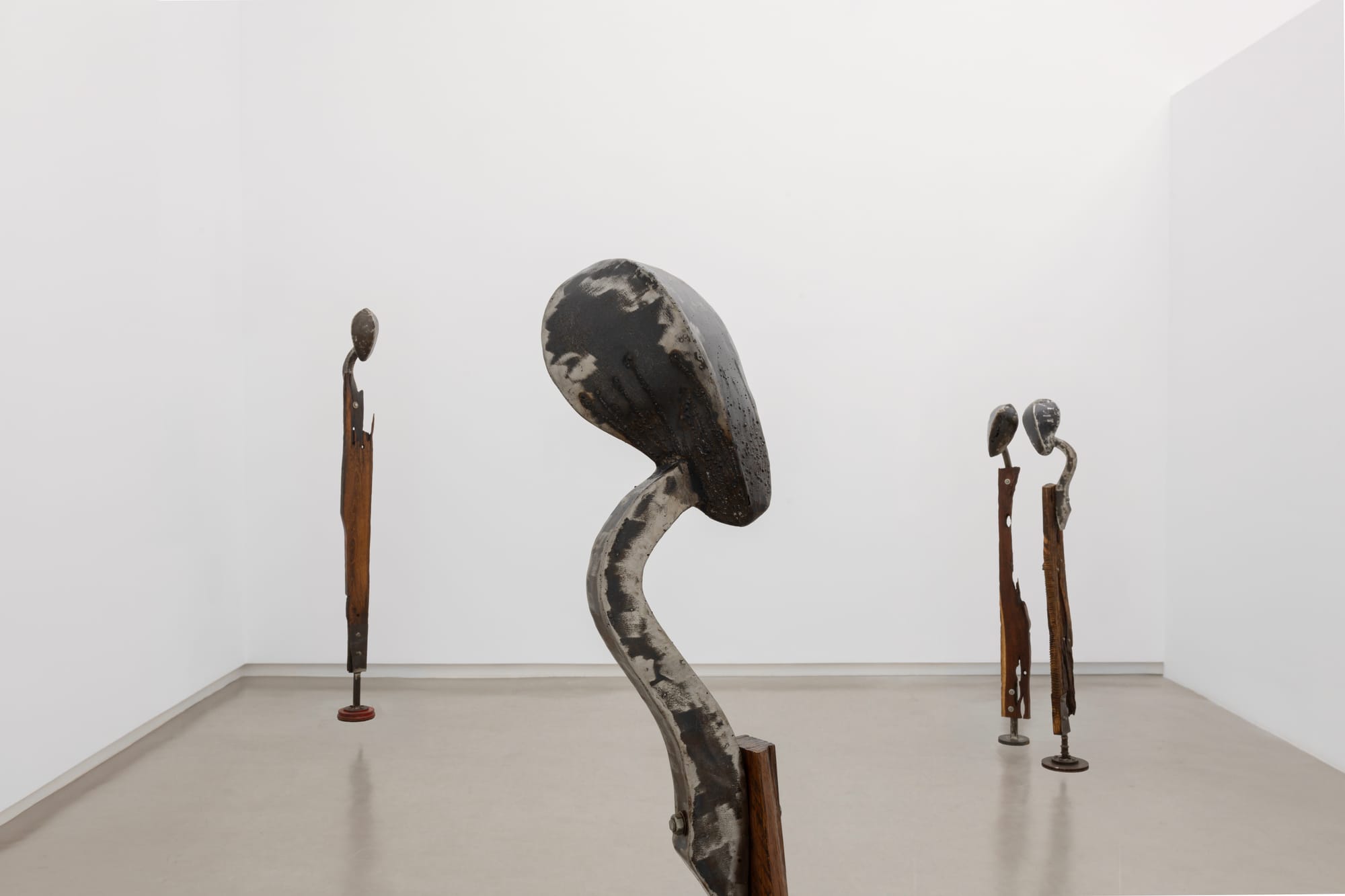
Maggie Otieno, photos by Khadija M Farah, courtesy Efie Gallery, Dubai & Sojourner The Difference is the Same Installation View by Maggie Otieno
Kenyan sculptor Maggie Otieno has spent nearly three decades transforming reclaimed and distressed materials, working across wood, metal and mixed media. She is known for large-scale public installations across Nairobi, including works outside Garden City Mall and at several of the city's train stations. Sojourner is her first solo exhibition with Efie, which has represented her since 2024.
At its centre are railway sleepers more than 150 years old. These timbers travelled from India to Kenya in the late nineteenth century to construct railway lines, connecting them to East Africa’s colonial past and the stories of travellers, labourers and communities along those routes. In Otieno’s hands, materials once used to enable movement become sculptures about memory and passage.
“What initially drew us to Maggie was her sensitivity to material. She works with things that have already lived, wood, metal, railway sleepers and other reclaimed materials, and allows their histories to remain present rather than disguising them,” Mintah says.
The show also includes work made during a residency at El Anatsui Studio in Temu, Ghana, in summer 2025. There, Otieno made sculptures from fragments of wooden canoes, some hinged to resemble books, evoking the turning of a page and the opening of a new chapter.
Mintah describes the residency as an opportunity to recognise connections between places, as well as encounter new materials.
“Her time at El Anatsui’s studio was important because it gave her a different environment in which to think about those ideas. Being in Ghana inevitably introduced new materials, encounters and histories, but it also made her recognise parallels with experiences she knew from Nairobi. That became important to Sojourner: The Difference is the Same: the recognition that places can appear profoundly different while carrying remarkably similar histories and human experiences.”
“The residency therefore became less about Ghana as a subject and more about what movement between places can reveal. The resulting works carry that tension between difference and familiarity, displacement and belonging.”
Otieno works from Nairobi, in a studio inside The Bric-A-Bac, an art centre in Karen that she designed and built herself. She also mentors emerging artists there, which feels fitting for someone whose work is all about what gets passed on.
Coming next: Yaw Owusu
Where the Tide Flows, and the Dunes Gather · 17 November 2026 to 10 January 2027
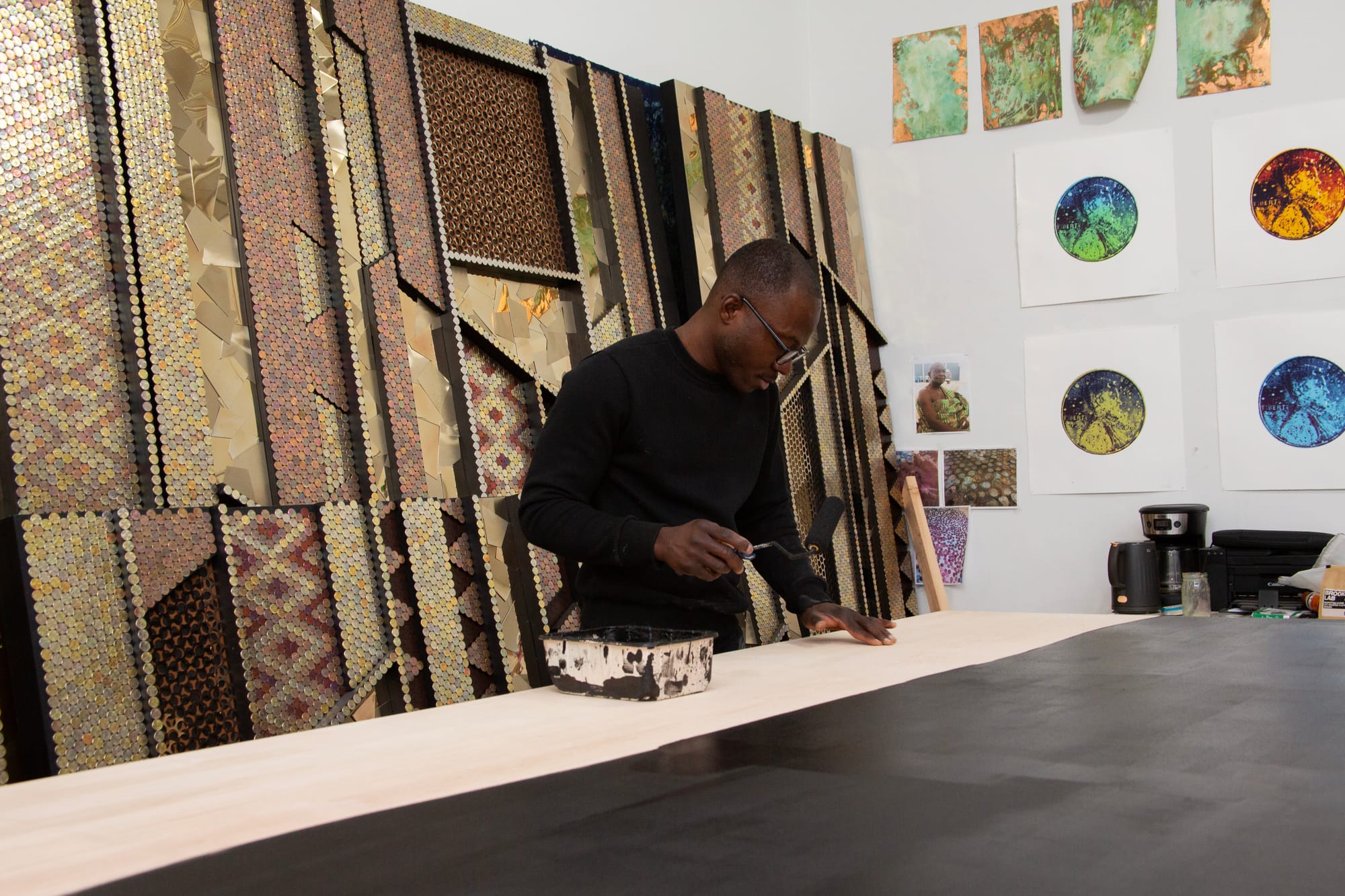
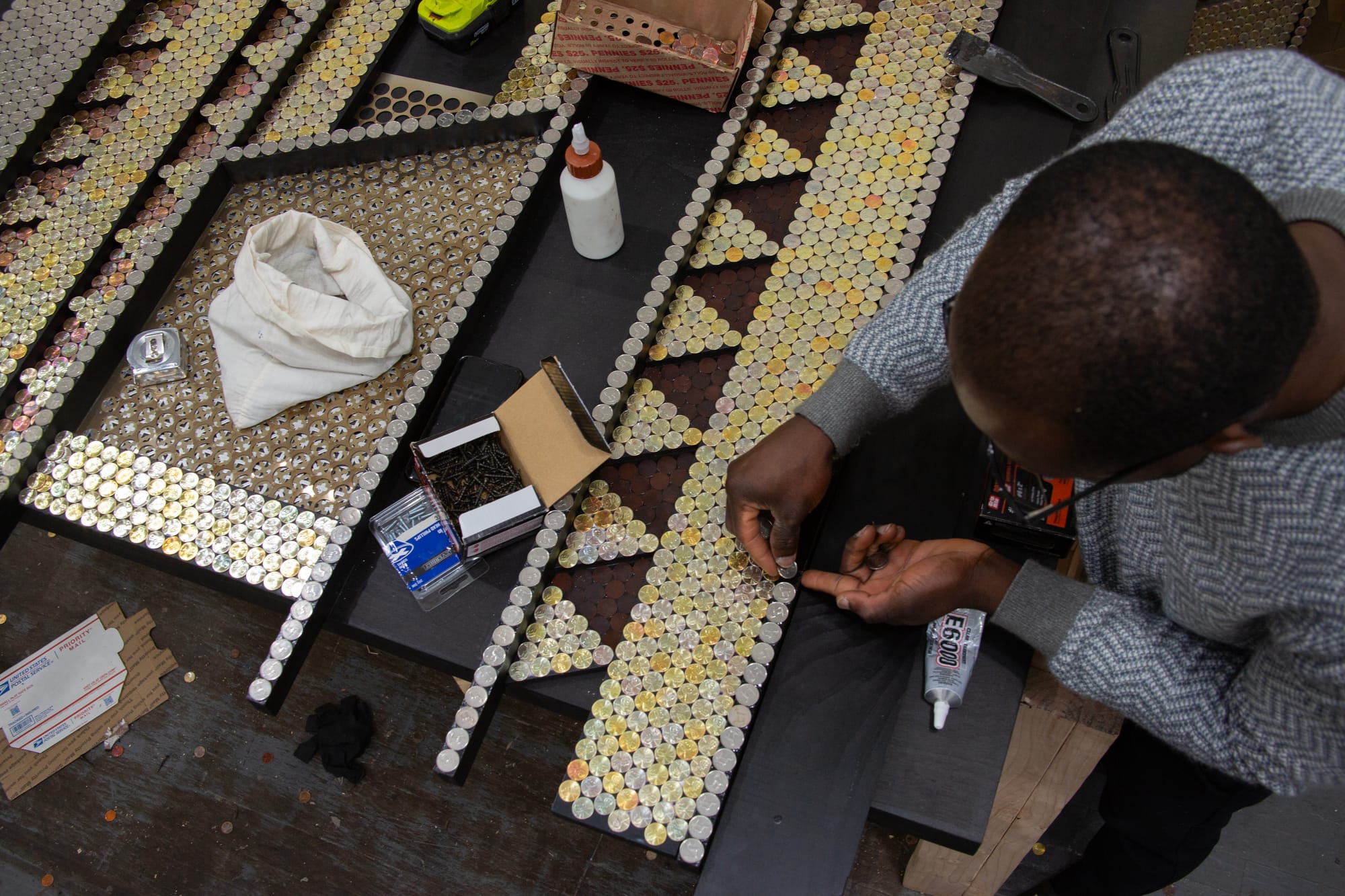
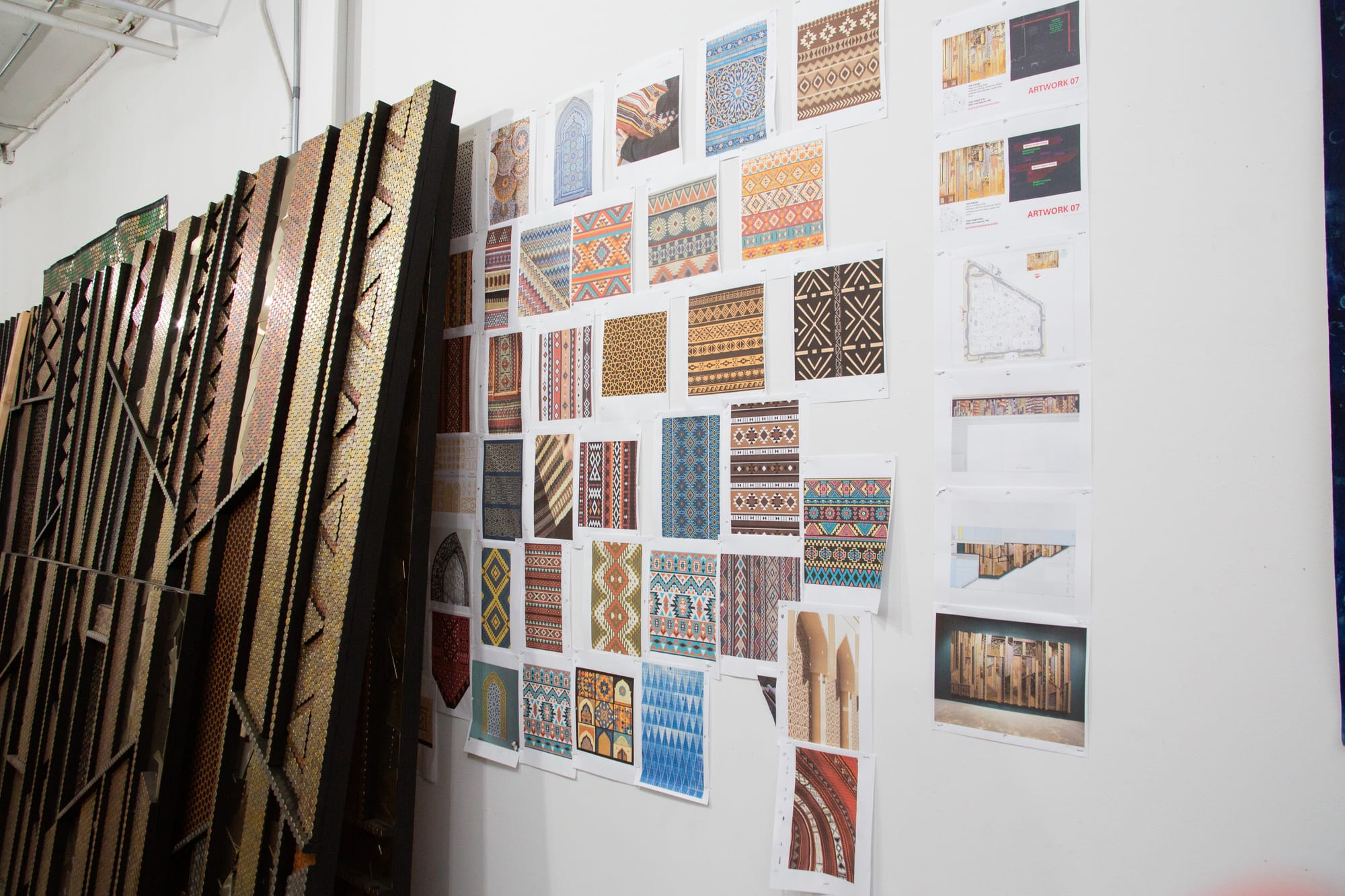
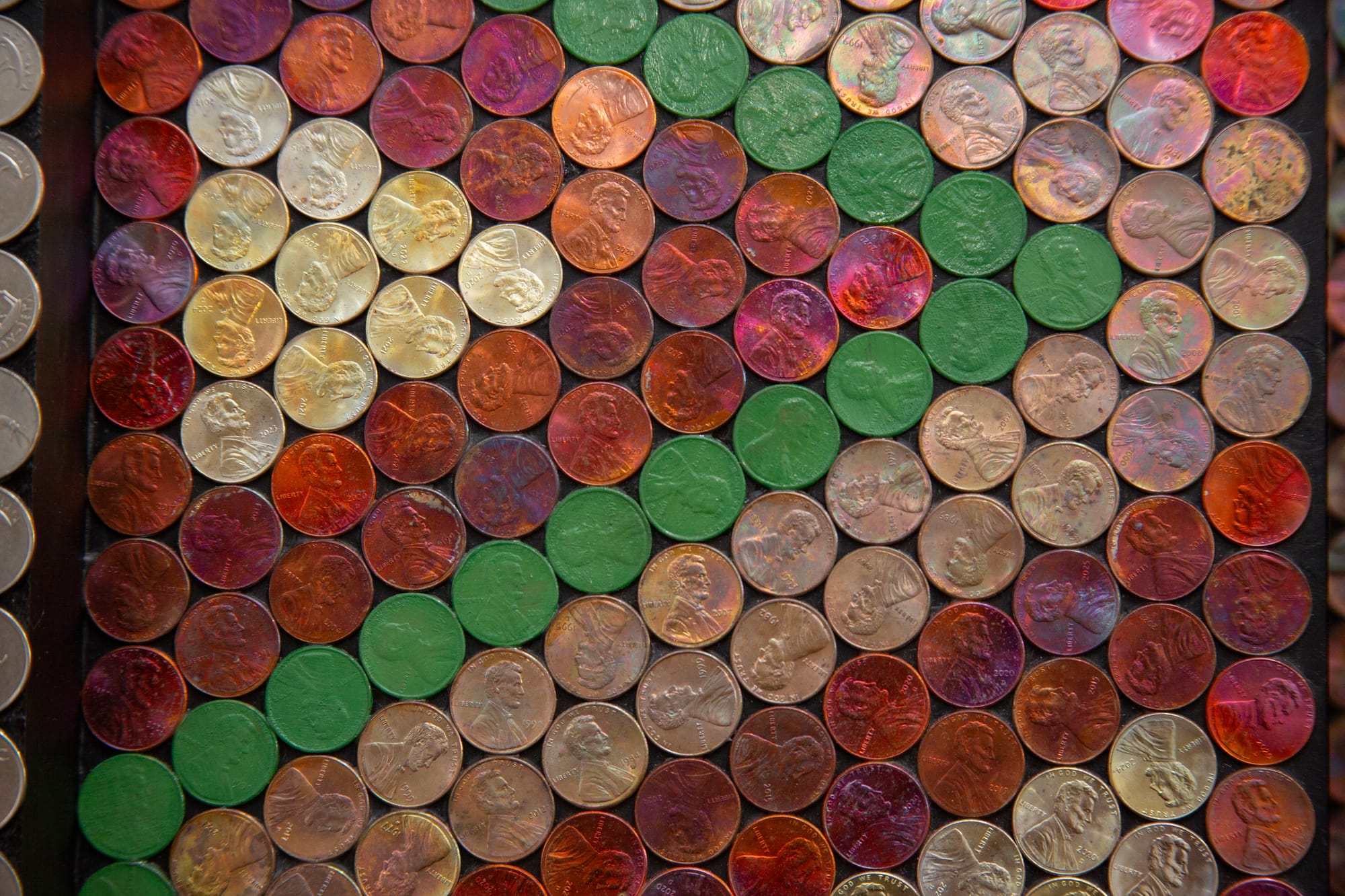
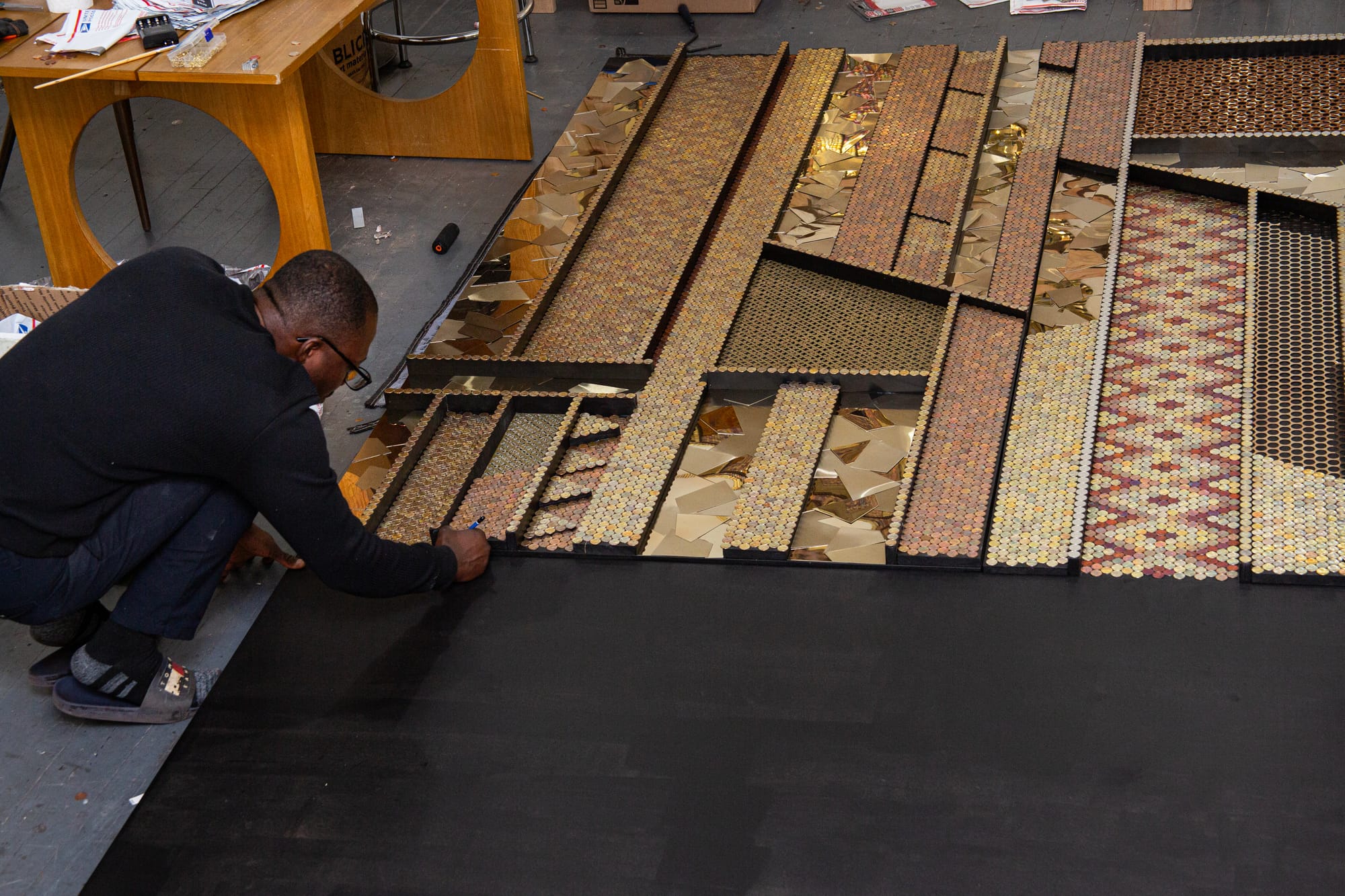
Yaw Owusu studio, courtesy the artist and Efie Gallery, Dubai. Photos by Eszter Enczmann
If Otieno asks what materials remember, Yaw Owusu asks what they are worth. The Kumasi-born artist, who studied at KNUST and Pratt and is now based between New York and Accra, has built a practice out of low-value currency. Most often, he works with Ghana’s pesewa coins, rendered obsolete by inflation.
By accelerating the coins’ natural corrosion through chemical and organic processes, Owusu creates sculptural surfaces of shifting texture and colour. They ask how value is constructed, lost and reclaimed, connecting material transformation with the volatility of global markets and histories of resource extraction.
His work is held in collections including the World Bank, the presidential residence in Accra and Meta’s New York headquarters, which houses a 50-foot installation. He received the Kuenyehia Art Prize in 2018 and the King Otumfuo Osei Tutu II Art Awards in 2026.
For Efie, the exhibition also revisits an early relationship.
“There is something particularly meaningful about returning to Yaw as Efie turns five. He was our first artist in residence, so his relationship with the gallery is intertwined with our own beginnings. To encounter his practice again at this point allows us to see how much both the artist and the gallery have evolved,” Mintah says.
Alongside the coin installations Owusu is known for, Where the Tide Flows and the Dunes Gather features works on canvas and debuts a series of abstract works on paper made using residue from coins.
“I think the works on paper will surprise people. They emerge from the residue of the alchemical process Yaw uses to make his coin sculptures, so they are materially connected to those works while appearing almost entirely different.”
That shift opens another way to consider the questions running through his practice.
“His sculptures can shimmer almost like gold despite being constructed from some of the lowest denominations of currency. There is a contradiction there that has always interested us: societies that appear prosperous are often built upon labour and lives to which very little value is assigned. In the works on paper, that relationship is almost reversed. What remains after the transformation becomes the work itself—rust-like, abstract and unexpectedly delicate.”
“They ask us to reconsider where value actually resides: in the object we privilege, or in what we usually overlook.”
Owusu is also working on a new monumental public installation in Abu Dhabi, with further details still to be announced.
Beyond: Frieze Abu Dhabi
Frieze Abu Dhabi · 19 to 22 November 2026
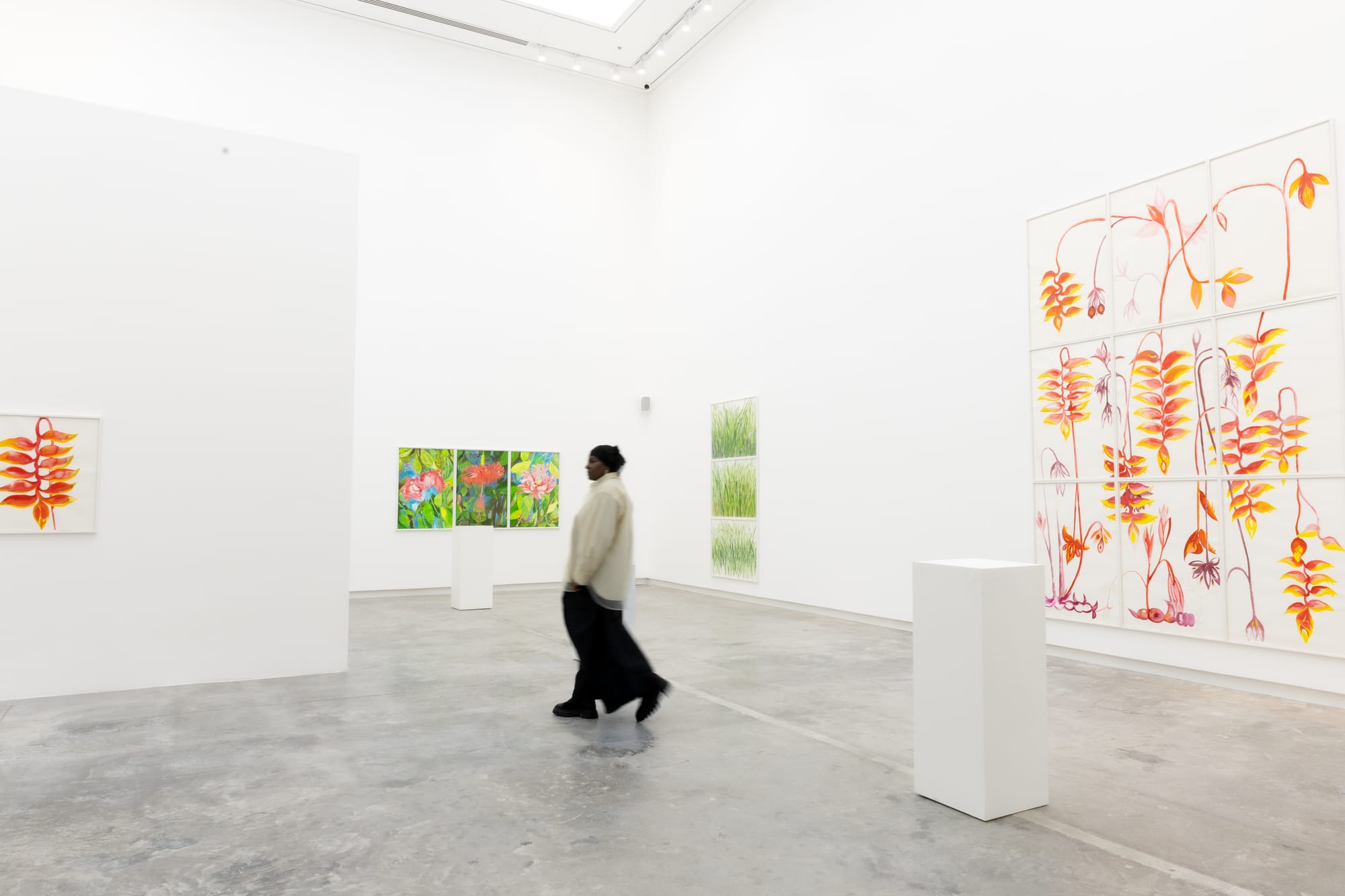
Two days after Owusu’s exhibition opens, Efie takes part in the inaugural edition of Frieze Abu Dhabi. Its presentation marks the gallery’s fifth anniversary with new and recent works by El Anatsui, María Magdalena Campos-Pons and Abdoulaye Konaté, centred on histories of exchange connecting Africa, the Middle East and the Caribbean.
Konaté’s Motif Arkilla (Sahel) sur fond ocre (2026), from his Sambadio series, debuts alongside Blanc sur blanc – No 1 (2026), an entirely white composition that introduces a quiet new direction in his work. El Anatsui’s bottle-cap work Za (2025) appears alongside Migrating into History (2024), a rare wood panel work. Campos-Pons presents three new large-scale floral paintings, continuing her exploration of ancestry, ritual, femininity and diasporic memory.
The fair arrives as Efie’s artists develop further connections with the region’s institutions. Louvre Abu Dhabi recently acquired a monumental work by Konaté from his debut solo exhibition with Efie, to be featured in Living Legacies, opening on 25 November. A monumental El Anatsui installation was among the first acquisitions announced by Guggenheim Abu Dhabi.
Mintah has seen the relationships around the gallery deepen over its first five years.
“Five years ago, we were introducing many of these artists and conversations to audiences in the region for the first time. Today, the landscape feels considerably more connected. We are seeing deeper engagement from institutions, collectors and curators, and importantly, relationships between Africa and the Middle East that no longer feel peripheral to the international art world.”
“Our own programme has grown alongside that change. The artists we work with are entering major institutional collections, receiving significant commissions and participating in increasingly global conversations. At the same time, Efie itself has developed from a gallery into something broader, a space for exhibitions, residencies, research, film, music and gathering.”
Joining the fair brings those developments together.
“So joining the inaugural Frieze Abu Dhabi in our fifth year feels significant. There is a symmetry to it: we are marking an important chapter for Efie at the same moment that the region is entering another chapter of its cultural development.”
Across the season, visitors can follow how artists work with objects that already hold histories. Otieno’s wood and Owusu’s coins have served practical purposes, passed through people’s hands and changed with time. Their work asks us to look again at what those materials can hold.
At Efie, these encounters sit within a space where looking can lead to listening, reading or conversation. Five years into the gallery’s work, Mintah sees plenty still to build.
“For us, though, five years feels less like an arrival than a foundation. We have spent that time building relationships and establishing a language for what Efie can be. The interesting question now is what we can build upon it.”
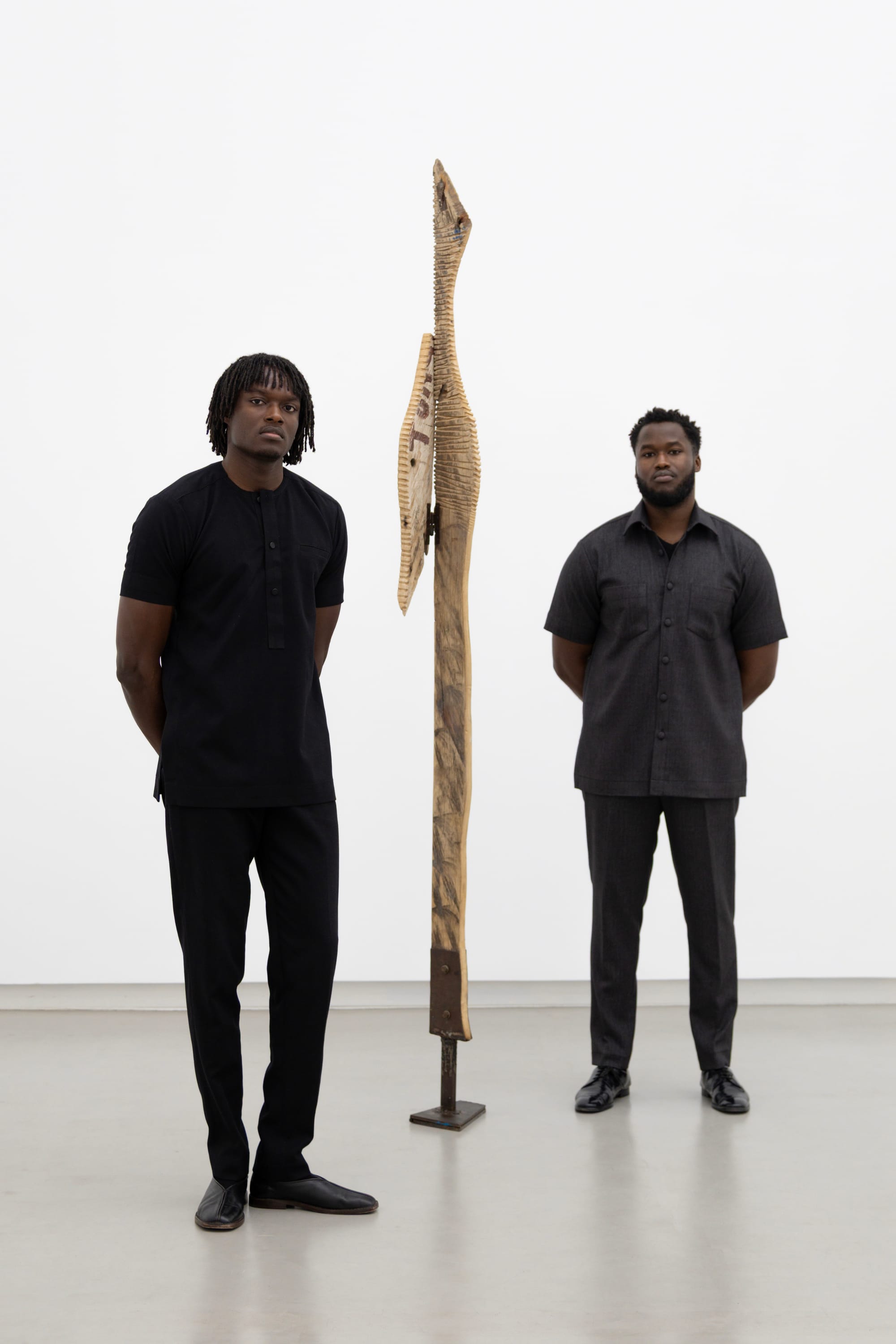
Together, the season's exhibitions give visitors a way to follow how artists work with objects that already hold histories. Otieno's wood and Owusu's coins have served practical purposes, passed through people's hands and changed with time. Their work asks us to look again at what those materials can hold.
For Efie, those encounters sit within a space where looking can lead to listening, reading or conversation. As its programme moves towards the end of 2026, there are several reasons to visit and enough happening beyond the exhibition walls to make a return worthwhile.



Member discussion