


Nigerian-British artist, Aisha Olamide Seriki, was born in Lagos, spent five years growing up in India, passed through Lagos again, and eventually settled in London at the age of eight. That early nomadic childhood, and the photographs her father took to document all of it, laid the groundwork for a practice that now sits at the intersection of fine art photography, sculpture, and printmaking.
Now based in London, Seriki holds an MA in Photography and an MFA in Fine Arts and Humanities from the Royal College of Art, where her project Orí Inú earned the New Photography Prize, amongst other prizes.
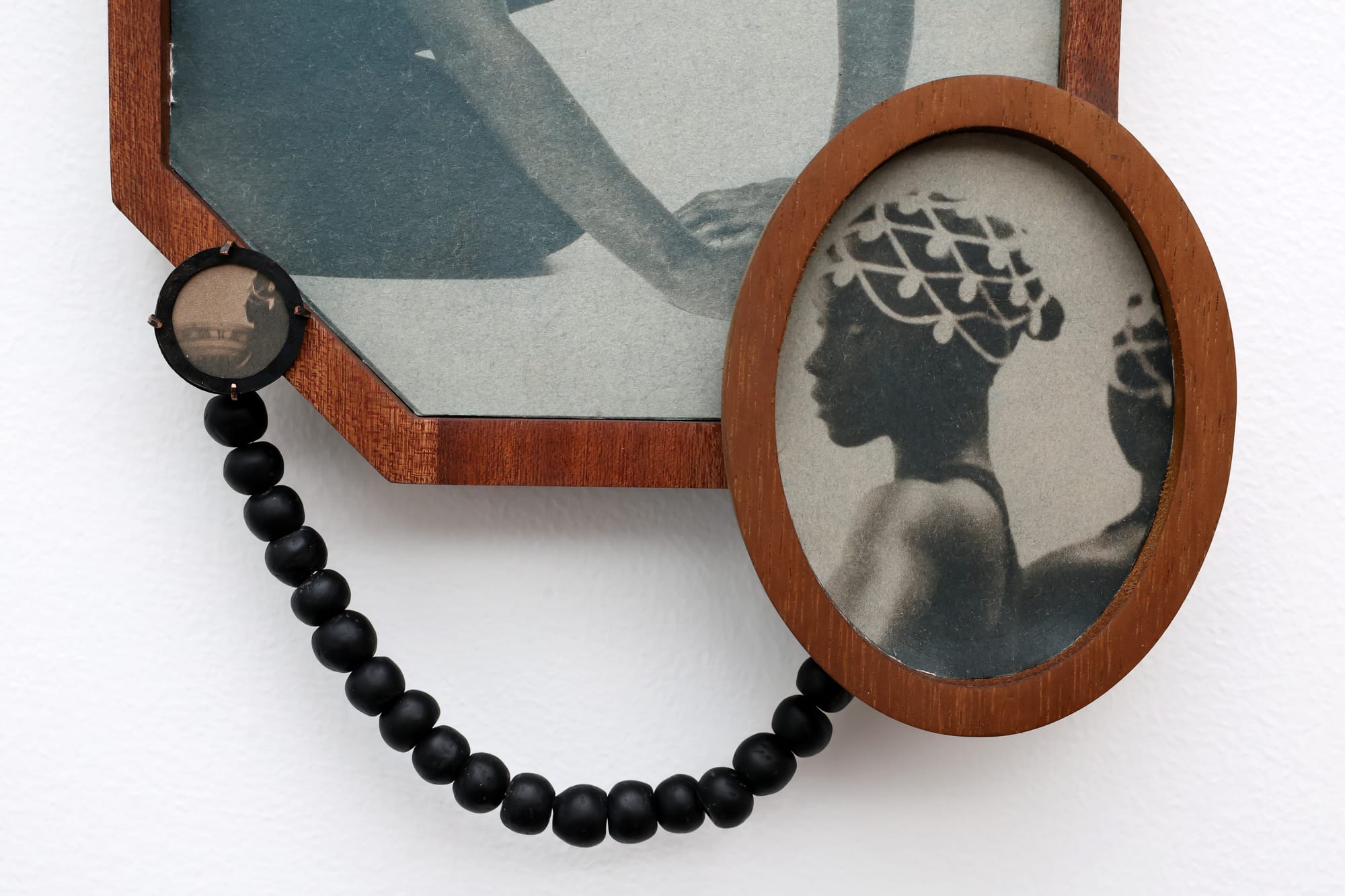
Her work refuses the idea that photography is a flat, purely visual medium. Instead, she builds layered photo-sculptural objects; hair combs cast in bronze, metal assemblages incorporating cyanotype and photopolymer gravure prints, wood-carved structures, using culturally specific materials like iroko, sapele, and brass to physically manifest a worldview drawn from Ifa cosmology and nineteenth-century spirit photography. The photograph, in her hands, becomes a ritual object rather than a document.
When we spoke, Seriki was back in London from Of Presence and Absence, a duo exhibition with British-Nigerian artist Motunrayo Akinola at Kó Gallery, Lagos, her first time exhibiting in the city.
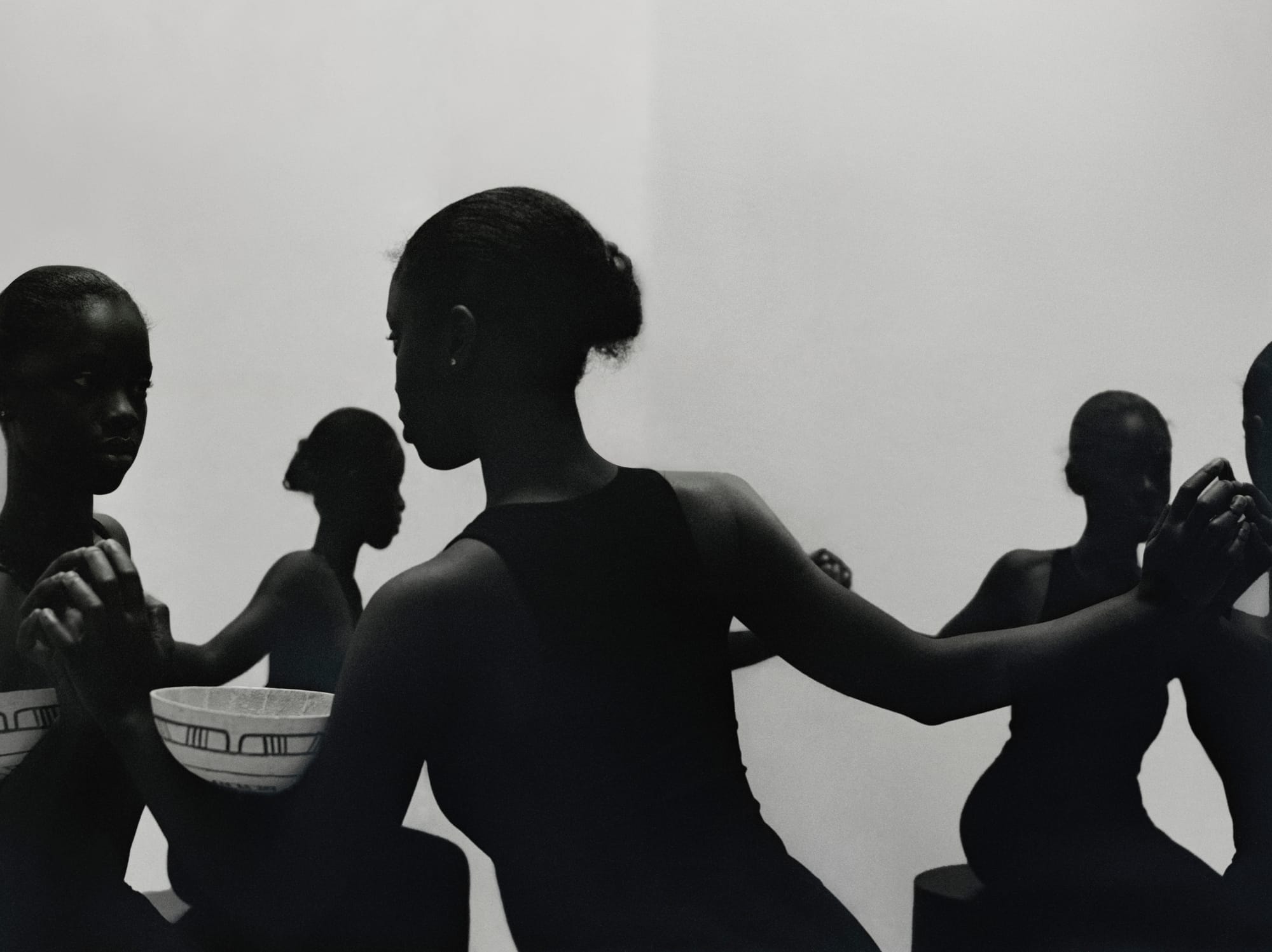
How did your upbringing shape the way you think about culture and image?
Moving around so many different cultures made me quite open to sources from different spaces. I've always been interested in culture as a phenomenon, and I've always understood that it changes depending on where you are.
My dad loves photography; he documents everything. And when we moved to London, it was just me, my mum, and my sisters. The photographs he took became a way to connect to earlier moments in my childhood that I couldn't otherwise remember. We were travelling so much when I was young, and you know, you're a child, you can't retain it all. But through those photographs, I could almost recover those memories. So photography has always held a special place for me because of that.
That’s sweet! When did you realise you wanted photography to be physical, rather than flat on a wall?
It was actually there from very early on, I was about 14 or 15, painting on top of images, re-photographing them, playing with collage. But when I went to university, I didn't study art; I studied Global Liberal Arts at SOAS, so I kind of lost that side of my practice. For the next five years, I was really focused on just perfecting portrait photography skills, asking myself, would I be interested in fashion photography? What kind of photographer am I?
When I started my master's, I began playing with photopolymer prints and printing on different materials, such as lace, for example. But it was a tutor who really shifted things. He pointed out that I was asking questions about who was in the image, why they were there, and what it meant for them to be photographed, but he said I could also question the frame itself, what I was using to capture and hold the work. That's when I went back to the idea of physical objects.
I was researching the Yoruba concept of Orí, the inner head as spiritual consciousness, and I came across a brooch that had a small image embedded in it. I thought, what if I made a comb that held my images in the same way that a calabash symbolises the head in the photographs? The physical object carrying the images is the same way your head carries its inner knowledge. That's where it all started. And from then on, it gave me permission to keep experimenting. Now the challenge is actually deciding what will be a photograph and what will become an object.
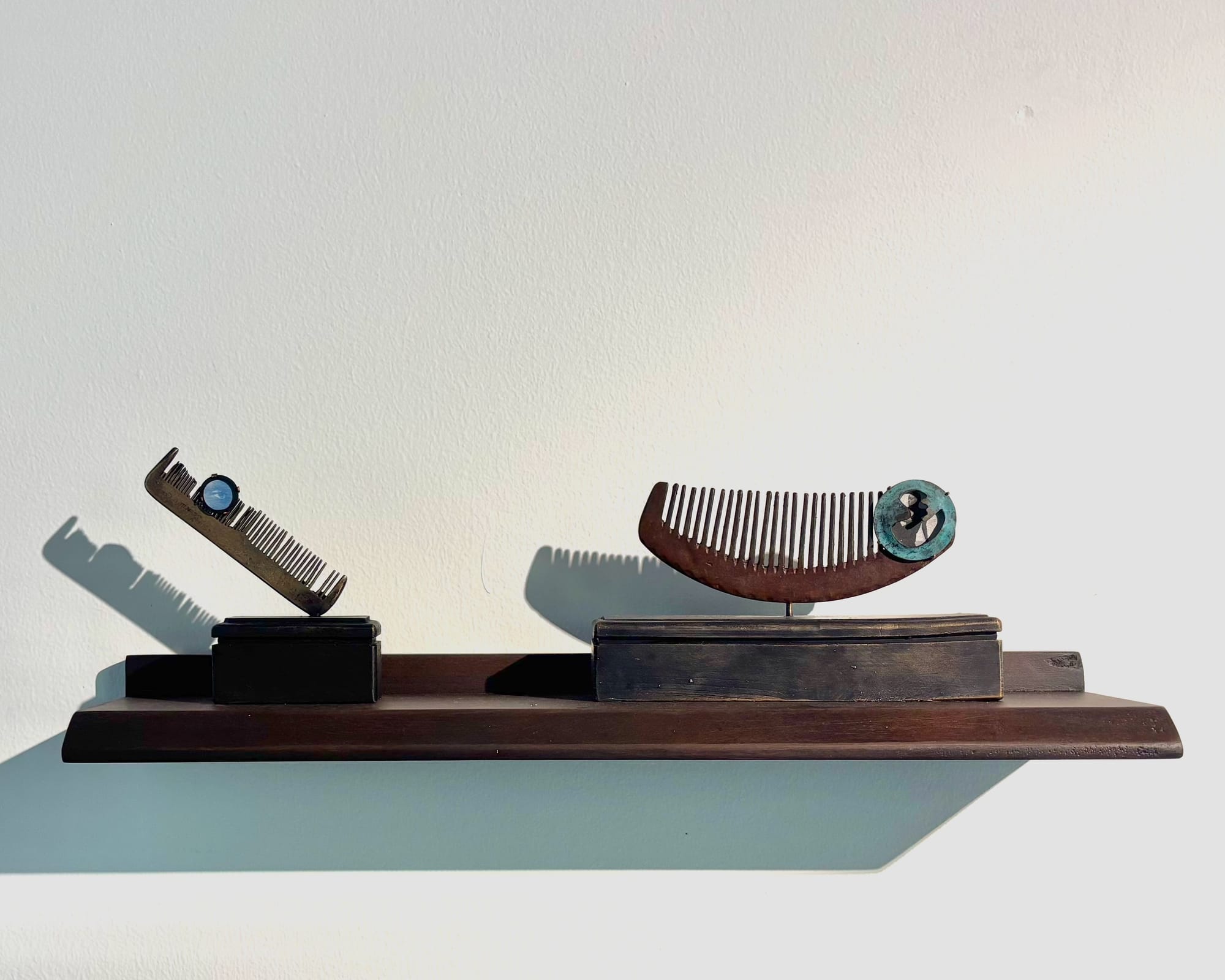
How do you make that distinction, what stays as a photograph versus what becomes a sculptural object?
If an image is very striking and it stands on its own — if adding anything else would be a distraction — then it stays as a photograph. There are images where things can be added, and everything works as a whole, and then there are images that simply don't need anything else.
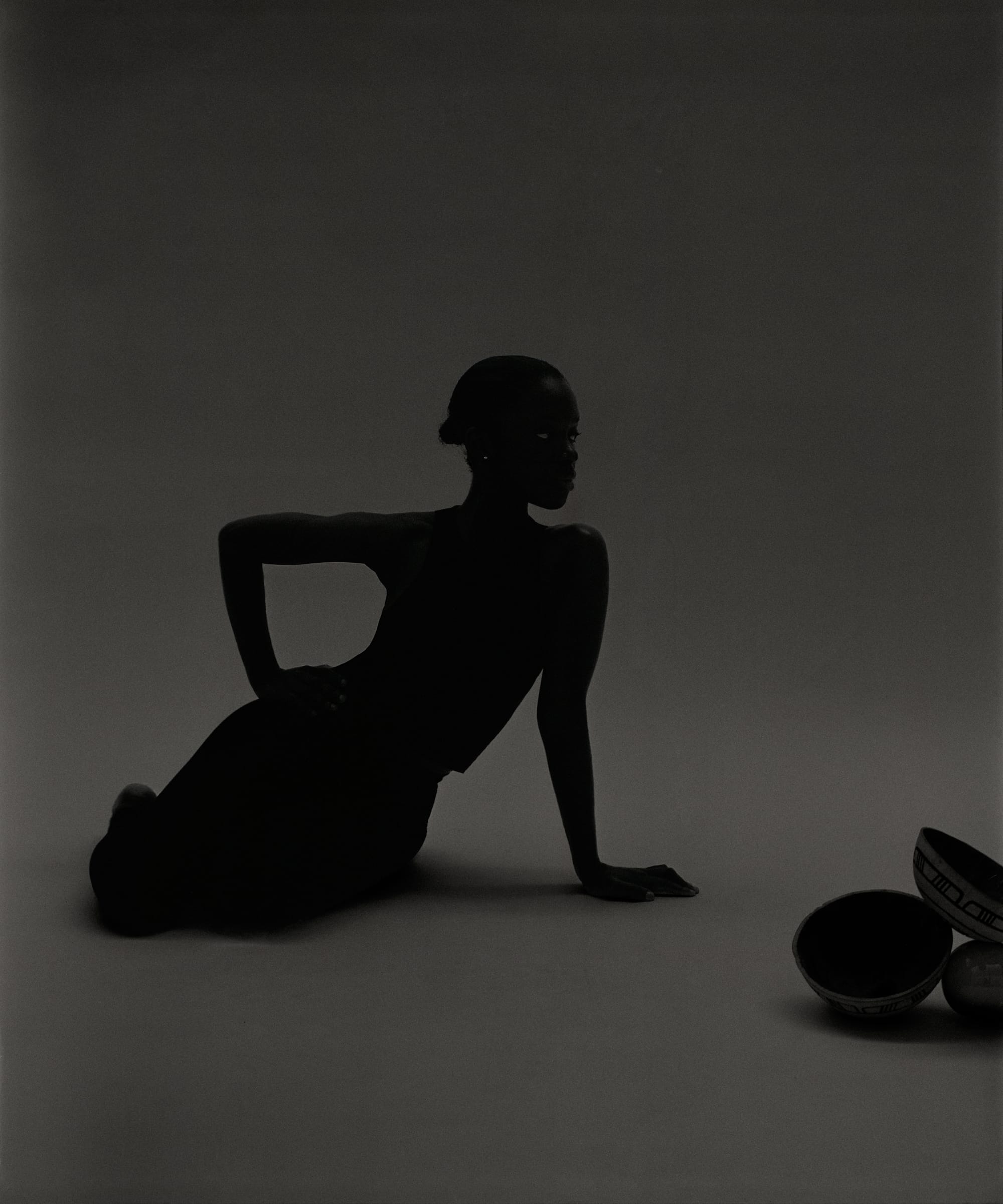
What tends to work well as an object is something compositionally simple, not much going on in the image. And sometimes it's frustrating because you go into a shoot planning for objects, and the image ends up being too powerful to touch. Other times, it becomes like a puzzle. I'll lay things out, rearrange, try hundreds of variations, especially when you're working with two images together, because the combinations are literally endless.
So how do you choose your materials? You've worked with wood, brass, copper, bronze, lace. What guides those decisions?
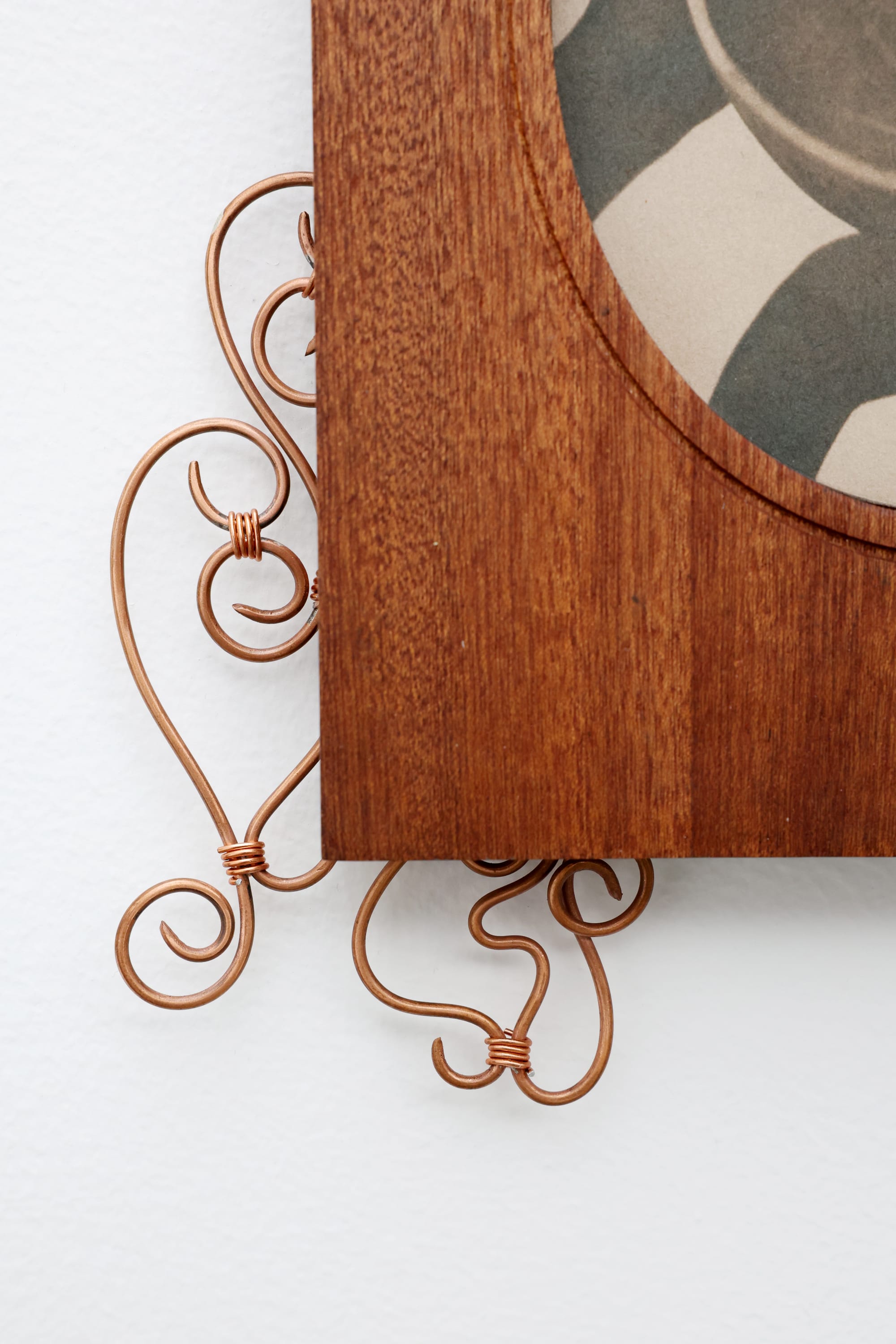
For me, the materials are part of how I research culture. The project is about researching Yoruba spirituality, using specific materials is a form of material knowledge, understanding what previous makers in the same region worked with, and what those objects meant. By understanding the material, I understand something about the people who used it before me.
There's also a practical side. I'm working with paper, wood, and metal, and each has completely different properties. An idea will often get reshaped by the limitations of the material itself. I recently started using brass because you can get it laser-cut, which makes certain things more achievable. Copper is a softer sheet material to use than bronze, so it's easier for me to make forms with. But my ideas are constantly in dialogue with what each material will and won't allow.
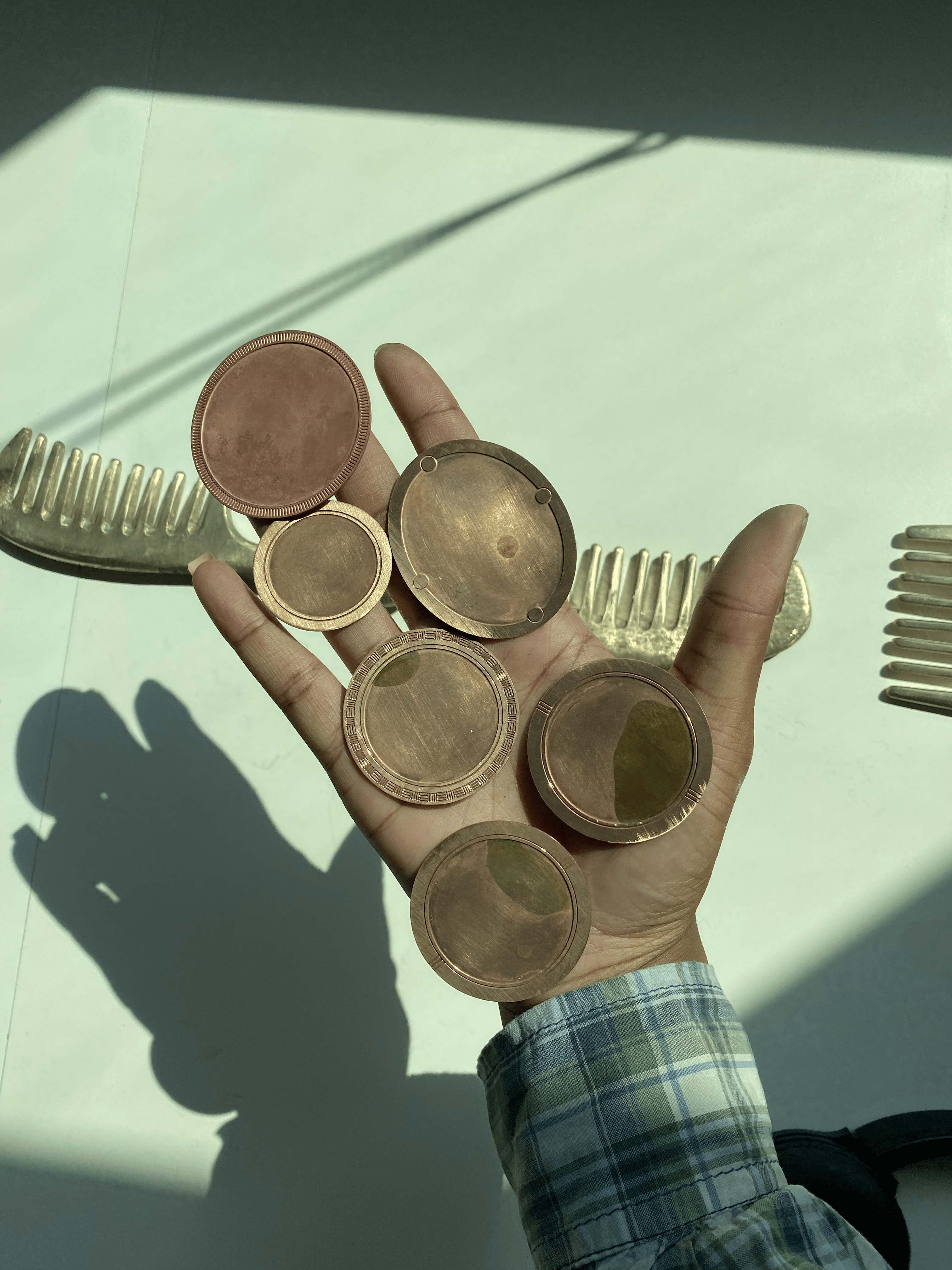
That makes a lot of sense. Your project Orí Inú is almost three years in the making now. Can you talk about how the research process works for you?
It usually starts with reading; secondary materials, images, and sculpture. A lot of the posing in my photographs is actually inspired by Ibeji sculpture, and African sculpture more broadly. I was looking at how figures are positioned in those works and letting that feed into how my subject moves in the frame. Even something like the headpiece in the work came from research; I was looking at the Gele, which relates to protecting the head, before I settled on something more minimal. I used cowrie shells to reference the head as a site of wealth and spiritual guidance.
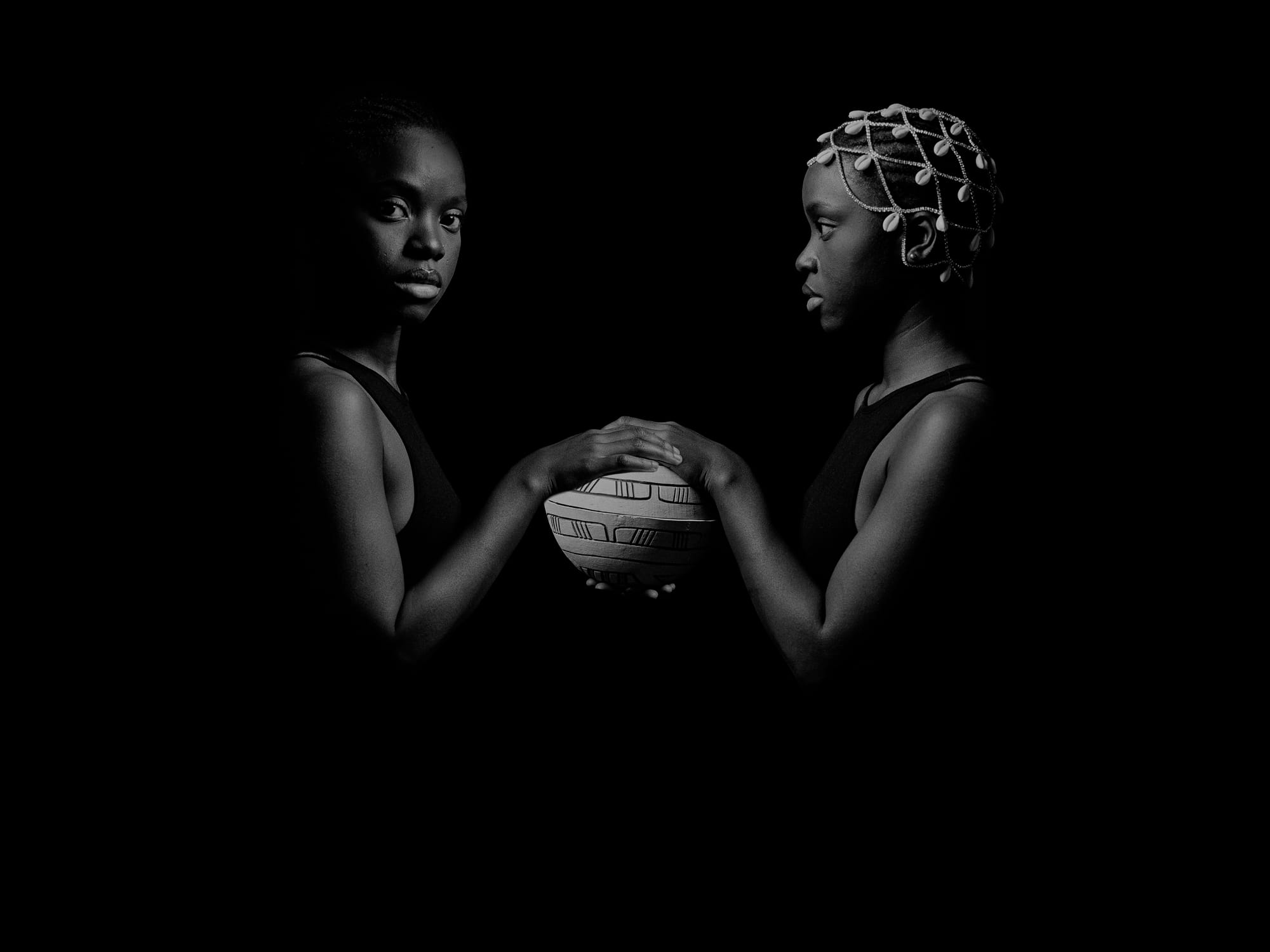
Then I started looking at photographic histories, artists working with surrealism, with spiritualism, seeing what techniques they used and how I could translate that. That's where spirit photography came in. In the mid-1800s, photography's promise of scientific truth raised questions about how the visible might relate to the unseen. Spirit photographers were trying to document the invisible: ghosts, auras, the presence of those already gone. I became interested in putting that Western history in conversation with the Yoruba concept of Orí Inú: the inner head as spiritual consciousness and guide. For me, image-making became ritual rather than documentation.
And then the research just keeps building from there; are there other symbols I could use? That's how the comb came in, as a secondary symbol. The question then became: how do I use it in a way that isn't too obvious, that doesn't detract from the central statement? This led to the object's research.
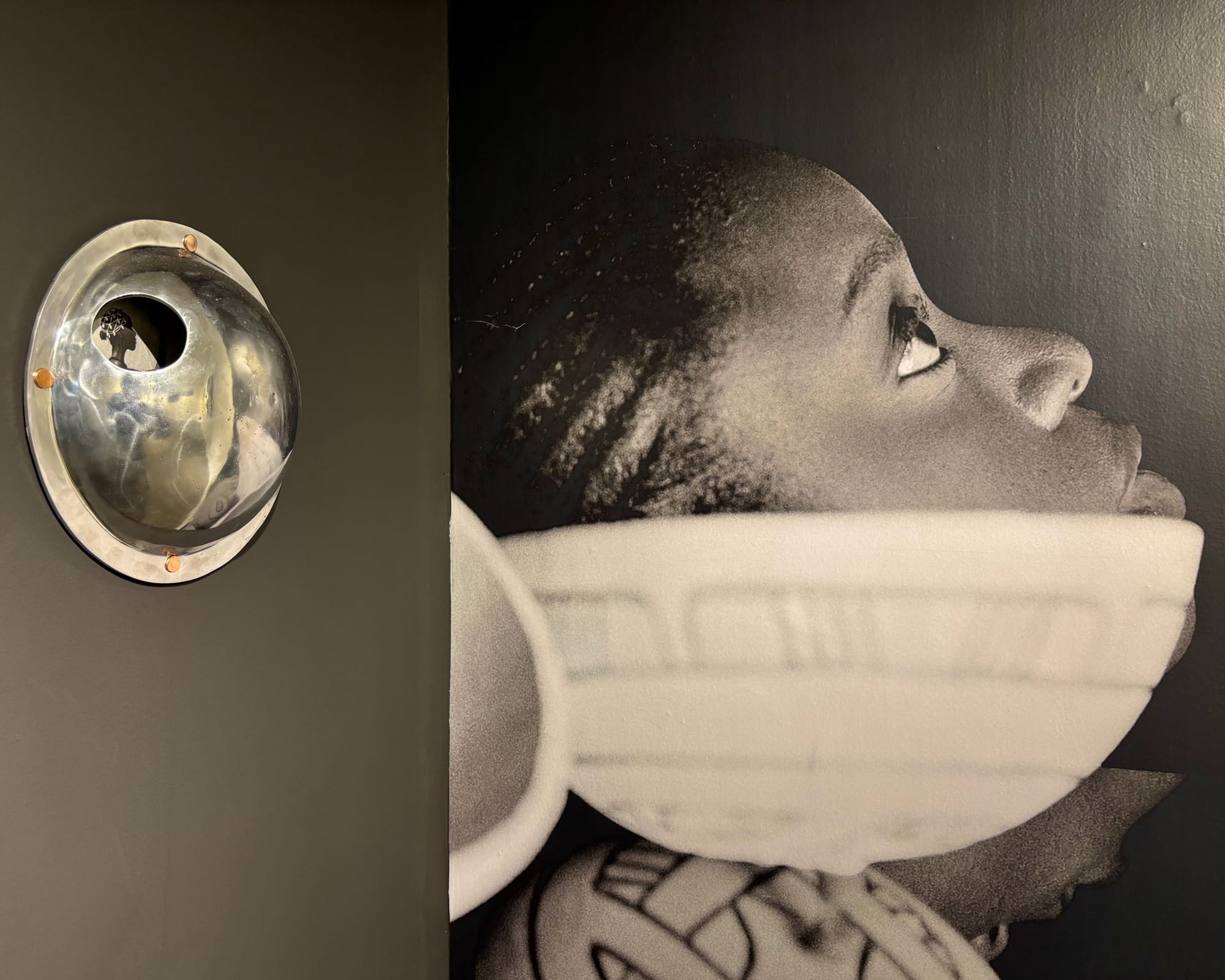
Love how everything leads to another when you start. What questions were you asking yourself when you started?
I had just started my master's, the first time I'd ever studied art formally. I'd been in full-time work; I hadn't touched a camera in a very long time. Honestly, I was quite depressed. I knew that I'm not the kind of person who is sufficed by a conventional career. I need to live a life of creativity. So coming into the master's and finally being in a space where I could just do my own work, it felt like, okay, this is what I'm meant to be doing.
That feeling made me think about honouring what I believe is my path. The questions I was trying to answer were: how do I show the physical body and the spiritual body in the same image? How do I do it in a way that isn't on the nose, where, if you know about Yoruba spirituality, you'll recognise the references, but it's not closed off if you don't? That's where the doubling came from, multiple versions of the same figure in a single frame as a way to suggest the layers of the self, the physical and the spiritual existing simultaneously.
That’s beautiful. This show at Kó is your first time exhibiting in Lagos. What has it been like building community here alongside the work?
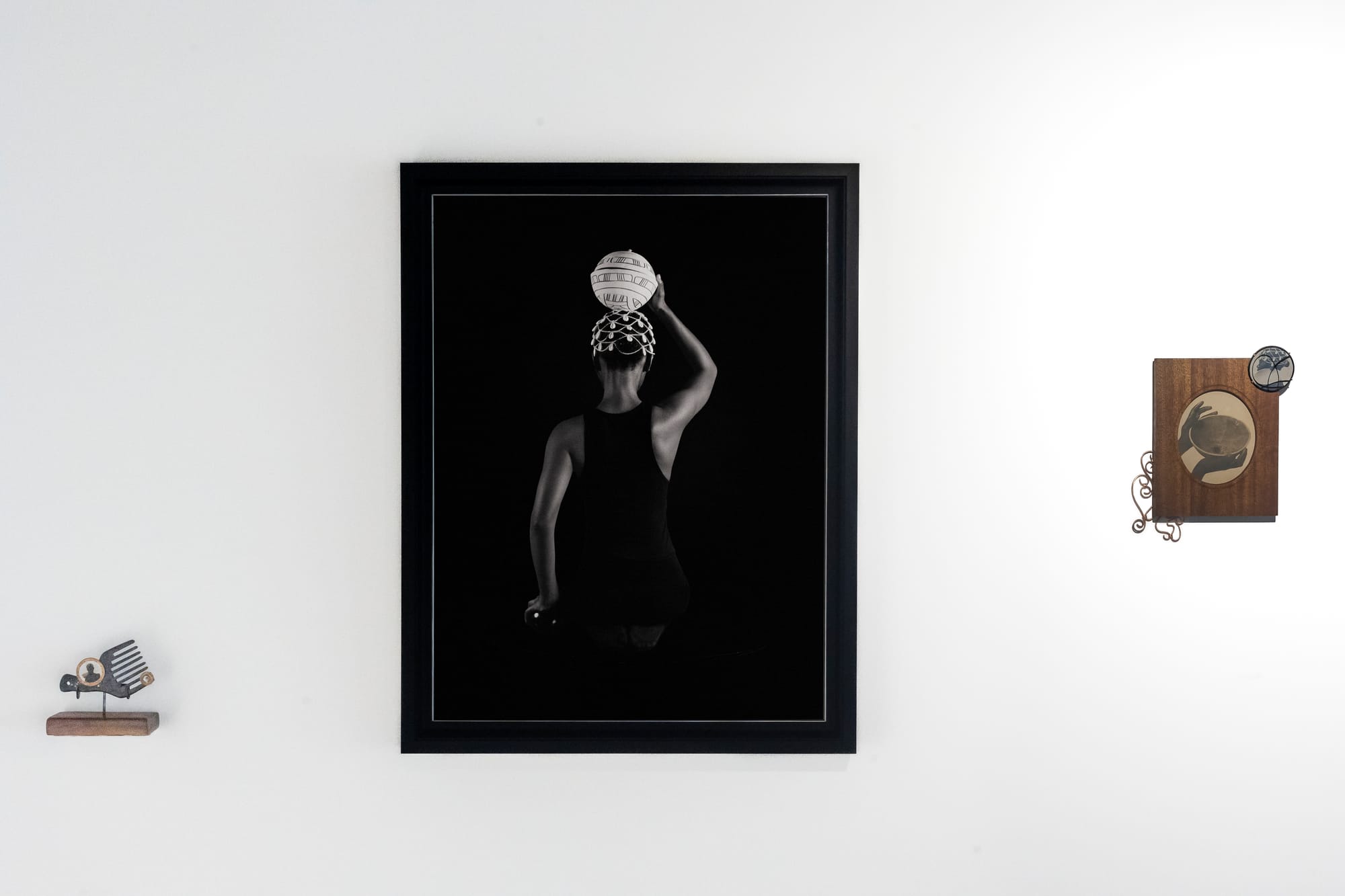
My creative community has always been split; a lot of it is based in London, through art school, through peers. But working on this show and doing the G.A.S residency has really helped me establish something here. I met so many artists and did studio visits. And when it came to actually making the work for this show, I really leaned on people.
My artist community was incredibly supportive in the production of the show— I went to the market with Falilat Ibrahim, I worked to finish my metal work at Universal Studio with Steve Ikpensi, and completed my wood pieces with David Adeogun. In London, I have my own studio, but here I don't. And the generosity of people just opening their spaces was genuinely so nice. I know Nigerians sometimes get a bad reputation, but in my experience, especially in the creative space, people are just so open and kind.
Love that! You've spoken about researching Yoruba spirituality, Ifa, and the fear you felt when you first started. Can you say more about that? And also what’s next for you.
The day I started researching Ifa for my dissertation, I was genuinely scared. I remember thinking, "Am I going to hell? Is something going to come for me?” And then I caught myself. I thought, how are you this uncomfortable about something that belongs to your own people? Like, people do theology, people study ancient Greek religion, people study Norse mythology without any fear. Why is this different? That discomfort was a wake-up call.
I should be clear that I'm not a practitioner. I'm a researcher approaching this with curiosity and respect. But I think the very nature of being able to look at your own spiritual heritage with curiosity, without shame, without fear, is important. And I think there's a growing shift. I'm seeing more people in the diaspora trying to reconnect with their spiritual roots, whether that's through serious research or even just, say, getting an Adinkra tattoo. It might be surface-level for some, but the conversations are happening, and that in itself is a sign that things are changing. Maybe slowly, but they're changing.
What I'm interested in now is the links between different spiritual systems. Between Ifa, Eastern spiritualities, and movements in the West. I grew up in a mixed-faith household, so I've always been drawn to faith as a broader human phenomenon. I think that's where I'm headed next.
I have one last question. To feed my curiosity. You've built a serious practice — awards, residencies, international exhibitions. But what does the reality actually look like? How do you sustain this?
It's definitely not easy. And it's something I'm grappling with more and more the older I get. There's a price you pay. I cannot imagine going back to a nine-to-five, but the cash flow is all over the place, constantly. And there are structural limitations that people don't always see. For example, I'm doing a residency in the US for two months. That means I can't hold a side job, because no normal employer will let you disappear for two months to go and make art.
I also know that I'm not naturally good at the administrative side of things, applying for grants, sending cold emails, and knocking on doors. I'd much rather speak to someone in person. But as an artist, if you're not good at that and you don't have another income stream, you will struggle.
The honest conversation in the art world is that you just survive, and you hope someone major discovers you and everything changes overnight. But that isn't really a sustainable strategy. It's manageable in your early twenties, but when you start approaching your thirties, you need a longer-term plan. I'm trying to figure out what that looks like, skills I can use, something art-adjacent that I can do from anywhere. It's not easy. But I think it's a conversation more of us need to be having openly.
Thank you! It was lovely speaking with you.



Member discussion