


I'll be honest: I'm not the best at art interpretation. I don't always find the clever parallel or arrive at the big conclusion. But I know when something has made me stop, and this year at ART X Lagos, a few things made me stop.
The fair's 11th edition, A New Chapter, A New Decade, looked back to the artists, architects, educators and thinkers who shaped Nigerian modernism and asked how we carry what we inherit into what comes next. That question was everywhere: in clay, in water, in sound, in the questions printed on a gallery wall. These are the installations I loved, with the context I found afterwards from curators' notes, docents and a fair bit of reading.
Residues of Past Encounters II · Ndidi Dike
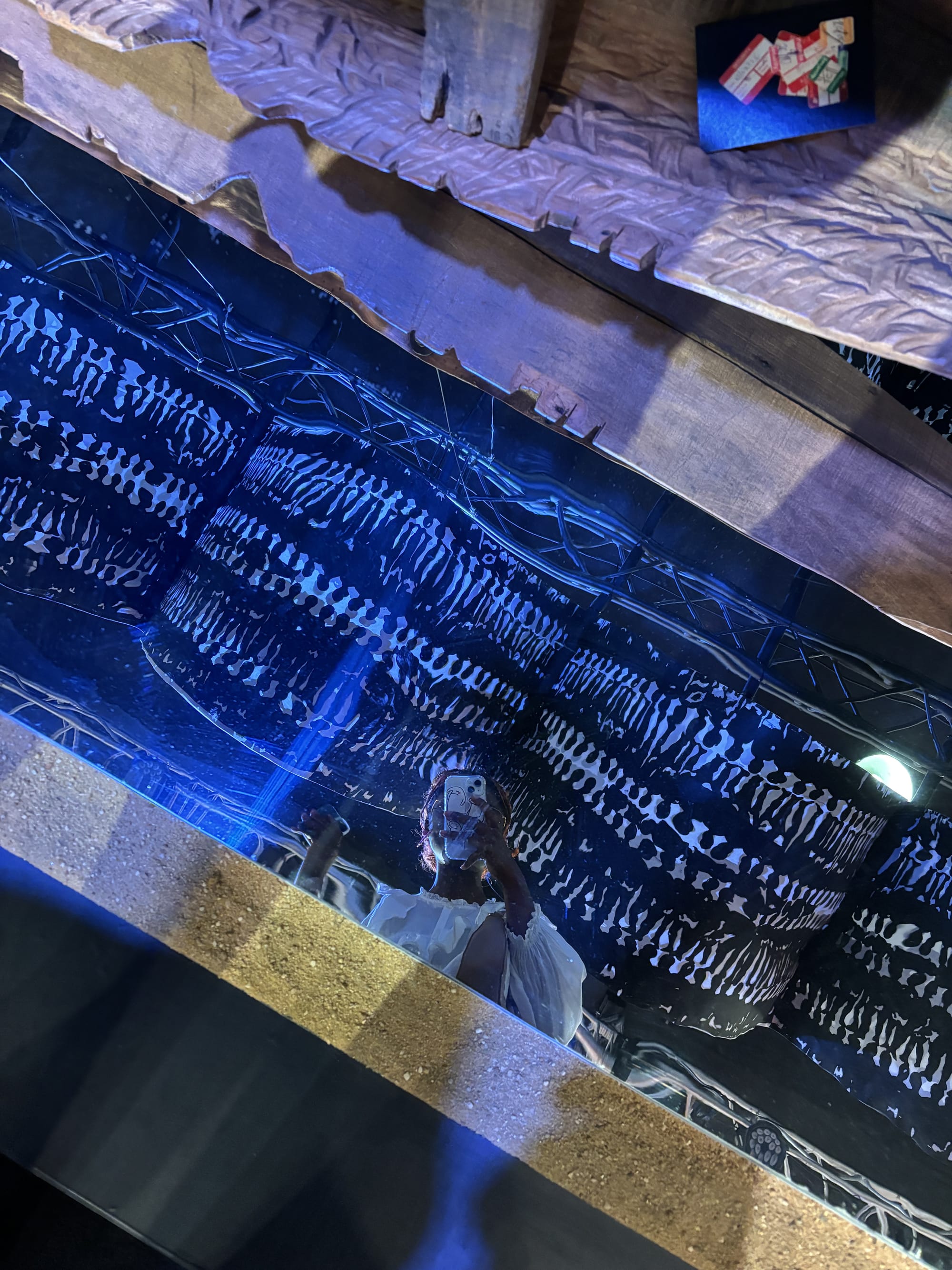
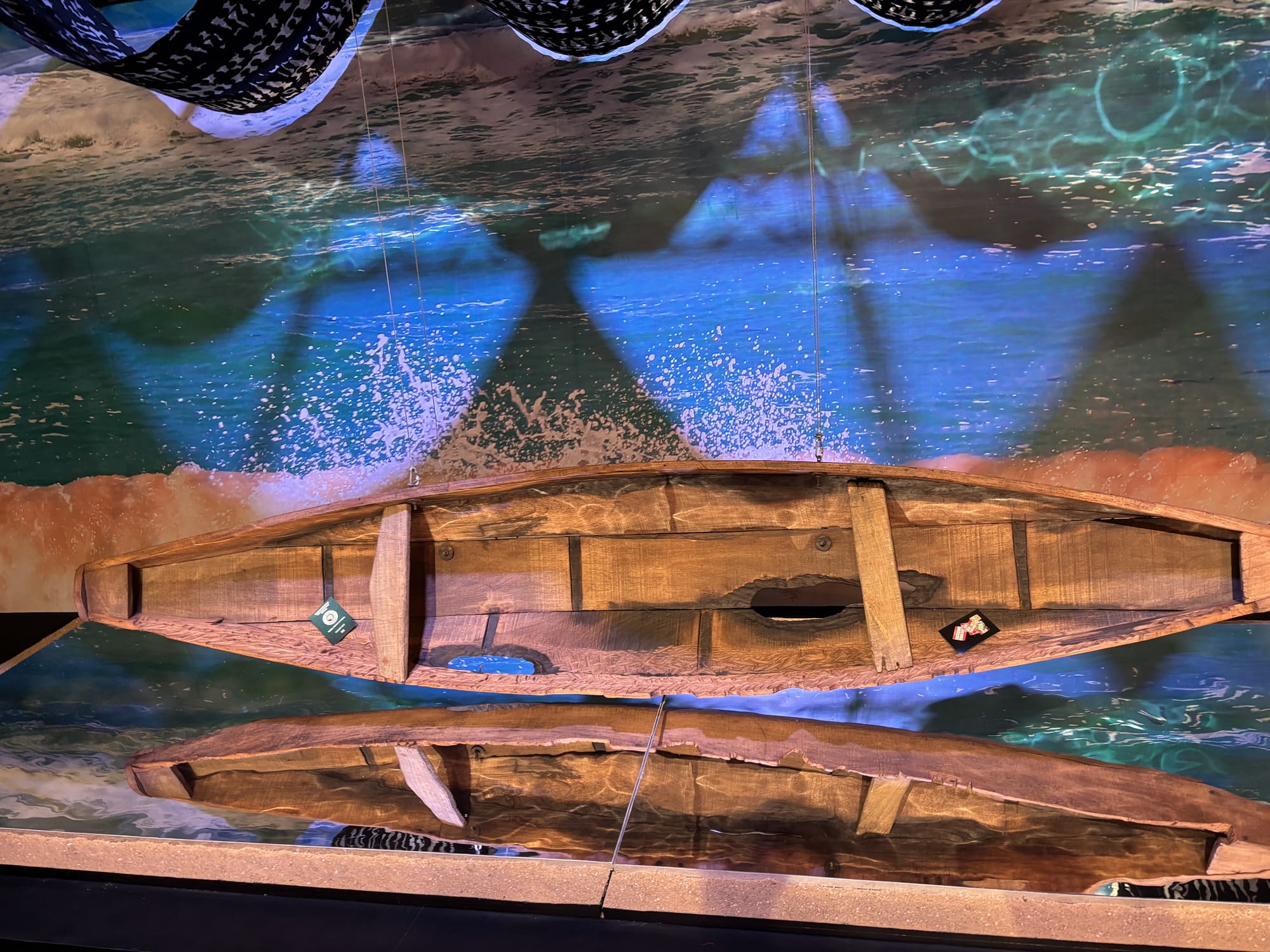
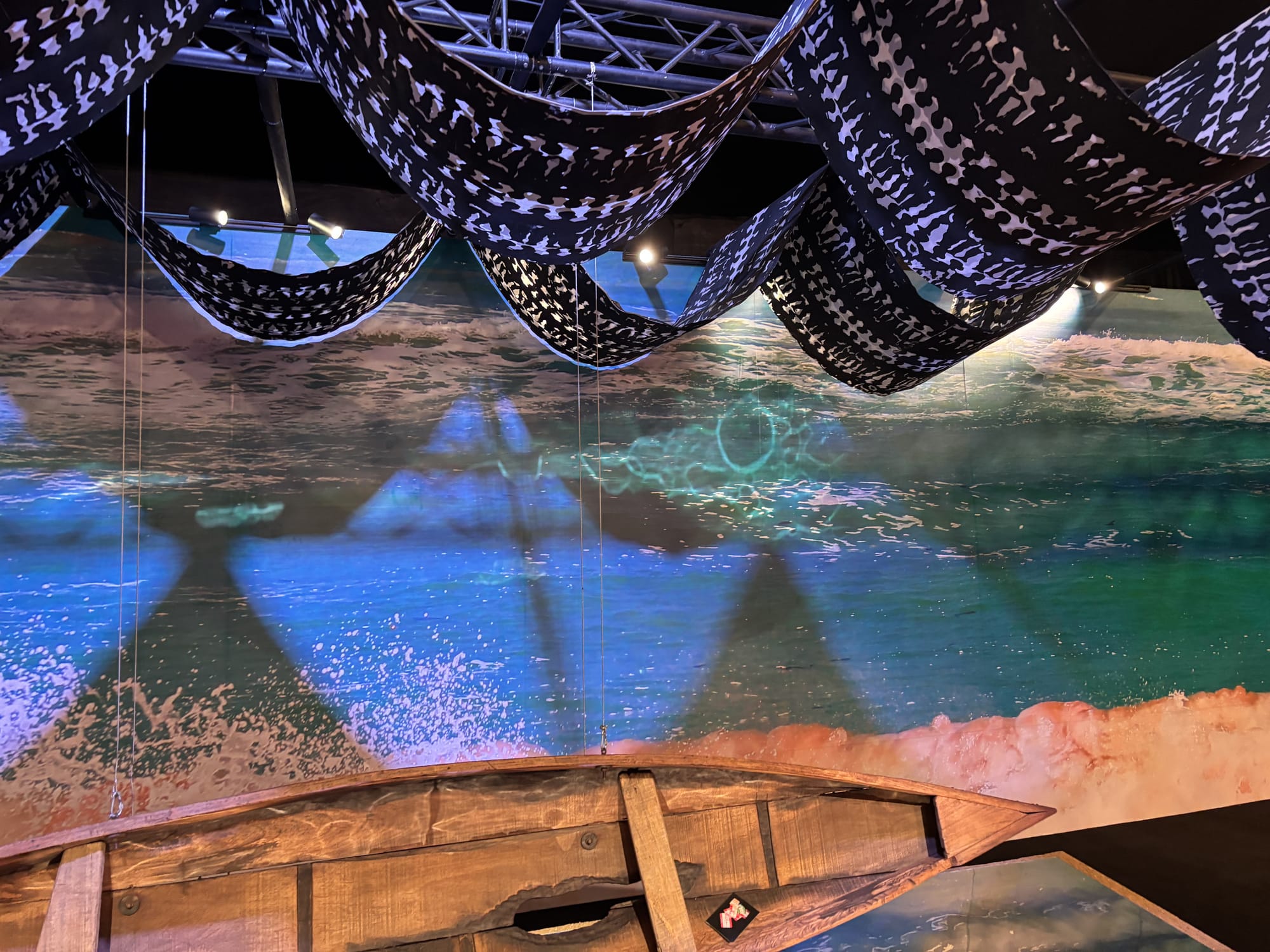
This was the one that caught my attention the most.
At first, I thought it was about migration. A weathered canoe, capsized, sitting on what looked like water. I thought about the people who cross seas in search of something better, and about one of my uncles, who once moved from country to country by sea in the most inconvenient way, scared and hoping he would make it. Then I caught sight of the passports, a Nigerian one and a British one, on either side of the canoe. Then I noticed the wreckage.
The exhibition note and the docent, whose name is Justice, told me the rest. Residues of Past Encounters, 2024–2026, reflects on the transatlantic slave trade, specifically Badagry and its Point of No Return. It's curated by N'Goné Fall, the Senegalese curator, and the curatorial text describes how suspended fabric and a mirrored surface connect histories of displacement and loss with the realities of the present.
Justice asked me to look up at the fabric and notice the pattern. At first I saw bones. Then, looking closer, I saw people. Bodies cramped together the way human beings were packed into the ships that traded them. The mirror beneath the canoe reflects it all, so the canoe seems to float on the sea. And when you look down into it, you see yourself. It could have been you.
There was sand, too, taken from the shores of Badagry. That detail undid me a little.
Ndidi Dike has been thinking about this history for a long time. After visiting Badagry's slave route in 2002, she said that no one could go there without being moved. An earlier version of this installation, with the partially capsized canoe and a distressed suitcase full of personal objects, was shown at CCA Lagos in 2025, in an exhibition honouring the late Bisi Silva. Seeing it now, evolved and expanded, felt like watching an idea that keeps travelling.
And it brought me back to where I started, to migration. So many people at ART X this year, and in Lagos this season, are from the diaspora: British Nigerians, second- and third-generation, coming home for art week. Some of them could be descended from people who were in a boat like that one. There's something powerful in that full circle. The same waters that carried our people away now carry their descendants back, by choice, with two passports, as collectors, artists and builders shaping this city.
I loved this installation for all the thoughts you could have, all the details and all the parallels. You could stand there for an hour and keep finding new ones.
Ladi Kwali: Beyond the Vessel
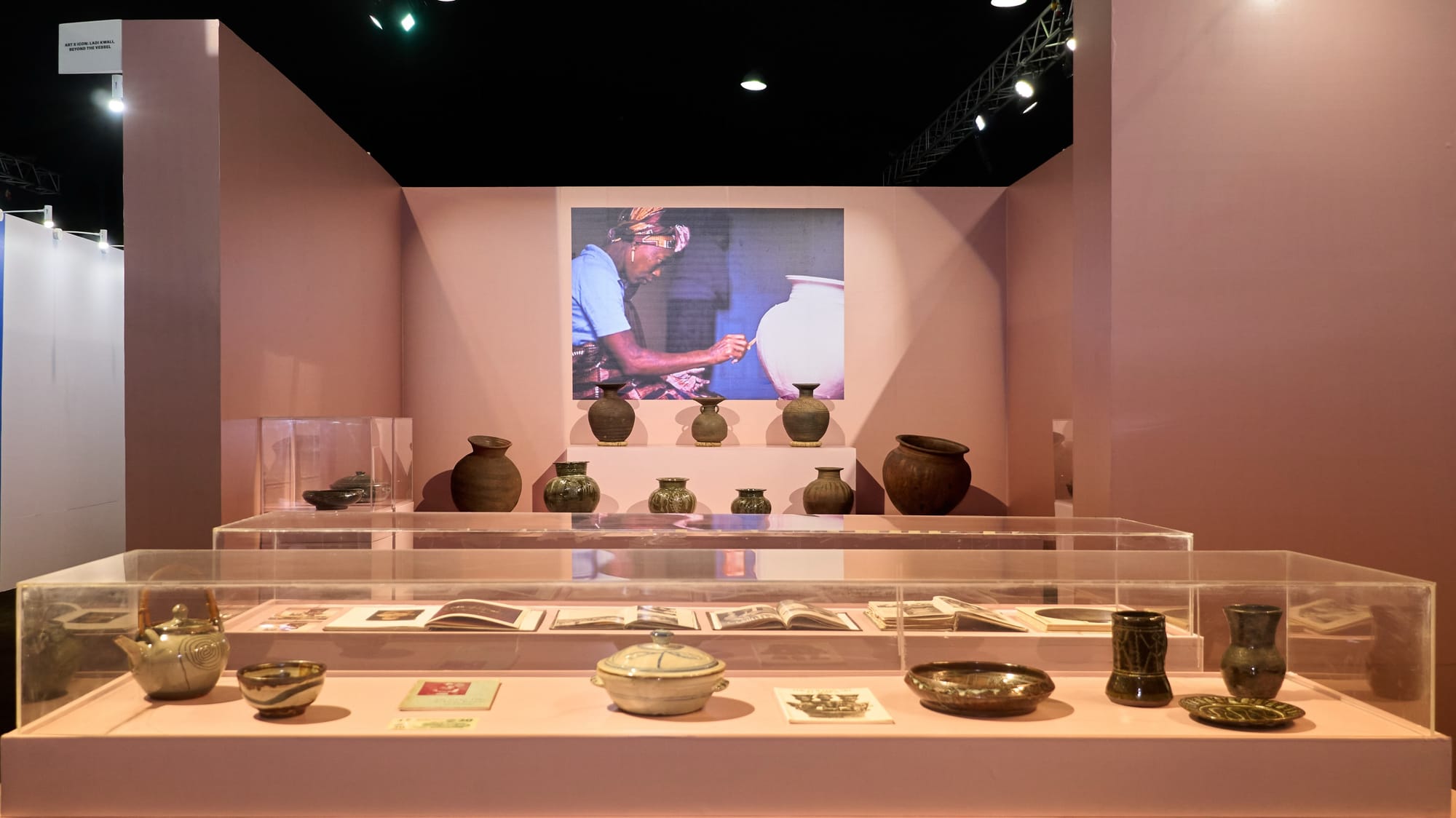
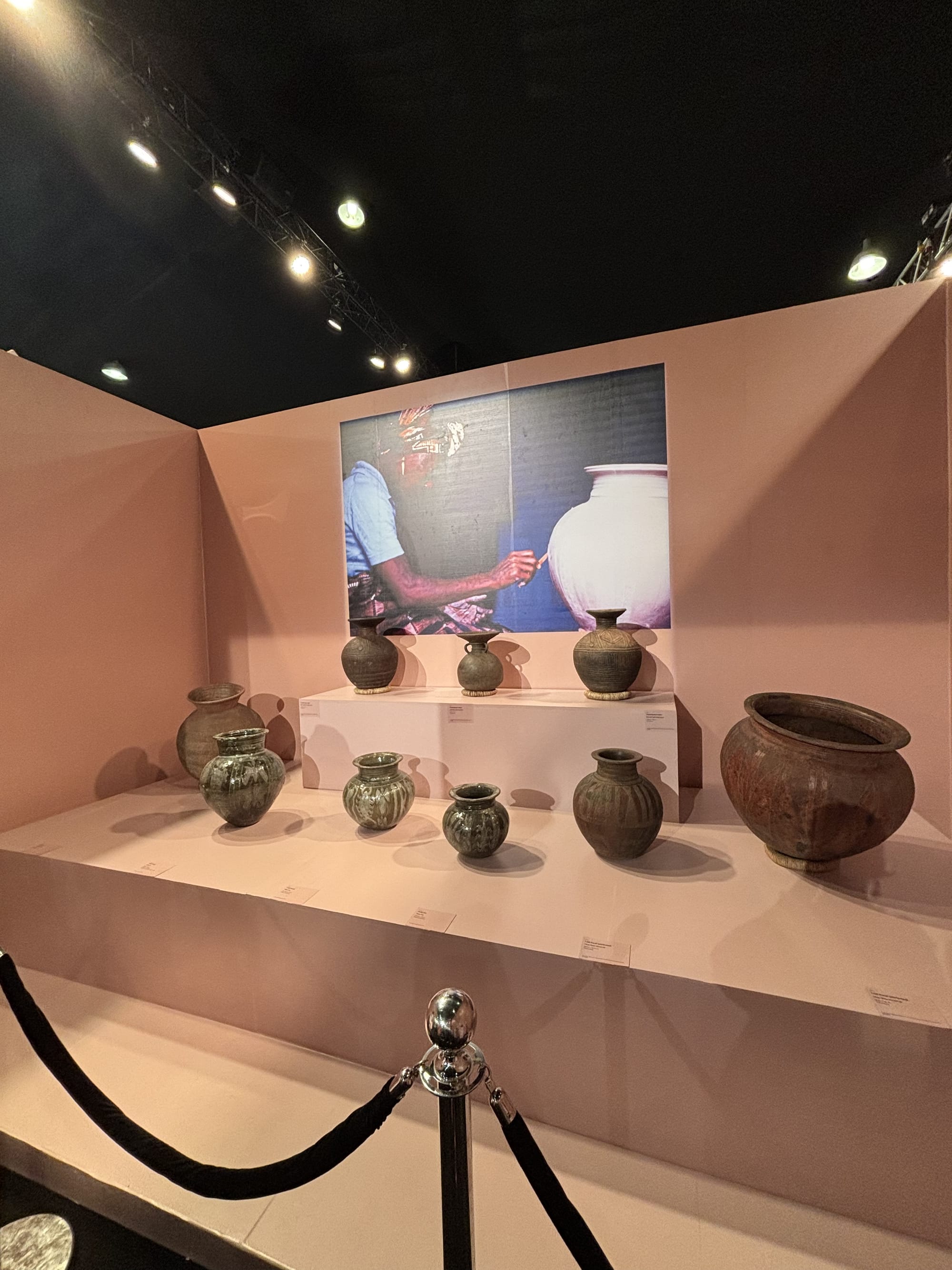
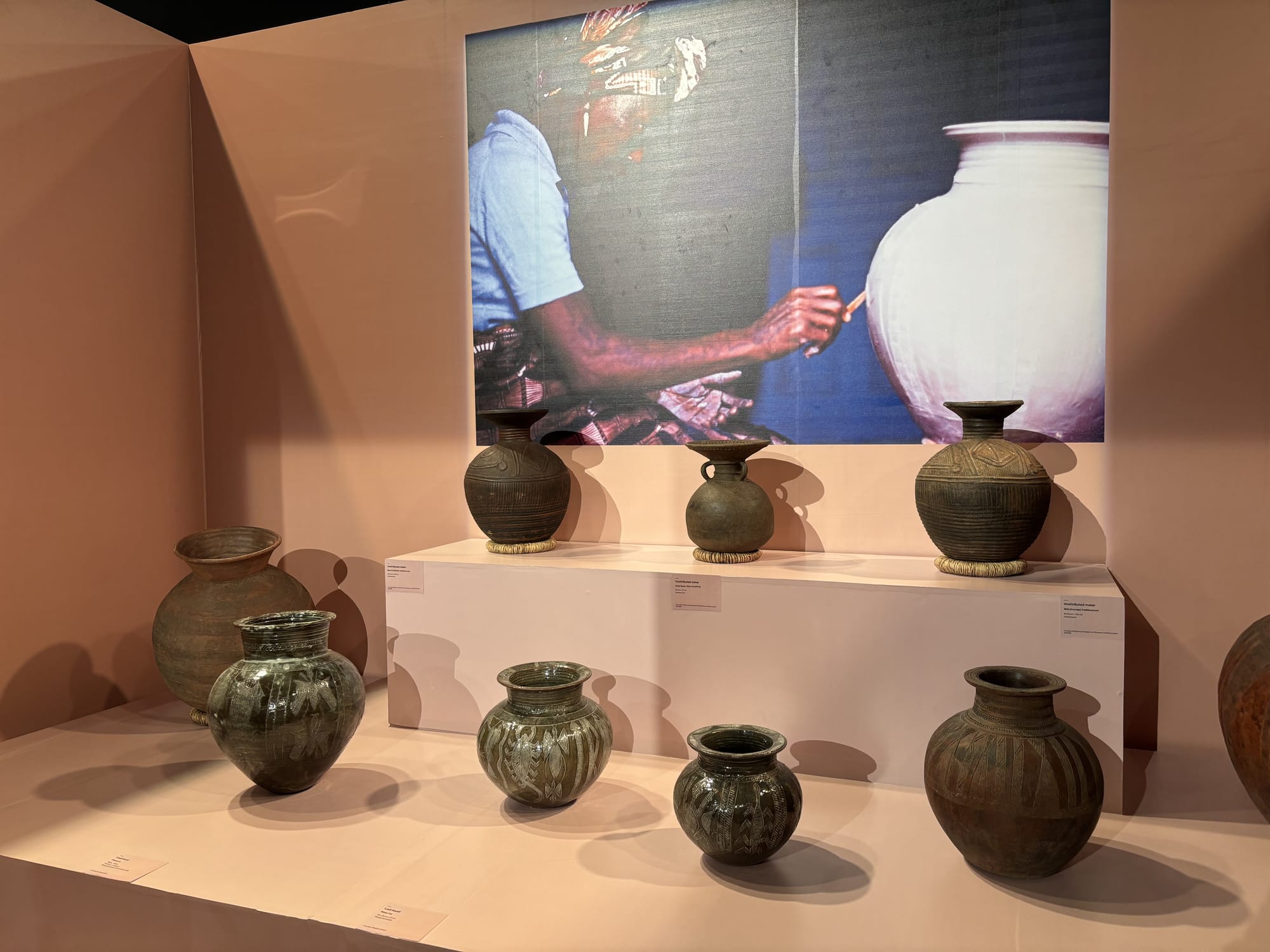
The history lessons in this one exhibition are things to sit with for months.
Beyond the Vessel was this year's ART X ICON exhibition, curated by Dr Jareh Das, who has spent years researching Kwali's life and legacy. It brought together ceramics and archival material from the National Museum in Lagos and from private lenders, and it placed Ladi Kwali (1925–1984) alongside the women who worked with and after her, like Asibi Ido and Kande Ushafa, and alongside traditional pottery by Gbari, Nupe and Bida potters.
The story goes like this. Kwali was already an accomplished potter, trained in her family's matrilineal Gbari tradition, when British potter Michael Cardew founded the Pottery Training Centre in Abuja in the 1950s. That's the old Abuja, now called Suleja in Niger State, not the capital we know today. In 1954, Kwali became the first woman to join it. There she learnt wheel-throwing, glazing and kiln firing, while still hand-building in her own style. The centre has since been renamed the Ladi Kwali Pottery Centre, and her face is on the back of the ₦20 note, at the potter's wheel.
The exhibition asked what Kwali inherited, what she changed and what later generations carried on. It also left the harder questions open: what counts as craft and what counts as art, and how gender and access have shaped whose work gets remembered.
Ceramics is one of my favourite art forms. I love the tactility of it: using your hands to make something, the drying, the firing, the painting, the colours and the way everything still holds up so strongly, decades later. Standing in front of these vessels, I kept wondering about the spirals and geometric forms carved into their surfaces. Were they made in a moment of release, just flowing? Or was precision the whole point?
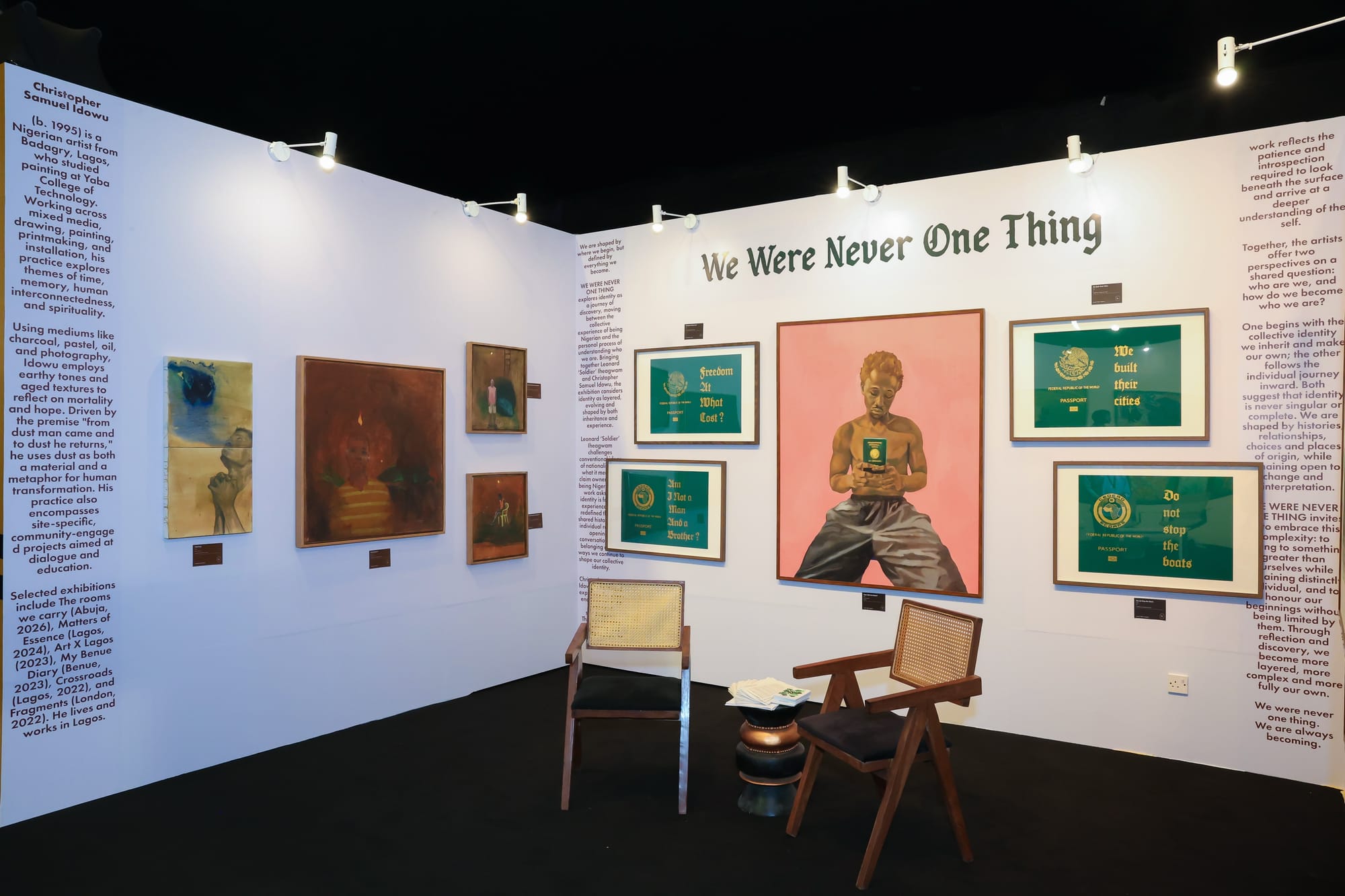
We Were Never One Thing · Windsor Gallery
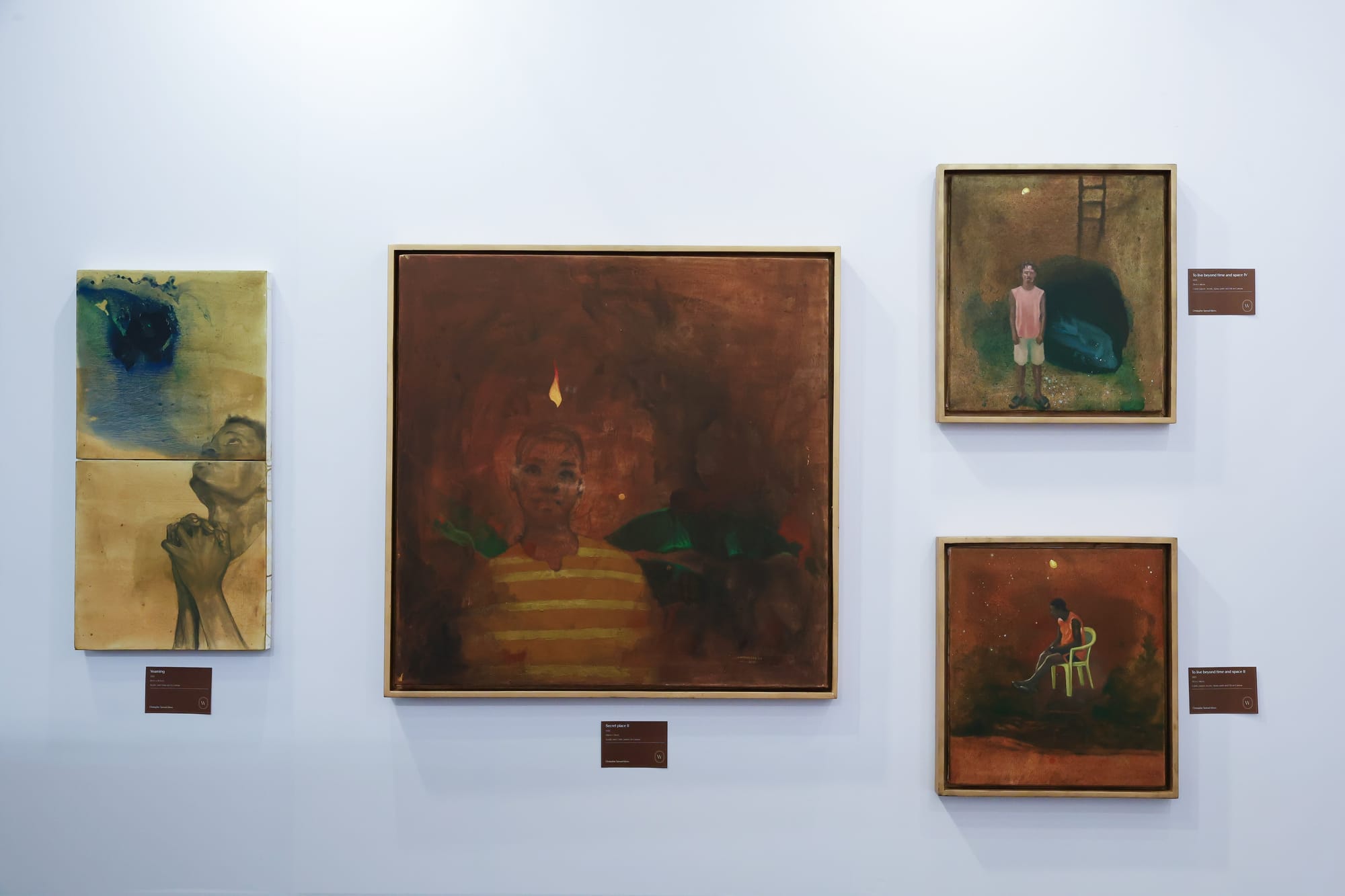
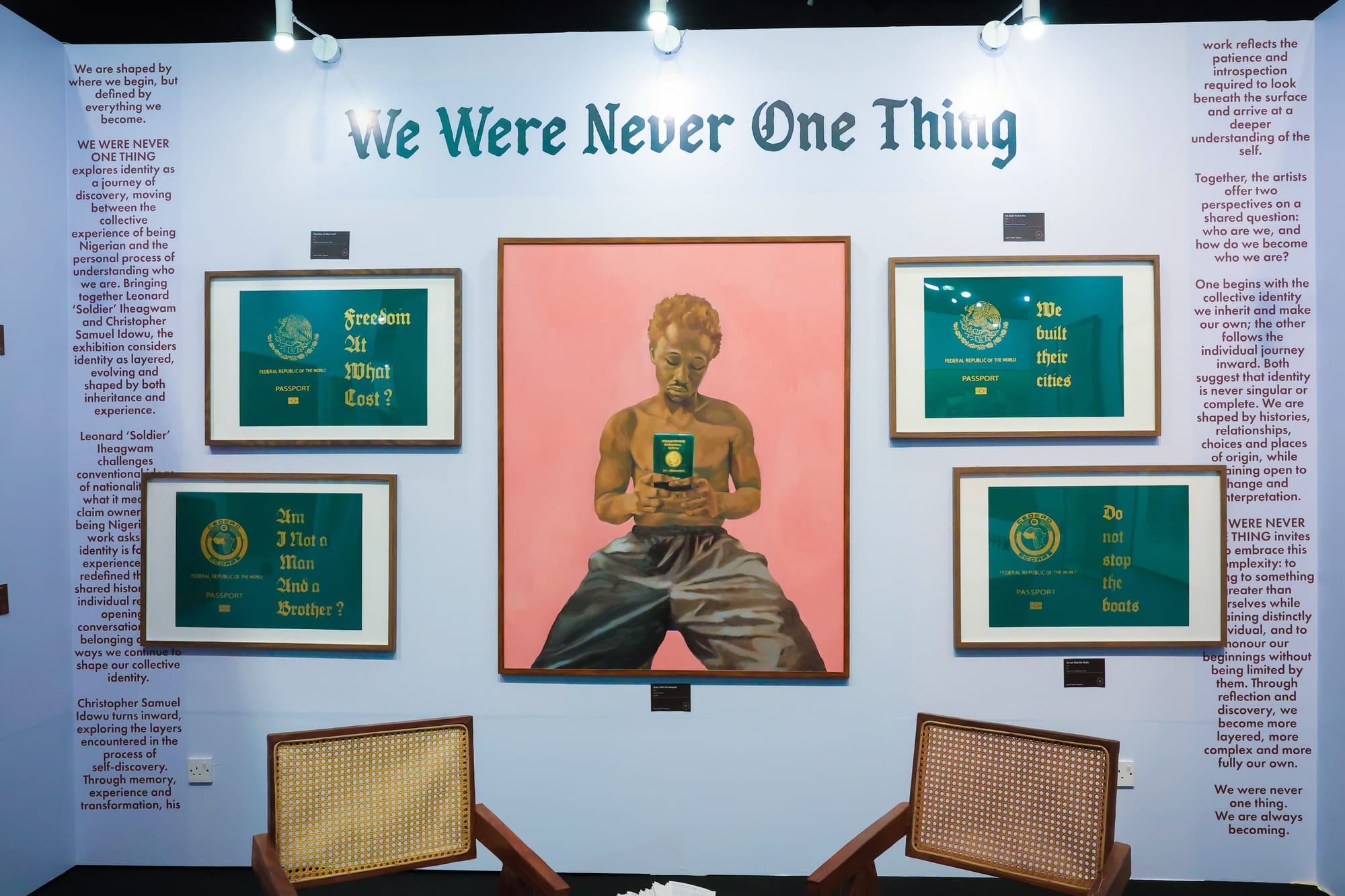
images via windsor.gallery
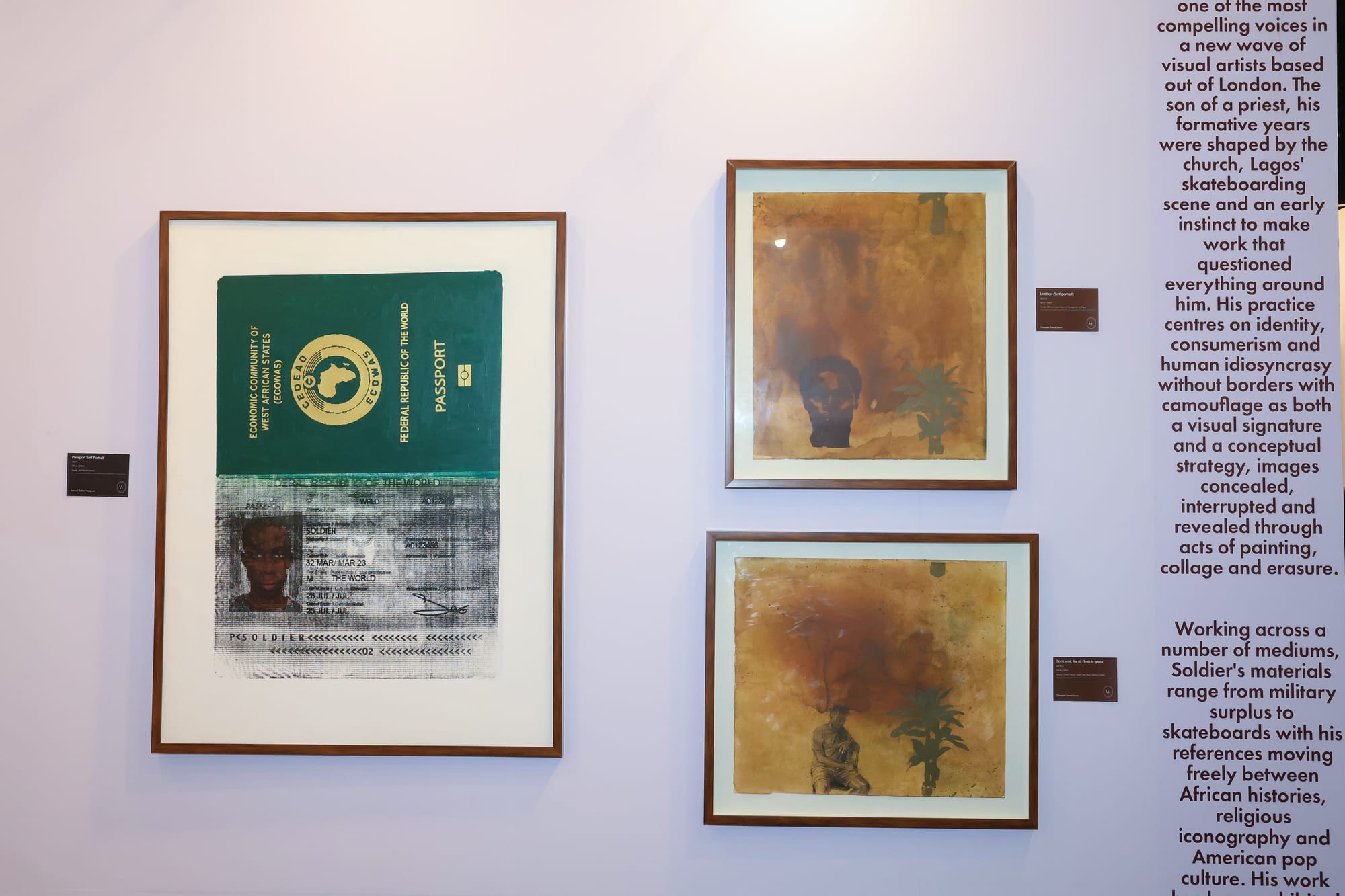
Windsor Gallery was one of three galleries in this year's Spotlight Section for emerging galleries, and its presentation was one of the most thoughtful at the fair. The gallery was founded in 2022 and now has spaces in Abidjan, Abuja and Lagos, built on the idea of bringing artists from across the continent into one shared context. We Were Never One Thing felt like that idea on a wall.
What I loved most was how it was installed. The commentary was lovely, and the questions weren't rhetorical. They were directed at you, the person standing there. You had to stop, think and question your own identity: what you are and what you've been told you are.
Speakers' Corner: Moving Parts · Yinka Bernie
video via artxlagos
This one was special because it's something that has crossed my mind more times than I can count.
Speakers' Corner this year became Moving Parts, a sound and image installation by artist and producer Yinka Bernie, co-curated by Papa Omotayo and Fikayo Adebajo. It's modelled on Lagos's pedestrian bridges, where strangers briefly share a path. Yinka has talked about being fascinated by those bridges: in a city where everyone is rushing to be somewhere, they quietly hold moments of pause. The project grew out of field recordings he made on Lagos bridges, which he turned into an immersive environment of sound and image.
I think about this all the time. The briefness of seeing someone for just a few seconds on a pedestrian bridge. The noise and the crossroads. You'll never see that person again, but for a moment, you were moving to the same rhythm. Moving Parts made that feeling into a room.
The Kids' Corner
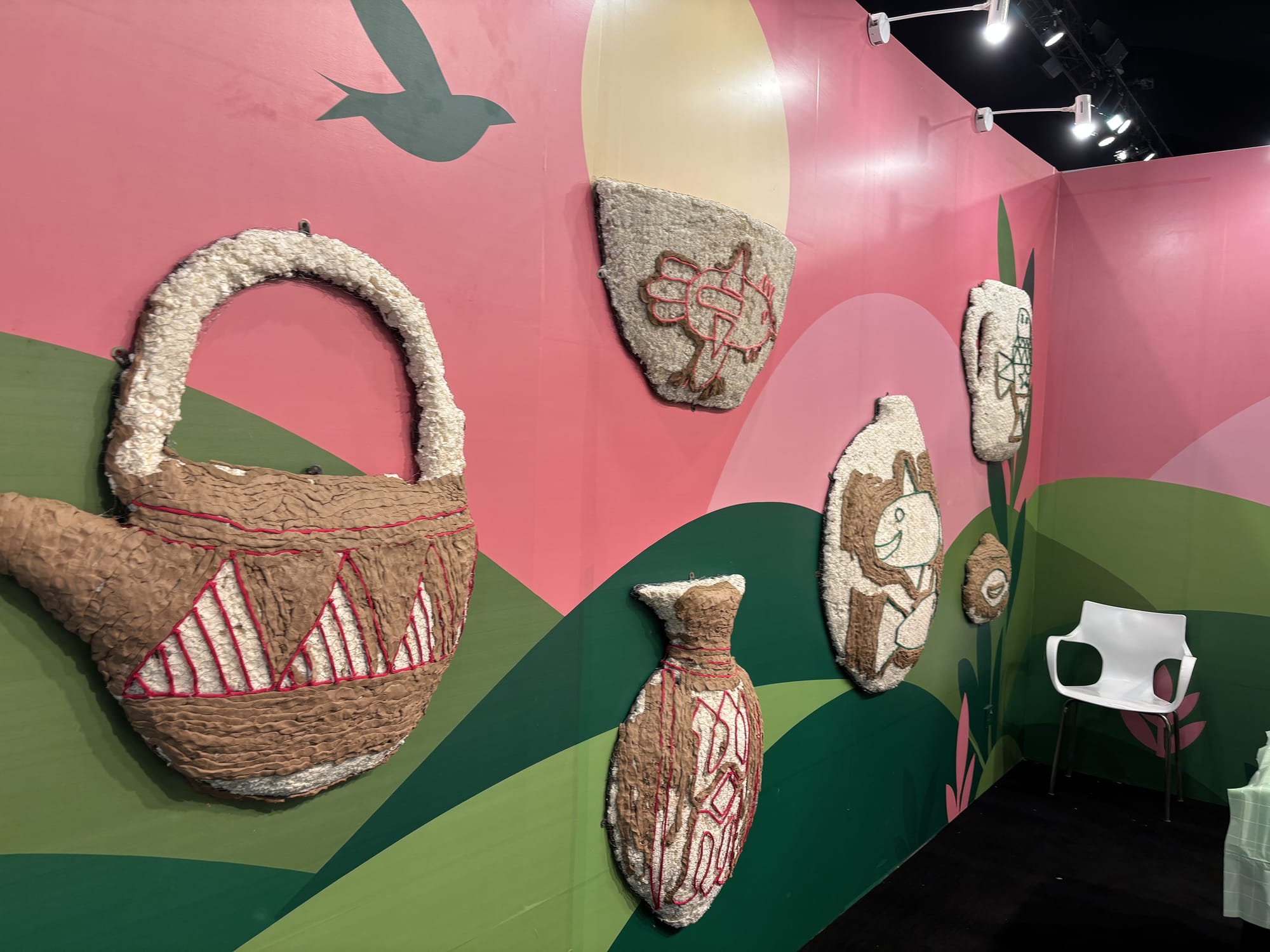
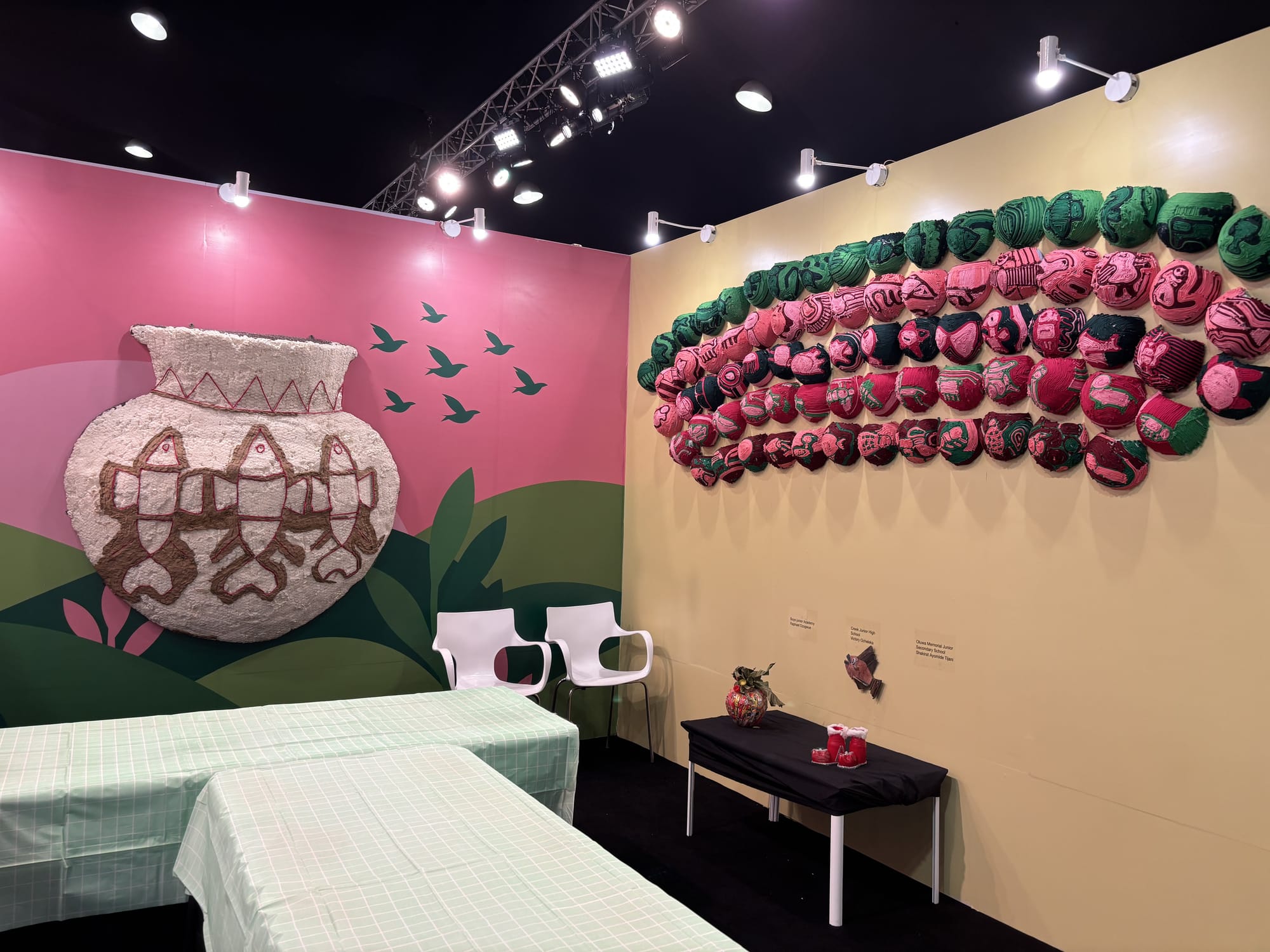
The first thing I actually paid attention to when I walked in was the Kids' Corner.
This year's Schools' Programme was conceived with artist and educator Tolulope Ami-Williams, in partnership with Teach For Nigeria, and it took Ladi Kwali's everyday vessels as its starting point. Kids at ART X Lagos added guided tours and a participatory installation where children and visitors shaped clay into one shared, growing work.
I saw students' artworks in small and large scales, made with styrofoam, wire mesh and clay. They had been progressing every day of the fair and finished by the time it closed. There's something lovely about an installation that's unfinished on purpose, especially next to an exhibition about a woman whose legacy was carried on by the people she taught. Somewhere in that corner is a future Ladi Kwali. I'm sure of it.



Member discussion