


Khadija Dikko is a textile designer whose practice sits at the intersection of memory, identity, and cultural heritage. Born in Nigeria and raised across Kano, Abuja, Kaduna, and Lagos, before moving through various parts of England, Khadija grew up in motion, always arriving somewhere new, always figuring out what home could mean in a place she might not stay. That question became the animating force behind her work.
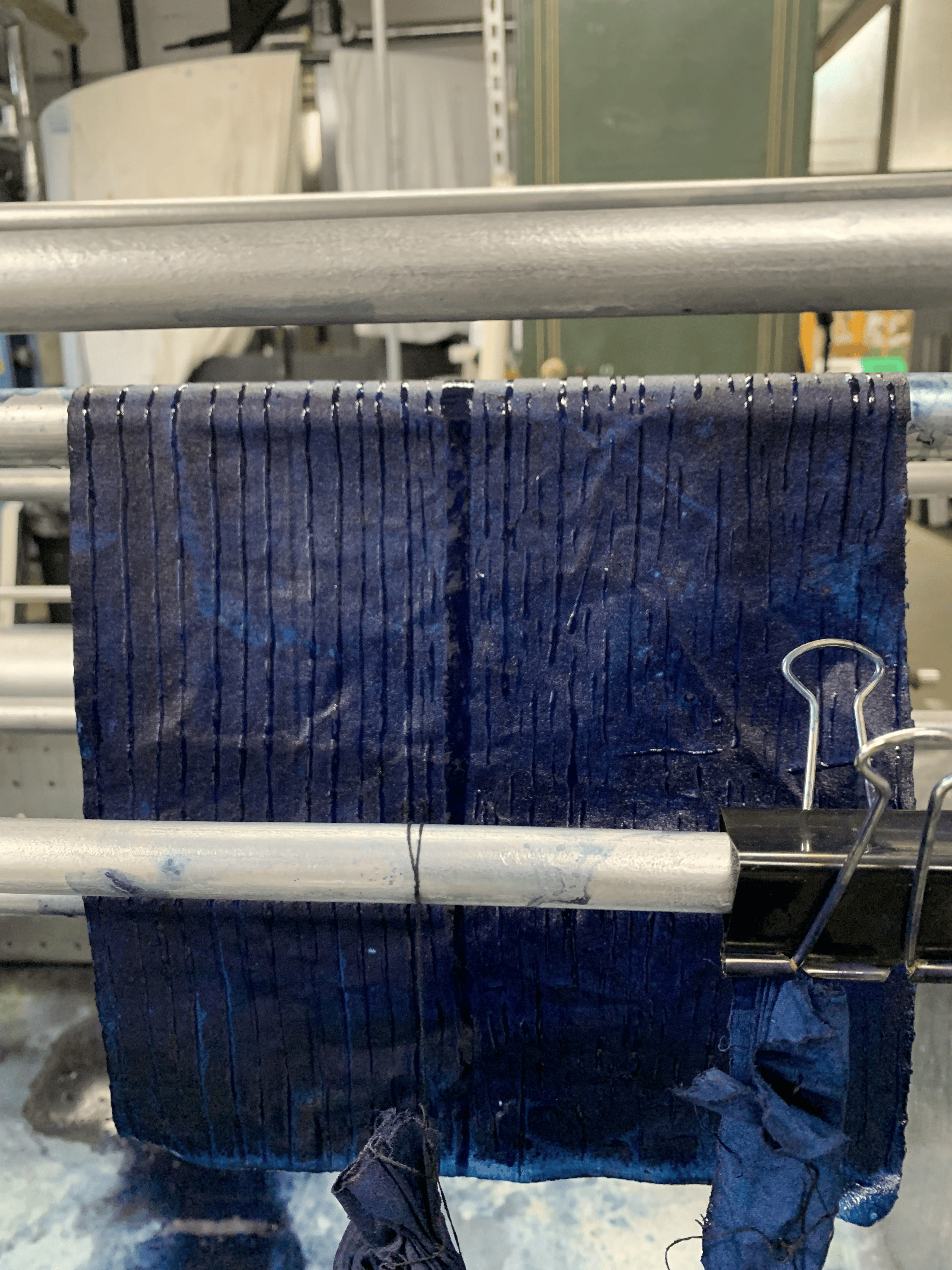
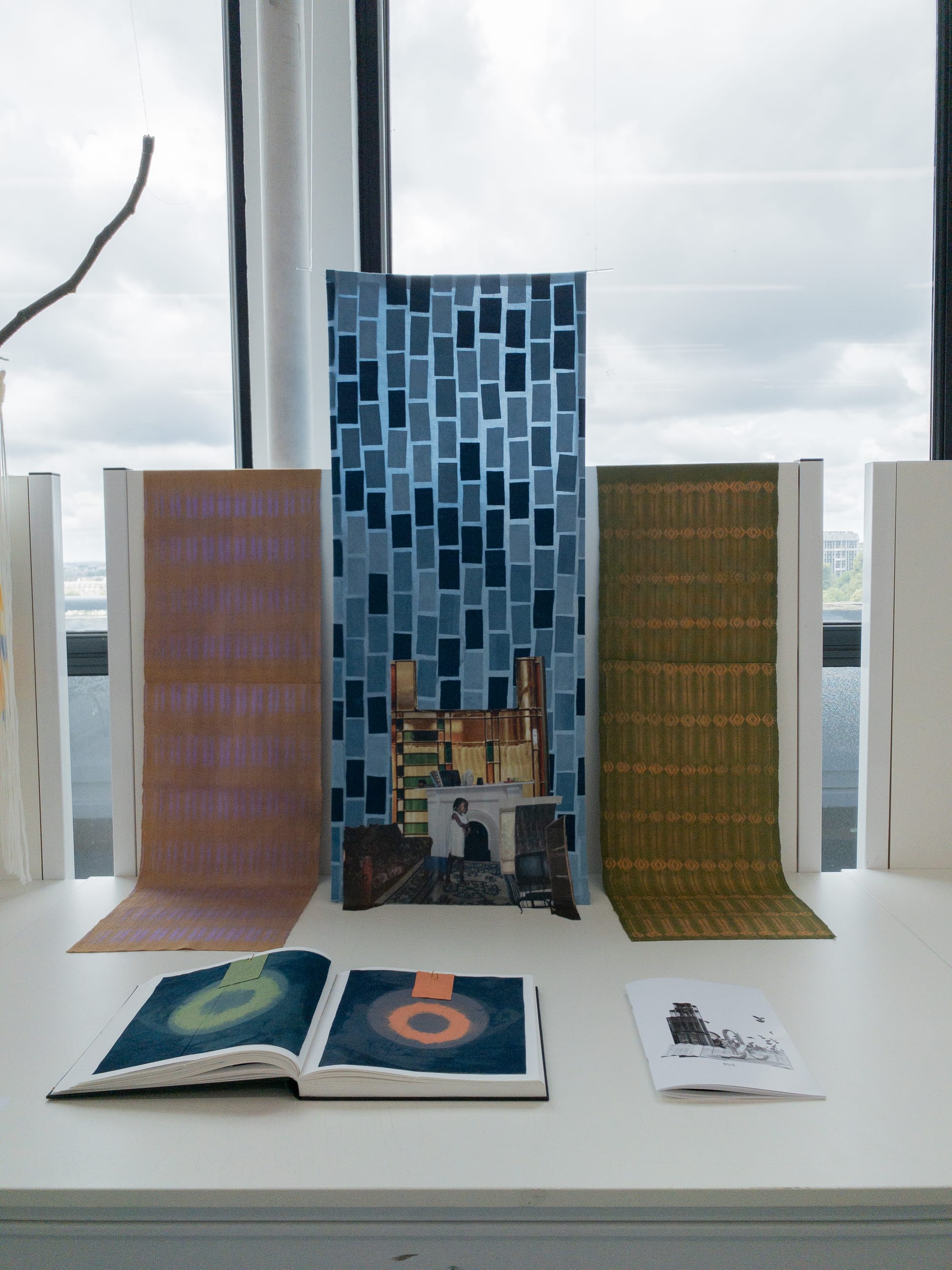
She completed her BA in Woven Textiles at Falmouth University and her MA at the Royal College of Art, where her practice deepened into something more personal. Her MA project, Tsuntsuwa Che — She is a Bird, brought together indigo dyeing, woven shibori, film photography, and photo collage to build a kind of portable home: a wall hanging assembled from the many places she has lived, designed to travel with her.
Currently based in Lagos, Khadija works as a textile designer/consultant working with brands such as This Is Us and continues to build a personal practice rooted in Hausa textile traditions and collaboration with Nigerian artisans. We sat down with her to talk about growing up in motion, the way textiles hold memory, and what she is reaching for next.
You moved between Kano, Abuja, Kaduna, Lagos, and different parts of England growing up. What was that experience of constant relocation like for you, and how did your sense of home evolve through it all?
I moved around a lot as a child, mostly for education, so I was in many different places for really short periods of time. The longest I stayed anywhere was about five years, doing my whole secondary school in Lagos. During that time, I was trying to figure out what home meant to me. Home didn't feel stable, primarily because I didn't have just one space. But looking back, I definitely had different pieces of home that I didn't even realise meant home to me.
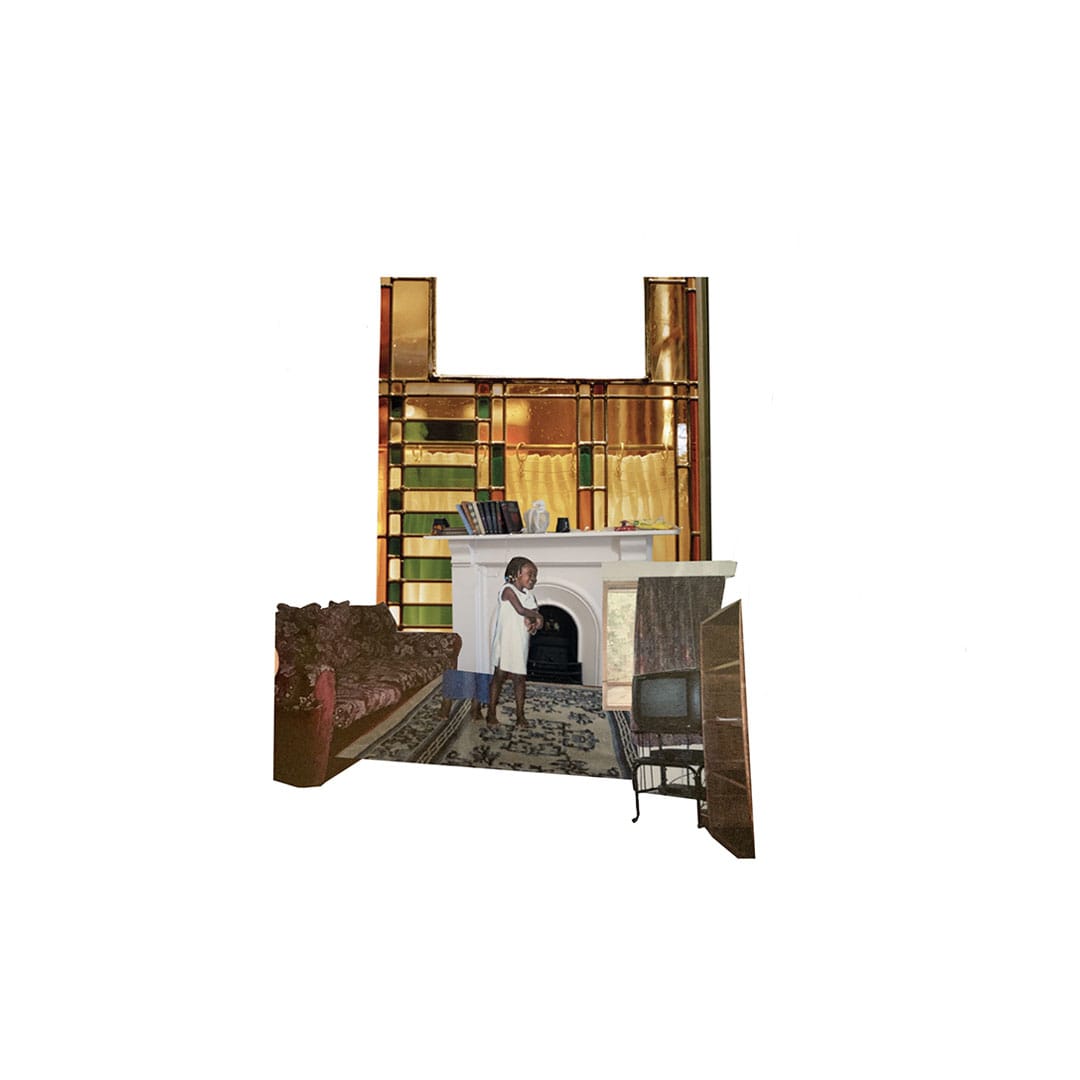
When I started my MA project, I wanted to investigate that more. I ended up putting pieces from the different places I had lived together in photo collages, trying to make sense of them in my head, really investigating that through making. I also pushed myself to photograph London as a way of engaging with the city as a local. At that point, I had reached a place where I thought: I know I'm not going to be here forever, so I might as well not get too attached. But then I realised, the beauty in things being temporary is that you can fully attach yourself to them. And when they're not there anymore, you have those memories to look back on and say, yes, that felt like home. Even if it was just for a week or a month.
That’s a reflective way to think about it. I know Bollywood films, Avatar, and Diary of a Wimpy Kid were some of your early inspirations. Now, your practice spans weaving, illustration, portrait painting, and film photography. How do all of these worlds feed you creatively?
Even before textiles became a defined thing, I was already trying to figure out the different ways to express myself. As a child, I would watch films and feel really inspired, but not know how to move forward with that inspiration. The difference now is that I can watch films, read books, do different things, and have it directly impact my work, through colour, texture, or even fabric.
Films are a really interesting source of inspiration for textiles because everybody in a film is wearing clothes. It's always fascinating to analyse that: look at the way this character is being dressed differently from the people around them. Textiles are a subtle way of indicating someone's character, their interests, their identity. You really can't look at textiles without connecting them to identity.
Textiles can be a wonderful way of understanding other people's cultures and traditions. When you were working with indigo dyeing or mixing techniques from different cultures, how did you approach that work with care?
It's definitely been a more considered process over the past two years. I learned everything I know about textiles in school in the UK. So there was a gap between what I was being taught and what I was trying to navigate my textiles towards, a gap that wasn't obvious to me at the time. But now that I've been back, really immersed in Nigerian culture, speaking to people and seeing how Nigerians interact with cloth every day, I can see the difference much more clearly.
There's a level of sensitivity that I now realise is quite important, and that I don't think I had at university. When I was doing the only project where I expanded into a culture that wasn't mine, I reached out to friends with knowledge of that culture and asked: Is this going to be insensitive? You really have to do your research and ask people, because it's easy to miss the nuances. Since being back, most of my work has focused on Hausa textiles, because there's quite a lot I have to say from within that culture. But I'd love to see more Nigerians engage thoughtfully with textiles from other tribes too, especially now that they're reaching a global stage. We just have to ask the deep questions and be sensitive about it.
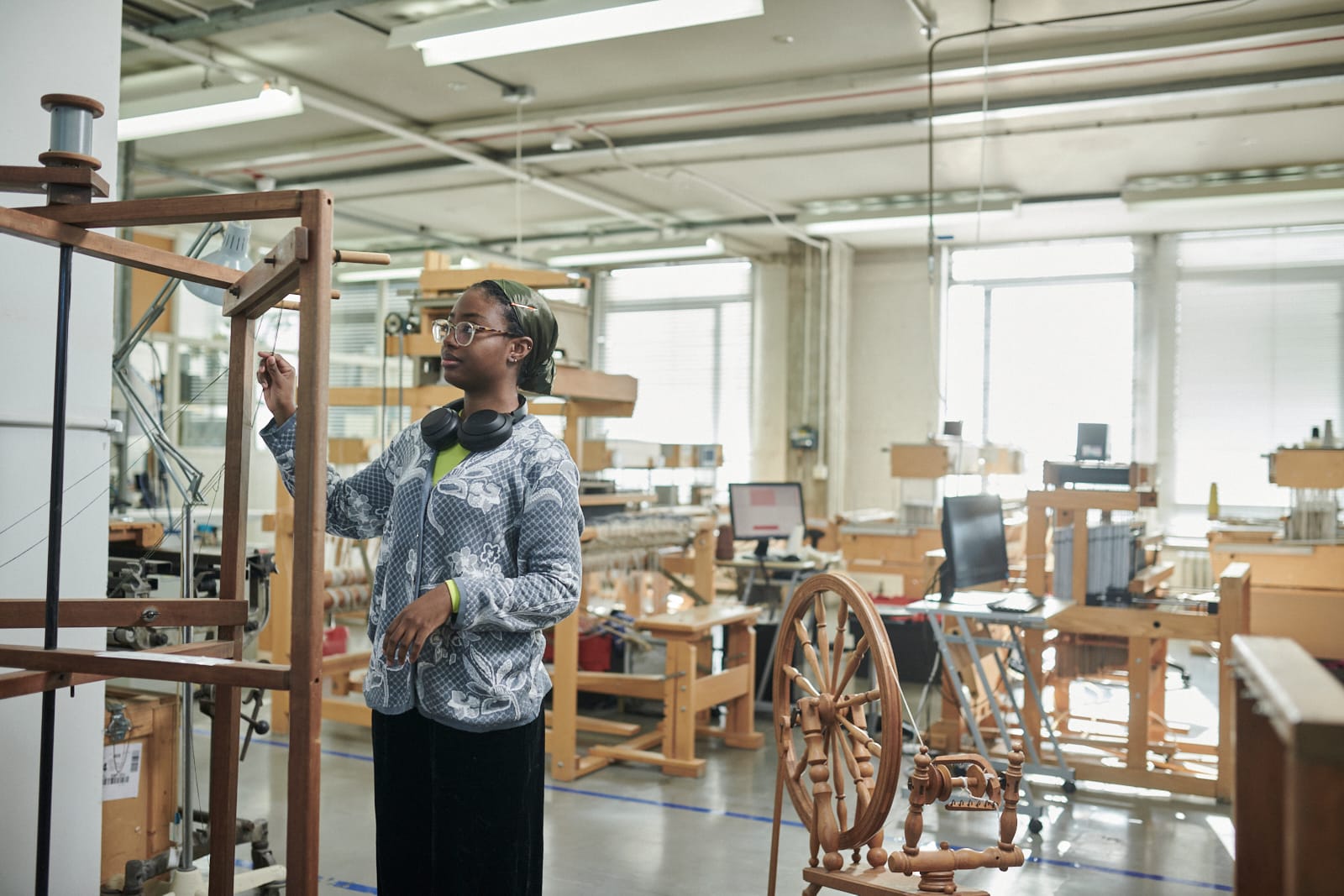
Your MA project, Tsuntsuwa Che — She is a Bird, used indigo dyeing, woven shibori, and film photography to explore the concept of home. Did that project bring you closer to a sense of belonging, or did it complicate things further?
It actually brought me closer. I feel like I moved at quite pivotal points in my life, finishing primary school in Kaduna, secondary school in Lagos, A levels in the UK, then university, then my master's. Those are big transitions. Sometimes, moving from one place to another, I would feel like I had to leave my old self behind and build a new person who fit the new environment. It felt very fragmented. So with this project, I decided to use it to heal a bit. At the core of it, that's actually what my art is about; I use it to really understand what I'm feeling and to find some kind of healing within it.
I keep saying that the project is just the beginning, because I'll probably move a lot more in life. But even just moving houses does something to you; everything is new. It's important to have things documented. And beyond the personal, it's important for Nigerian textiles to be documented too. You need to know who you are and where you're from.
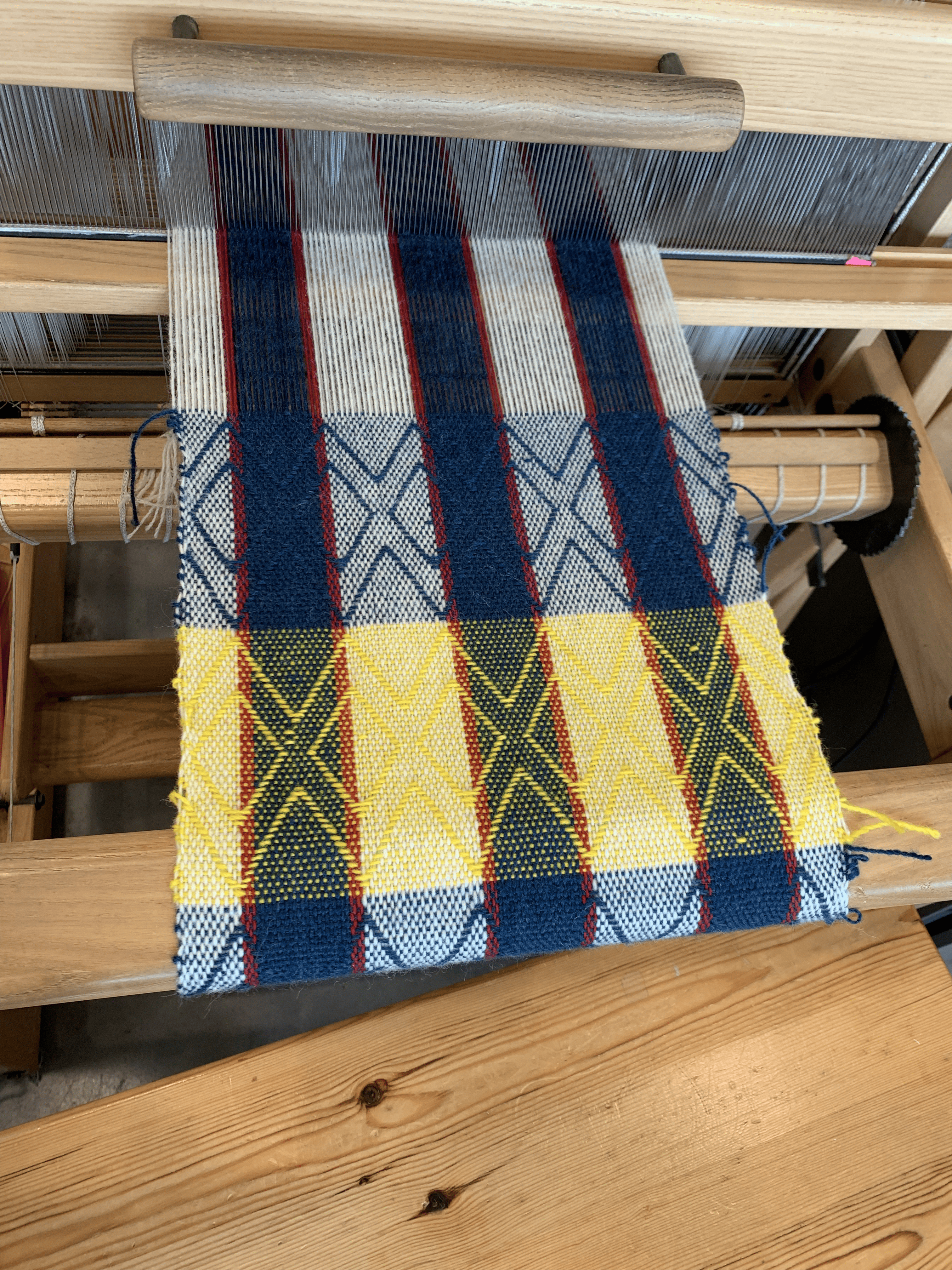
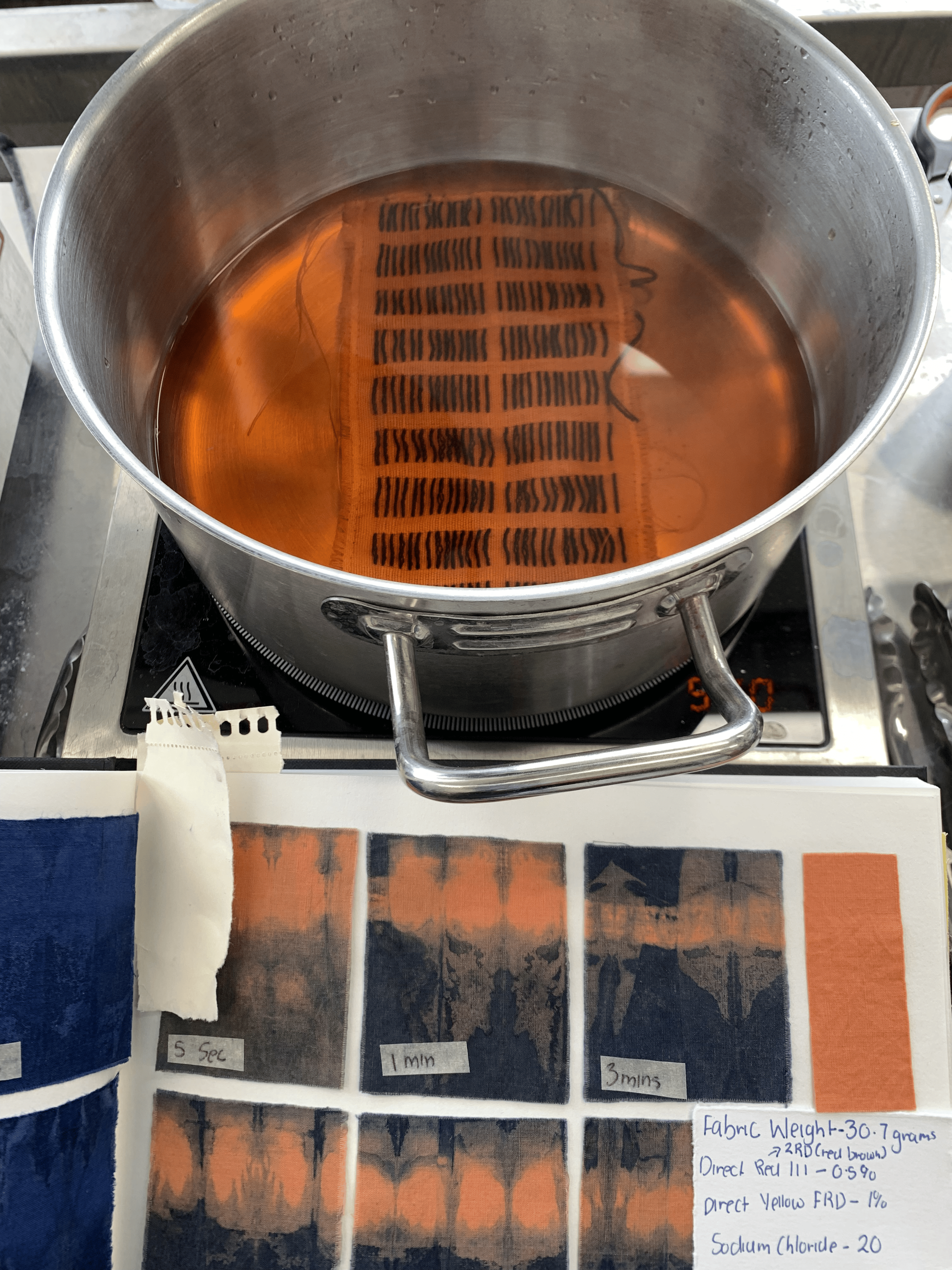
I introduced woven shibori — a Japanese technique — into my practice partly because indigo is also used heavily in that process. Indigo dyeing is practised around the world, including in Nigeria, so it became a way of linking cultures together rather than replicating one. I didn't want my weavings to be replications of the photographs I took. I wanted to use the weaving to explore how indigo interacts with other colours, and to reflect what I was feeling at different moments in my life.
Wairimũ Nduba Is Building A Living Archive of African Sound
Film photography is a deeply personal medium for you, connected to your father, to memory, to documenting the places you've lived. How has it allowed you to express things that weaving cannot?
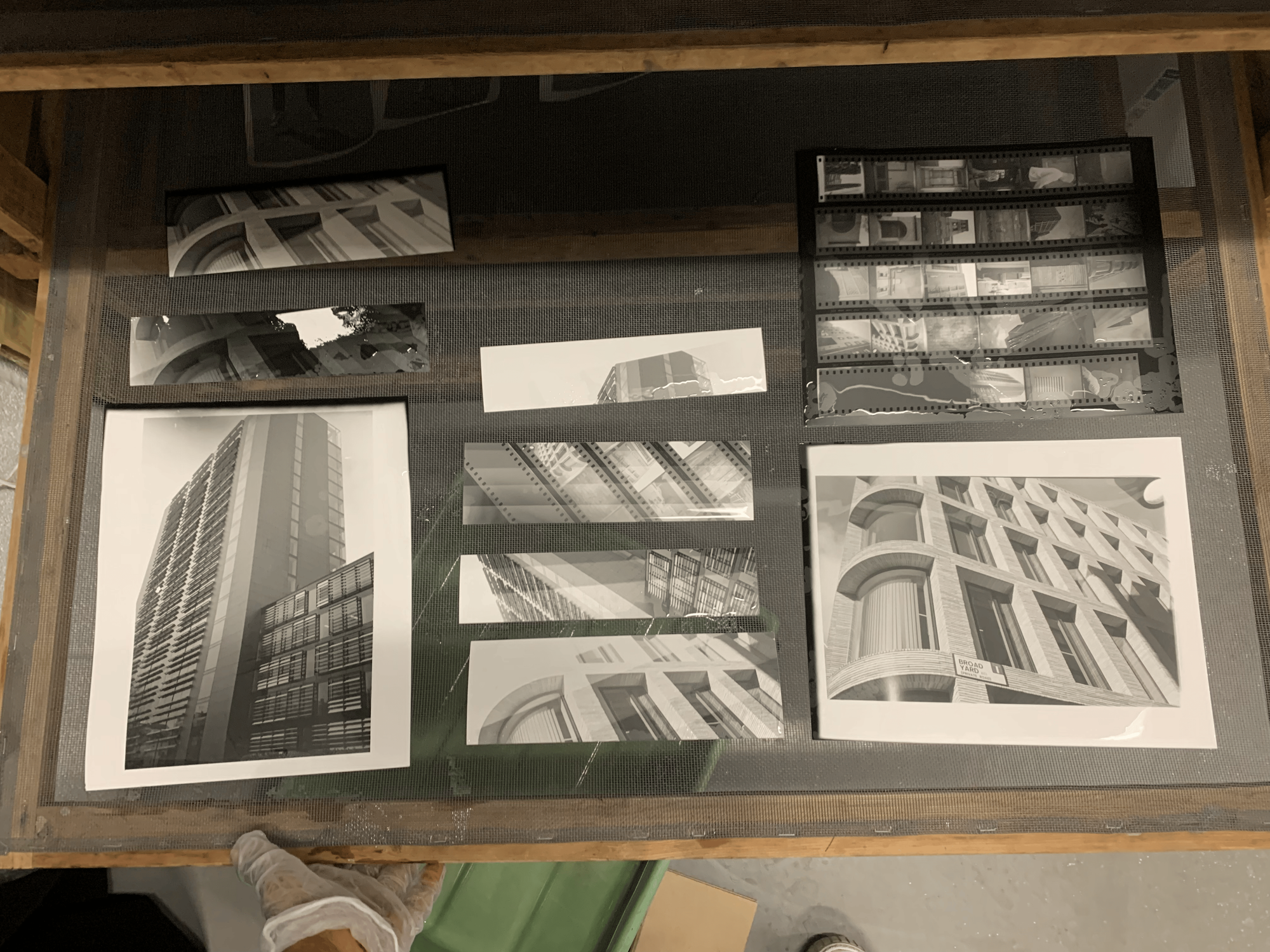
Film photography pushed me to discover London outside of just being there for school. I joined a film photography group and was literally the youngest person there. The process is very slow and heavy on patience, and when I get obsessed with something, I want to learn how to make it from scratch. I took film photography classes at a different RCA campus, where I learned how to develop and print both colour and black-and-white film. So I continued to develop that skill. That's just the weaver in me.
But also, looking at photographs has always been a big part of my life because I didn't get to meet my dad. He passed away before I was born. I grew up looking at physical pictures of him. Film photography became a way for me to connect both things together.
You've described weaving as a numbers game — which is a bit ironic, given that you were trying to avoid physics when you chose this path. How do you hold the balance between technical precision and emotional storytelling?
I always start with the story, the layered, emotional part, and then figure out how to do it technically. The maths is ironic because I genuinely still have nightmares about it. But I think the reason it works in weaving is that it makes maths visual. It becomes creative, and that makes it fun.
What I usually do is start with an idea — let's say a piece about circles and the cycle of life. I'll come up with my colours and motifs, then translate that onto graph paper. Because weaving is essentially the interlocking of threads, to make a circle in the cloth, I have to raise threads and calculate how the horizontal thread passes over and under them. Sometimes you just have to play around with it. I don't think I push myself enough technically yet, but I believe that will come as my practice evolves.
What kept you going through the phases of self-doubt?
Honestly, just knowing it was the only thing I was good at. In secondary school, I didn't do great across the board. I liked English literature, and I was decent at it, but not amazing. The one thing that really pushed me was just feeling like textiles was where I belonged.
Which is funny, because even in GCSE I technically failed — I got a C in art and thought I was going to get an A. Same with A levels. I tried to tell them, no, my work is so much better than this. They remarked it and still gave me the same grade. I was like, you guys are not seeing the vision. But even though institutionally I wasn't getting the grades to confirm it, I still believed I was good at it. And it was one of the things that made my mind go quiet when I was doing it. I just thought: this is me and you, we're here forever.
How would you describe how the textile industry or landscape in Nigeria and Africa more broadly has evolved, and where do you see it going, especially as more people begin to approach it with more intention?
More people are using traditional textiles for their brands, which means more money for artisans and a bigger stage for the work. I'm not sure the craft itself has evolved much, and I don't think that's a bad thing. Nigerian textile artisans are already insanely good at what they do.
But the industry needs to evolve in terms of systems. Artisans need better systems to make their workflow easier and faster, not to mass-produce, but so they're not getting burnt out. The fashion industry is built on the textiles industry. That industry can't stand strong on its four legs if the foundation is shaky. Things are changing on a smaller scale; brands are forming real, ongoing relationships with artisans, which brings some stability. But the systems we deeply need also have to be institutionalised. That's where government and funding come in.
You spent a long time working mostly alone in your practice, from undergrad through your MA. Now you work with artisans, collaborators, and a broader community. How do you navigate making your work personal while building with others?
My textile design skills are quite broad — weaving, print, mixed media. Our tutors always reminded us: don't be so obsessed with your specialism. Your degree will say textile designer, not woven textile designer. Broaden out.
When it comes to working with artisans, I don't go to them with a design and say, replicate this exactly. It's usually an exchange. Sometimes I'll suggest a technique, and they'll tell me it won't work, then try it anyway, and it does. Or they'll suggest something I'm sceptical about, I try it, and it works. I'm a maker just like they are. I go to them as a genuine peer-to-peer session.
What does collaboration look like for you in Lagos now, compared to when you were in school?
In school, I didn't really collaborate; I felt like I didn't have the time. But in undergrad at Falmouth, I loved that the studios were open plan. You could see the fashion designers from your desk; fashion marketing students had lectures in the same building. That wasn't formal collaboration, but it was collaborative in the way that you got inspired by people's work and the conversations you had with them.
Since being back in Lagos, it's been quite open. We're a small community, and everybody tries to help each other. You also recognise, in Nigeria, that community is already ingrained in how we live. You can't truly be by yourself. Even if you tried, somebody's auntie would come along and say, I have a business, come and do this for me. It's a double-edged sword sometimes, you need to know somebody who knows somebody to access certain things, but the spirit of it, the genuine desire to help each other, is really special.
What questions are you asking yourself now? What are you looking forward to in your practice and in the industry?
I'm just open to having time to experiment. I'm also trying to take things slowly and not take my art too seriously; art is about play. You discover things when you're playing, and it can become serious later. You don't have to have heavy expectations before you've even drawn anything.
But genuinely, I'm looking forward to being impactful, whether through workshops, working with brands, or helping build better systems. Since being back, I've just been absorbing everything and letting my practice be shaped by it. I already have the core. You go to school, you learn, and then you come back and do something that furthers your community and the people around you. That's what I want to be doing from here. In the meantime, I've been crocheting bags, making bottle holders, and small things that bring joy. You have to live life to do art. If you're not experiencing things, you don't have anything to say.
Thank you, Khadija. It’s been so fun talking to you.



Member discussion