


Zikora Enweani is not a chef. She’ll tell you that herself. What she is, is a builder, someone who looks at a problem, strips it down to its components, and engineers a solution. It’s the same instinct that carried her from secondary school technical drawing classes through an electrical and electronics engineering degree and into a finance career in London. And it’s the same instinct that led her, somewhere between a craving and a calculation, to co-found Kwikish.
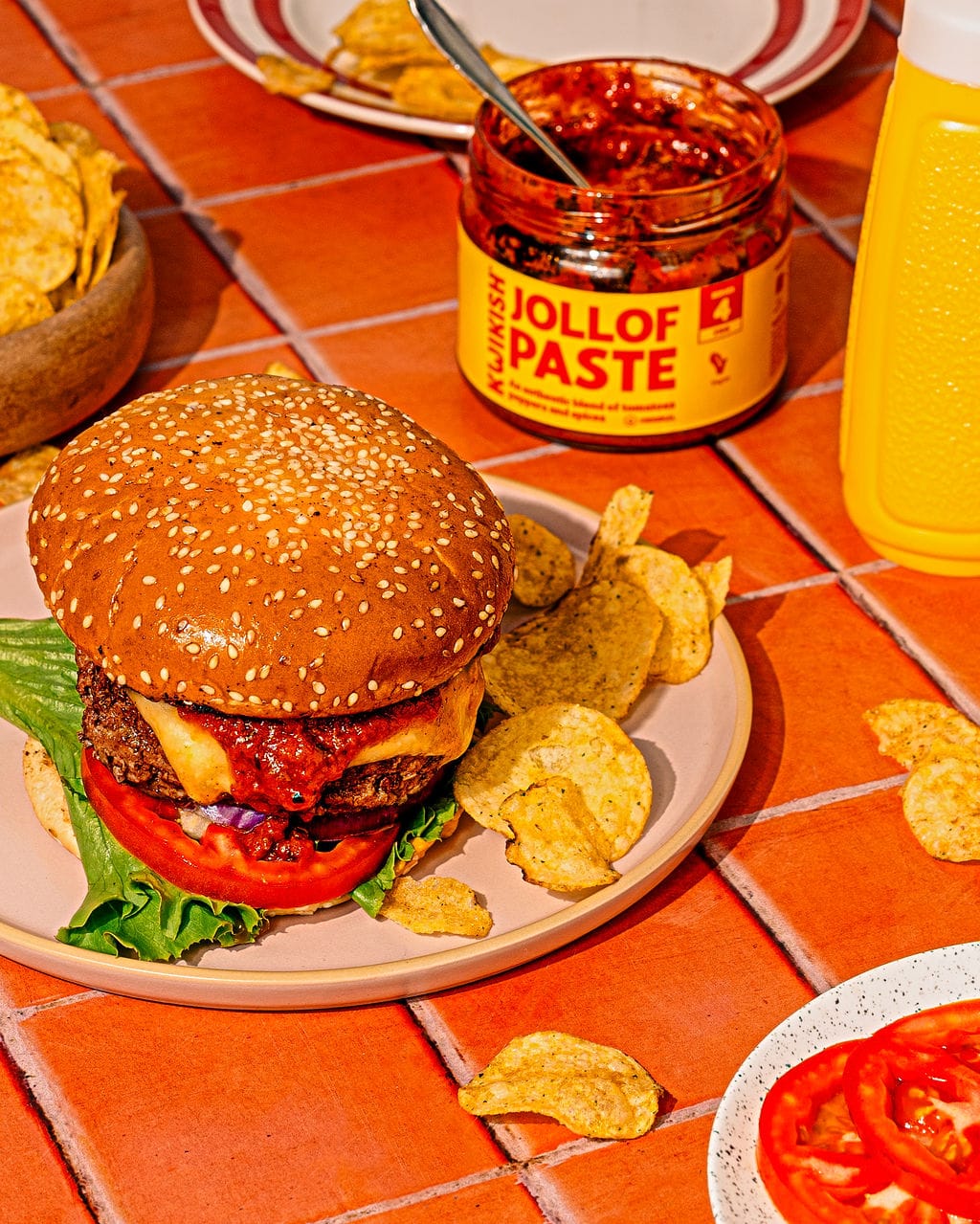
Kwikish is a London-based African pantry brand built on a simple but pointed premise: that the richness of West African cooking — the jollof flavour — should not require you to sacrifice an entire evening to enjoy it. Their flagship jollof paste has already sparked conversation well beyond the kitchen, most recently through a collaboration with Pzaza Pizza that used the sauce as a pizza base and ignited the kind of debate only jollof can: who does it belong to, and how far should it travel?
In this conversation, we talked about what it means to grow up in male-dominated spaces, why she sees convenience as preservation rather than compromise, and the personal reckoning that comes with building a business that holds a mirror up to who you are.
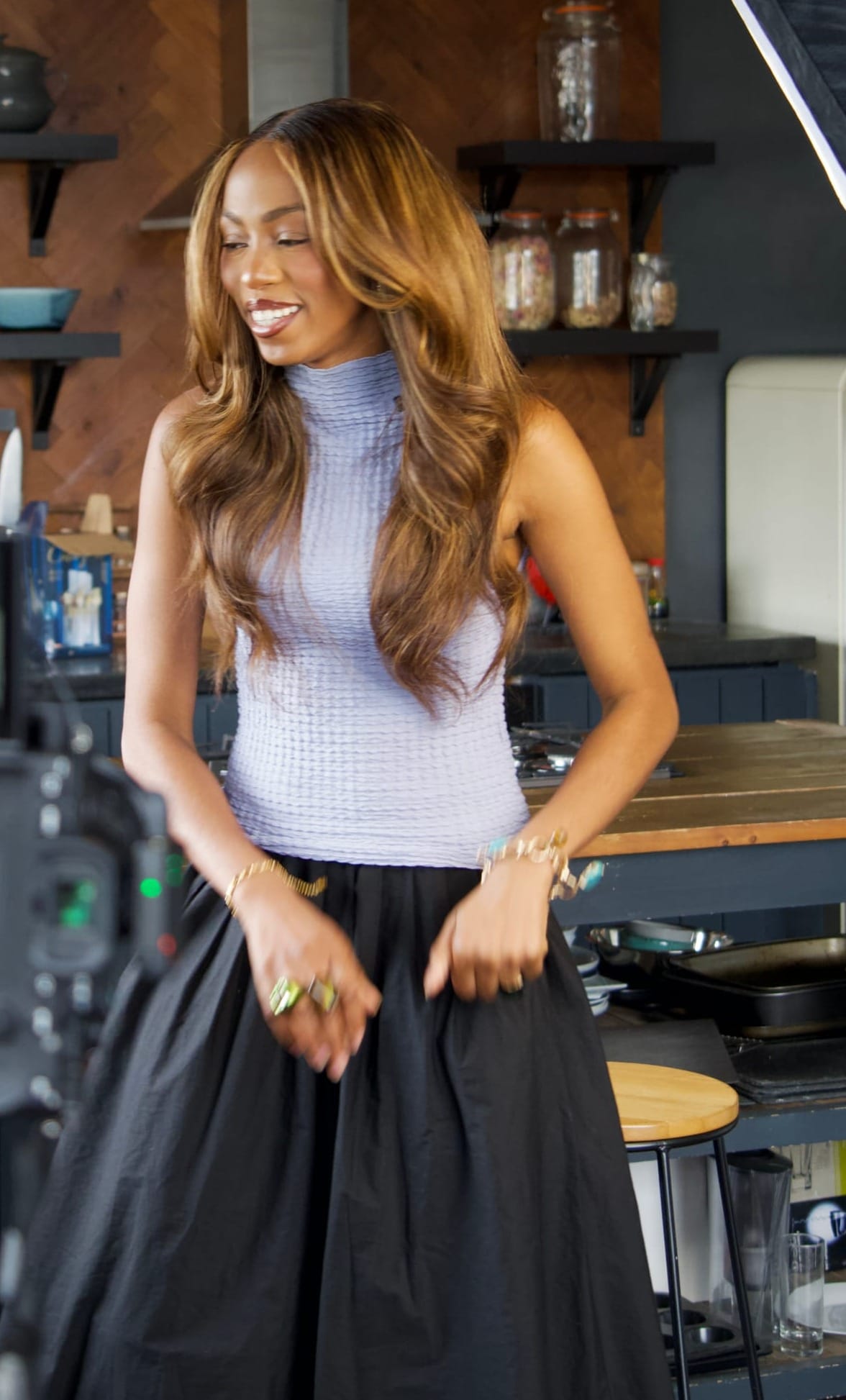
You’ve moved between very different worlds — engineering, finance, food — and between cultures too, growing up Nigerian and building a career in the UK. How has all of that shaped the way you think?
I’ve always been in male-dominated spaces. In secondary school, I was doing technical drawing. Then engineering, then finance, same thing. Being in those environments taught me how to attack problems. Combined with that Nigerian doggedness and then the UK, where people are very calm, very polite, very measured… all of it rolled together has made me quite aggressive in how I move. Fast and calculated. I can break a complex problem down to its minutia. And I think being across different industries means I can make connections that people who’ve only ever been in one lane might miss.
Growing up Igbo as well, my father is as progressive as an Igbo man can be, but there was still that cultural messaging of ‘women, sit down, look pretty, be quiet.’ Being in male-dominated fields pushed against that. And now I think all of it — the engineering brain, the Nigerian drive, the time in finance, the Igbo household — has made me a great thinker and a great executor.
The transition from finance to food wasn’t exactly the obvious next move. What happened?
It wasn’t intentional. I had a thesis, the Black population in the UK is growing, the diaspora is growing, but there’s nothing for us at an elevated level. I’m working a busy finance job, my favourite cuisine is Nigerian food, and the options are either spending on Uber Eats or carving out hours I don’t have to cook from scratch. With Chinese food, I can just pick up a sauce. There are meal kits and options. For West African food? Nothing in the middle.
So I started making the jollof paste myself, using it to cook. And even then, I thought, I don’t actually want to be doing this either. I went looking for a product I actually liked and realised: for a diaspora this large, there is genuinely nothing serving this market at a serious level. A few aunties here and there, but nothing built at scale with intention. Kwikish just kind of happened from there. I wasn’t sitting there thinking ‘I want to build a business.’ I was solving my own problem and slowly realised there was something in it.
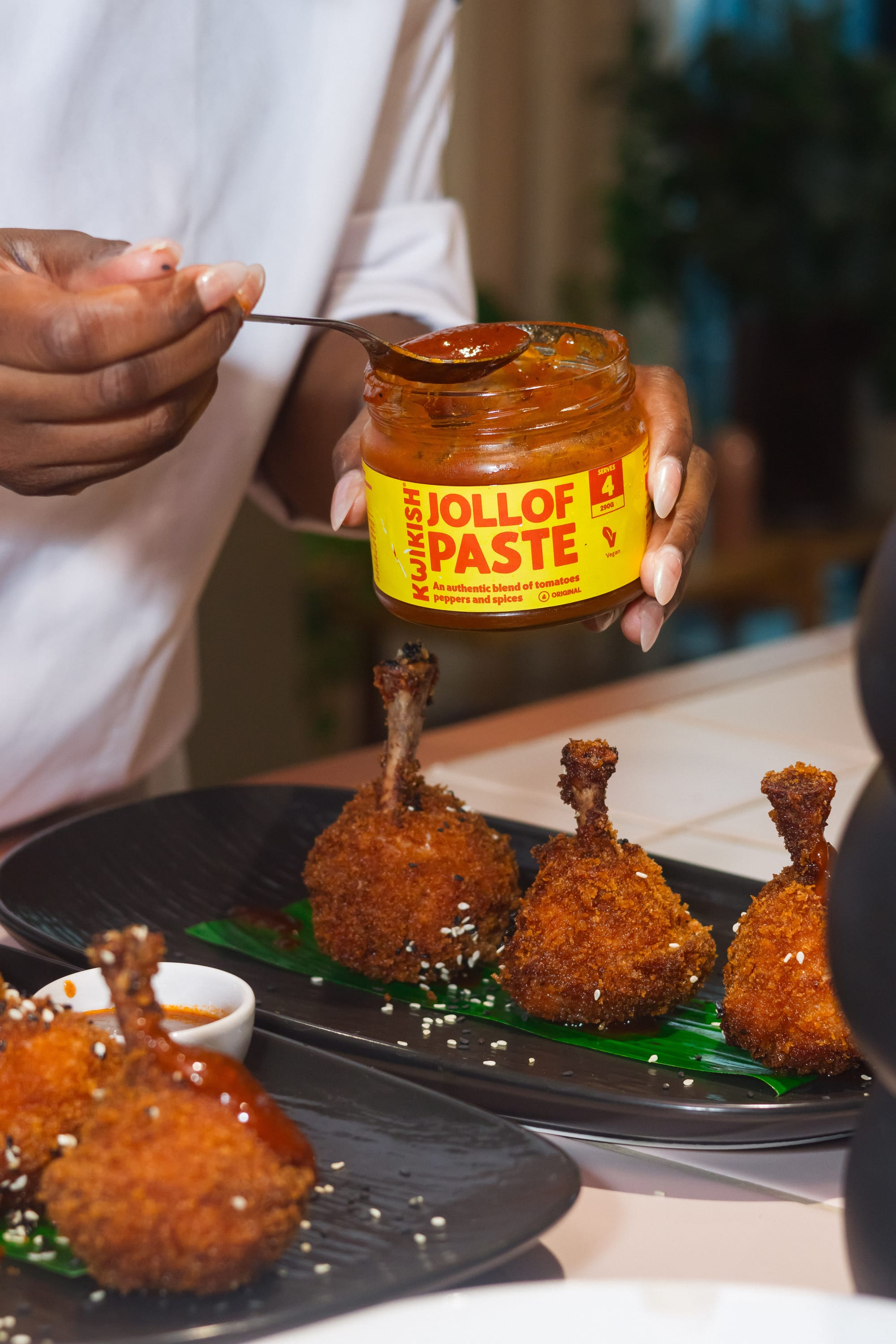
There’s always a debate when it comes to simplifying traditional food, where convenience can become compromise. Where do you draw that line?
I’m the eldest of five. I’ve been my mother’s sous chef since I was small, cutting the onions, peeling the garlic, chopping the peppers. Cooking is not, for me, this joyful meditative thing people describe. I find it laborious. So where do I draw the line? I don’t need to cook for three hours to eat in ten minutes. But I do need it to be good. Clean ingredients, authentic flavour, actually sometimes even better than what I’d make from scratch. That’s the goal. Convenience, not compromise.
And I think about it beyond just me. African women spend significantly more time in the kitchen than women in other demographics, an extra hour or two every day. An hour you could sleep, work on something, or go outside. That time matters.
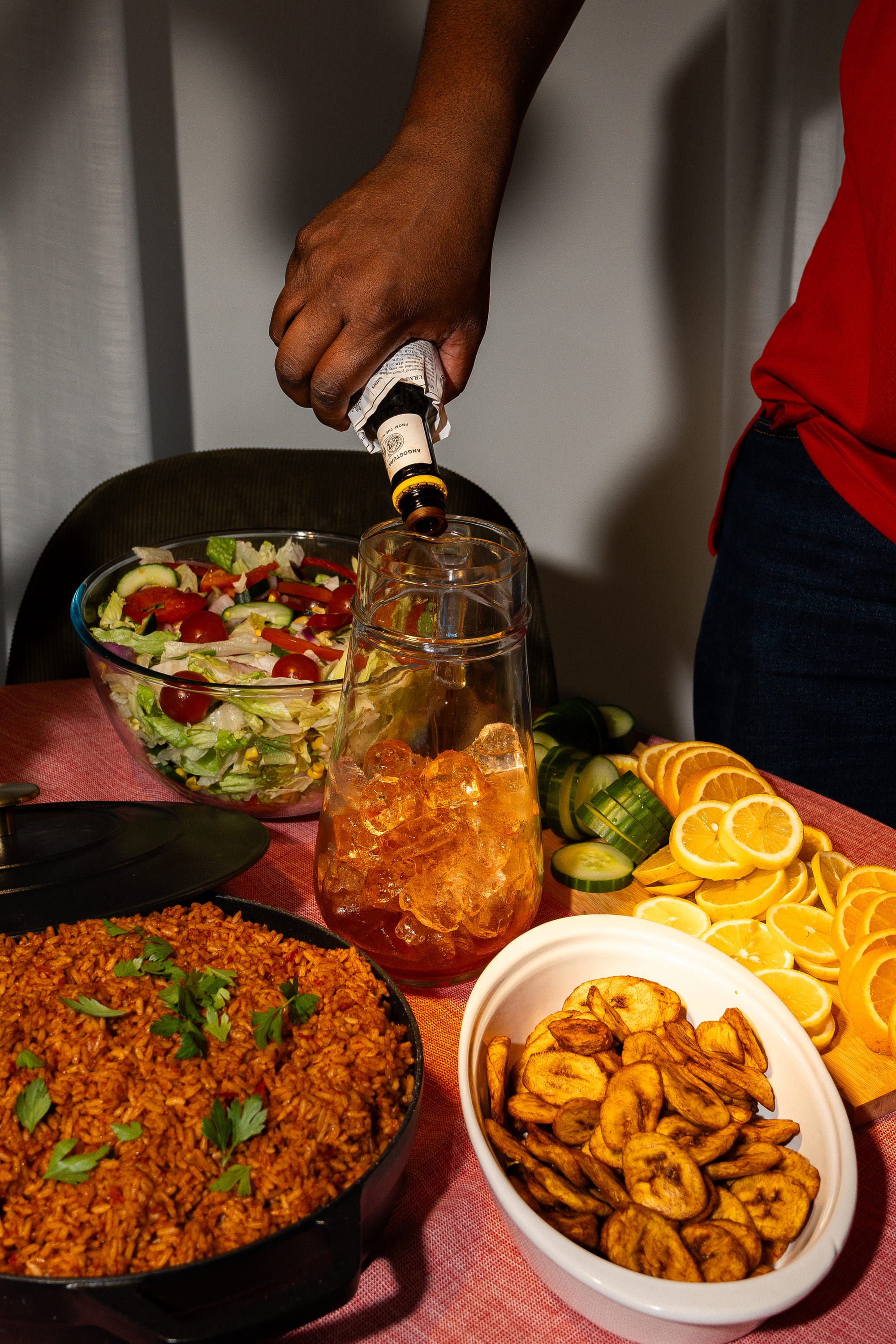
But there’s also a cultural preservation argument that people overlook. I have younger siblings at university who won’t cook jollof from scratch; they wait for Mum to make it and send it over. So jollof becomes a Christmas thing, an Easter thing, something that only exists at your mother’s house. Three generations down the line, people won’t know what jollof is. With Kwikish, jollof can actually become one of your regular dinner options. You pass the flavour on. The culture travels. Yes, it’s not the same as your mum’s. But it’s yours to eat, to cook for your kids, to keep alive.
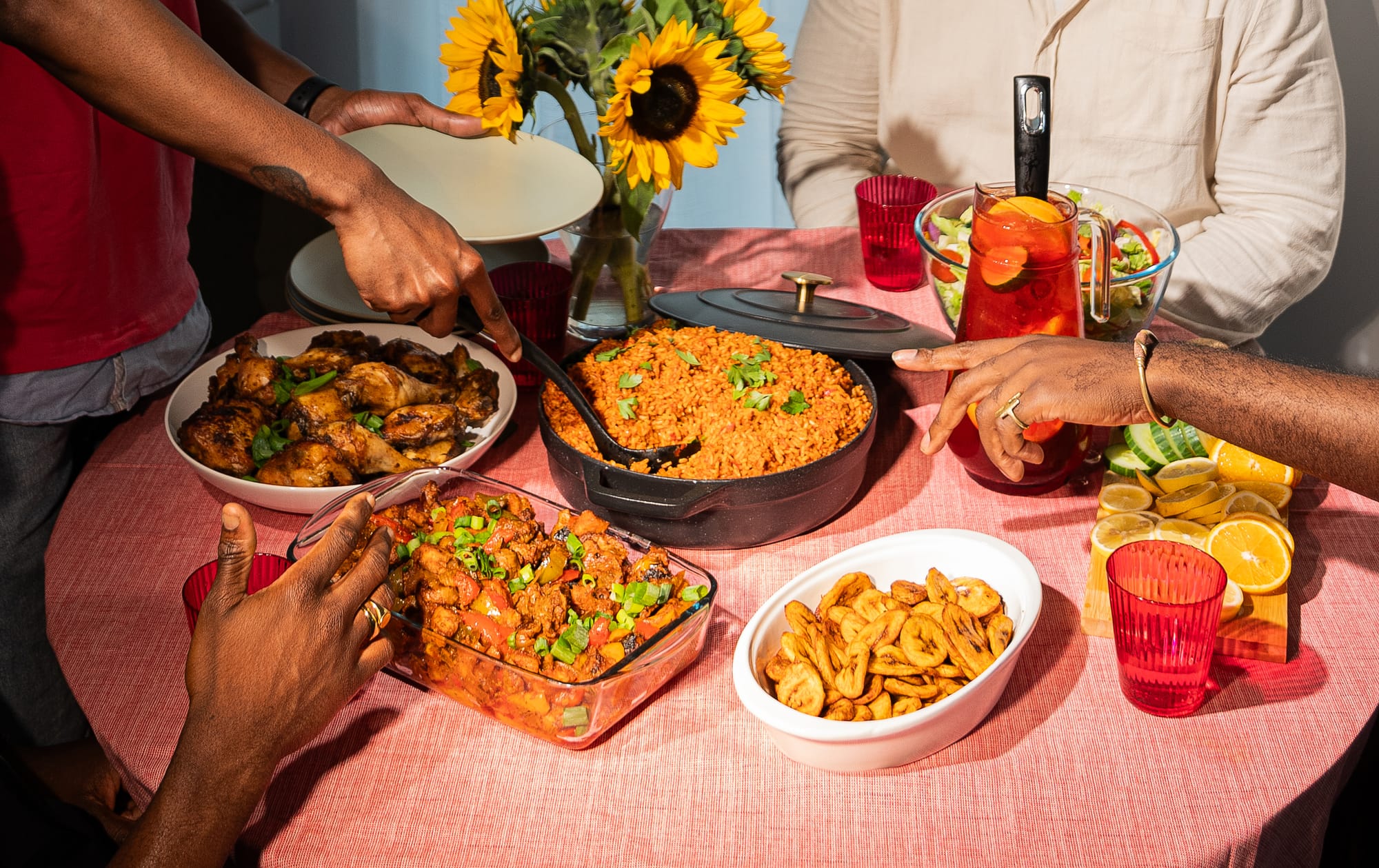
That makes sense. At the end of the day, we must allow our culture to evolve. For you, Jollof is more than Jollof rice. It’s an entire flavour. The Pzaza Pizza collaboration — jollof as a pizza base —was something that proved that. Where do you stand on the tension between experimentation and purists?
Look at what the Koreans have done in the last fifteen years. Korean barbecue, Korean fried chicken, K-pop, young people who start with a K-pop star end up learning Korean, watching K-dramas, and wanting to visit Korea. The culture travels because it met people where they were first. That’s what I’m trying to do with jollof.
As Africans, we spend a lot of time asking why the West isn’t embracing us. But you can’t take someone who’s never encountered West African food and expect them to immediately sit down with fufu and soup. That’s a huge jump. You meet people where they are. You give them the flavour in a format they can understand. And once they try it and say, ‘this is incredible, what else is there?’, now you can take them further. Jollof pizza is a gateway. It’s not the destination. Last year, we did supper clubs — jollof butter, jollof honey, jollof garri cake. We had people there who’d never thought about jollof beyond rice. Now it’s something novel you can bring to a dinner party, and tomorrow when someone asks, ‘What is jollof?’, I can educate them on my culture.
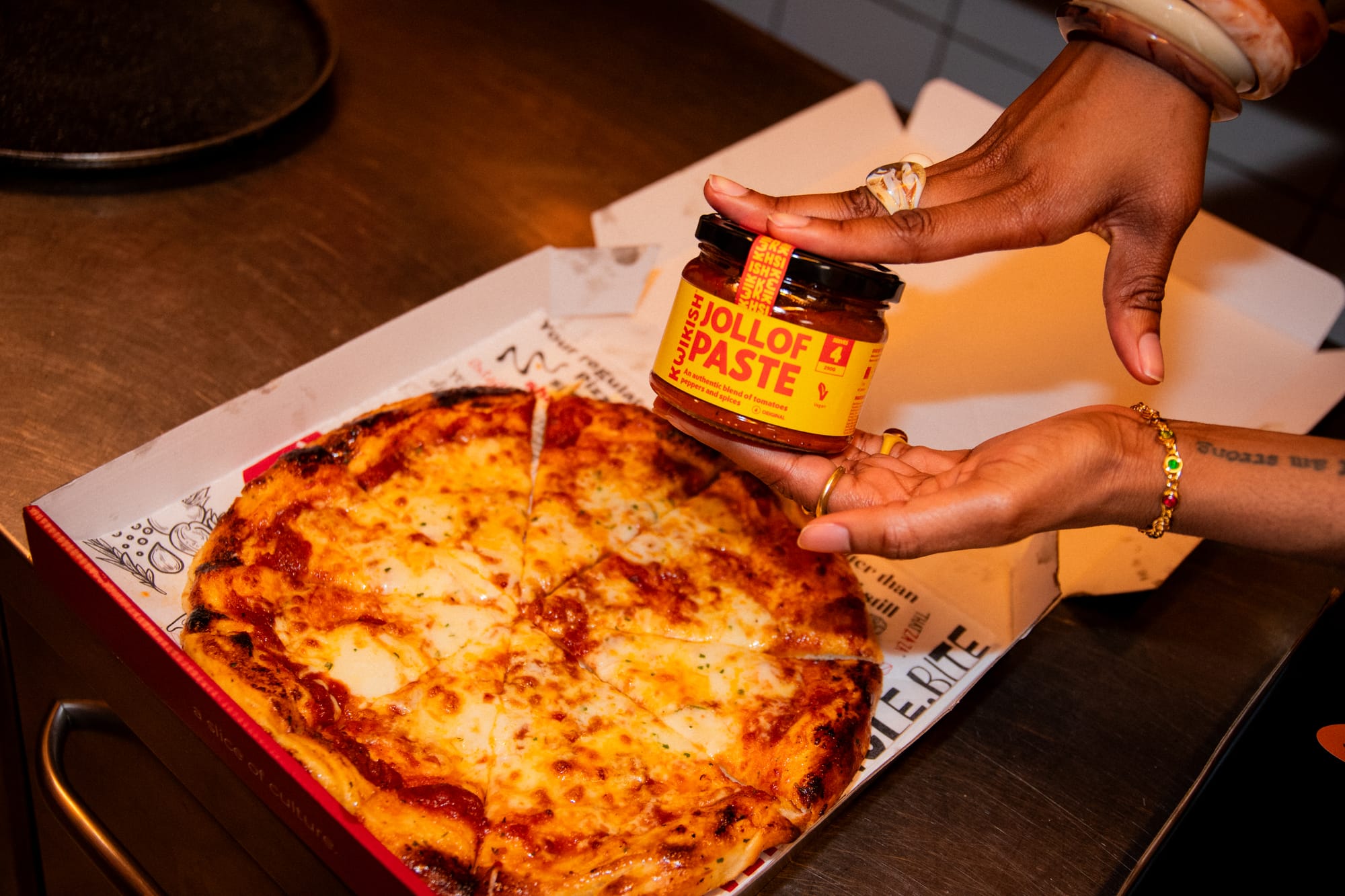
You make a great point. As African culture, in this case, food, globalises, there’s a real fear of it being stripped of its context, watered down or appropriated. How do you hold on to authenticity at scale?
I don’t think you can fully prevent the watering down. If someone sees a commercial opportunity in jollof and chases profit without care, I can’t stop that. Chinese sweet and sour? They don’t sell that in China. Tikka masala is the UK’s most beloved dish but it’s not a traditional Indian meal. Things grow, mutate, travel. That’s the nature of culture.
What I can do is be the custodian of what I produce. I make it as authentic as possible. I don’t compromise on ingredients. When you use Kwikish, you’re getting the real flavour foundation: onions, garlic, ginger, that holy trifecta. And in the storytelling, I make sure the context is never stripped away. Whatever someone does with the jar in their kitchen is theirs. But the brand carries the culture. To love something, sometimes you have to let it go. But let it go with intention.
I see. And even in the storytelling, too. Partnerships seem central to how Kwikish operates — supper clubs, chefs, retail. What makes a collaboration meaningful to you?
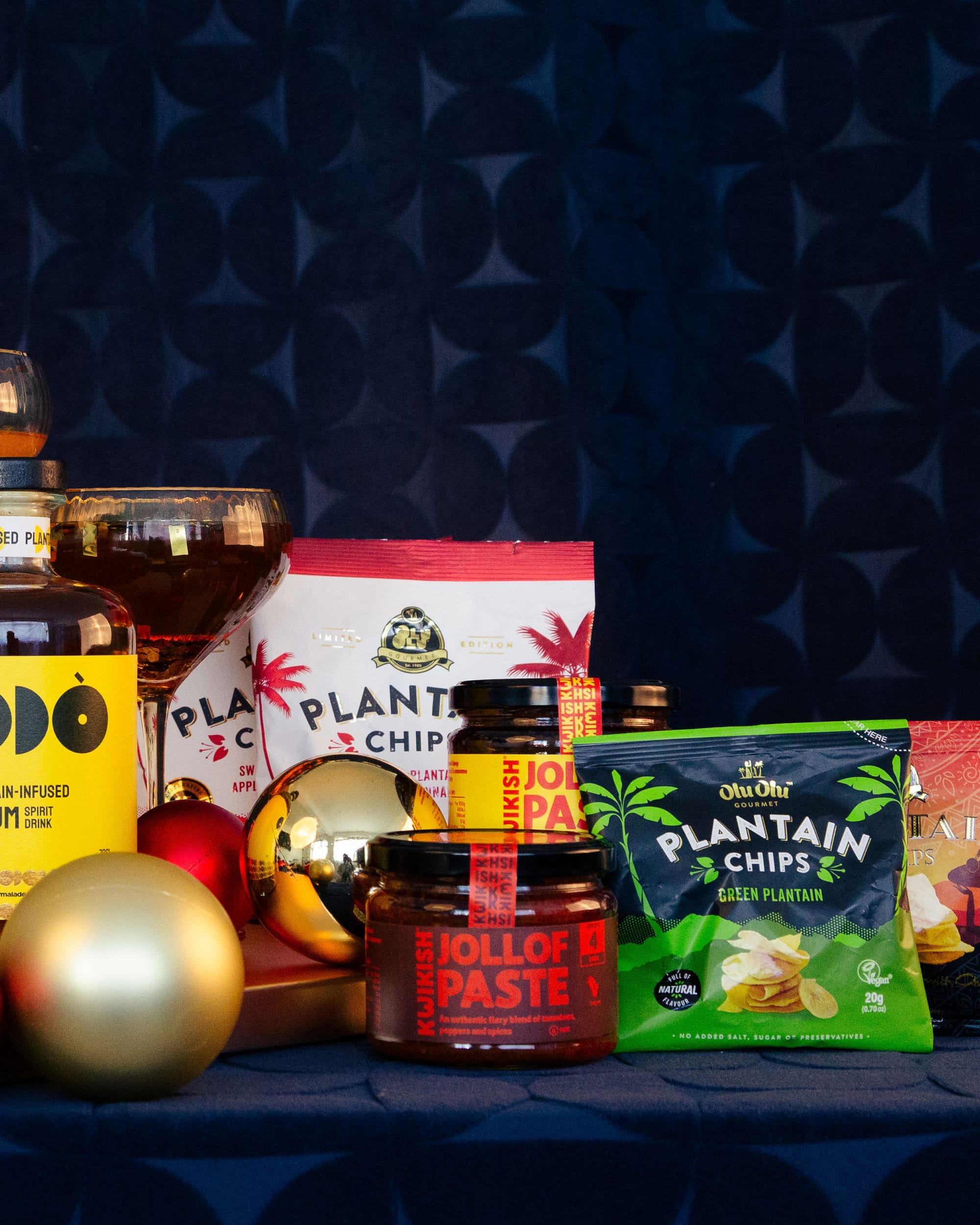
We need to be on the same page about what we’re doing. The commodity right now is culture. So you need to understand what I’m doing, I need to understand what you’re doing, and together we celebrate it, not exploit it. A great example was our Christmas hamper with Dodo, the new plantain rum. Two brands at a similar stage, both doing something novel in the African food space. I grew up with Christmas hampers in Nigeria, so to see Kwikish in one, that hit differently. That’s what a good collab feels like. Shared understanding. Shared celebration.
Love that. Kwikish is about a year and a half in. What’s next?
I’ve found product-market fit. My thesis was correct. So now it’s time to be audacious. More collabs, I want to work with bakers on jollof focaccia, sandwich shops, and chefs from other traditions. Someone sent me a photo of jollof ramen they’d made with our paste. I tried it myself. It was fantastic. That’s the future, continuing to export African flavour in more ingenious ways, so that the many versions of me out there can enjoy their culture without the struggle attached to it.
Because I think African culture is too often synonymous with struggle. Why are you using a hoover? Use the broom. Why are you using a washing machine? Wash with your hands. It’s everywhere, this idea that to do it properly, you have to suffer. But there’s no prize in suffering. Enjoying your culture shouldn’t come with that tax.
I agree! And personally, what has building this actually been like?
The hardest part of building Kwikish has been me. Entrepreneurship holds a mirror up to your face. Your business reflects you. And I’ve had to reckon with things about myself I didn’t expect, like realising I had a scarcity mindset. I’d think, ‘don’t spend, hold tight, I can do it myself.’ But business doesn’t work like that. You have to trust people. You have to think in abundance. You have to make bold bets and accept that some won’t pay off. That’s a whole operating system update.
Kwikish hasn’t paid me yet. I pay my team, but I don’t pay myself. I’m not going to lie, sometimes I miss my salary. I miss the finance job where working hard enough meant a bonus at the end of the year. This is a long game. And there’s something very real about just having to trust the process.
Thank you, Zikora! This was lovely.



Member discussion