


African cinema is having a moment, but the women shaping it have been doing the work for much longer than the current wave of international attention might suggest. Across the continent and its diaspora, a new generation of filmmakers is making films that move between intimate stories and much larger questions about migration, memory, gender, identity, tradition and what it means to imagine an African future.
Some have taken African stories to Cannes, Berlin and Sundance. Others have built careers through experimental cinema, documentary or independent filmmaking, finding new ways to tell stories that do not always fit neatly into conventional ideas of African cinema.
From Senegal and Ghana to Kenya, Zambia, Morocco, Burkina Faso and South Africa, these directors are expanding what African film can look and feel like.
Here are the modern African women directors whose work is worth knowing.
Mati Diop (Senegal/France)
Born in Paris in 1982 to Senegalese musician Wasis Diop and niece of pioneering director Djibril Diop Mambéty, Diop grew up moving between France and Senegal, a duality that runs through all her work. In 2019, her supernatural romantic drama Atlantics, about the women left behind in Dakar when their partners attempt a dangerous sea crossing to Europe, made her the first Black woman director to compete for the Palme d'Or in Cannes' 72-year history; the film won the Grand Prix instead. Speaking to the CBC about the milestone, she said, "My first reaction is that I found it quite sad... there's still a long way to go before it becomes something completely natural and normal."
In 2024, she won the Golden Bear at the Berlin International Film Festival for Dahomey, a documentary on France's restitution of looted Beninese artefacts, becoming one of the few directors to win top honours at two of Europe's major festivals.
Akosua Adoma Owusu (Ghana/United States)
Born in Alexandria, Virginia, in 1984 to Ghanaian parents, Owusu trained at the University of Virginia and the California Institute of the Arts before building a body of experimental and narrative work exploring what she calls the "triple consciousness" of the African immigrant navigating African, white American and Black American identity at once.
Her 2013 short film Kwaku Ananse, blending a West African trickster fable with her own semi-autobiographical story, earned a Golden Bear nomination at the Berlinale and won the 2013 Africa Movie Academy Award for Best Short Film. In 2015, IndieWire named her one of six "Avant-Garde Female Filmmakers Who Redefined Cinema," and her work now sits in the permanent collections of the Whitney Museum of American Art and the Centre Pompidou. She currently divides her time between Ghana, where she is reviving the historic Rex Cinema, and New York.
Nuotama Bodomo (Ghana)
Born in Ghana in 1988 to two educator parents and raised between Norway and Hong Kong before settling in New York to study film at Columbia and NYU, Bodomo works largely in Afrofuturist short film. Her 2014 film Afronauts, inspired by Zambia's real 1964 attempt to beat the US and USSR into space, premiered at Sundance and Berlin and was later included in the Whitney Museum's Dreamlands exhibition.
She was named one of Filmmaker magazine's "25 New Faces in Independent Film" in 2014 and went on to write and direct for Terence Nance's HBO anthology series Random Acts of Flyness in 2018. She remains one of the most closely watched names in African diasporic experimental cinema, and is currently developing a feature-length version of Afronauts.
Kaouther Ben Hania (Tunisia)
Trained at Tunisia's Ecole des Arts et du Cinéma before continuing her studies at La Fémis and the Sorbonne in Paris, Ben Hania has become the most internationally decorated director working in Tunisian cinema today. Her 2020 film The Man Who Sold His Skin earned her a first Oscar nomination for Best International Feature, and her 2023 docu-fiction Four Daughters, on a Tunisian mother whose two eldest daughters were radicalised and disappeared into the Islamic State, won the Golden Eye at Cannes and a second Oscar nomination, making her the first Arab woman with two Academy Award nods.
Speaking to The New Arab about the years-long process of making that film, she admitted, "there are days when I say to myself, this is all rubbish, I shouldn't have made this film... And then comes the good news... so you take it." Her earlier feature Beauty and the Dogs had already won the Best Sound Creation award at Cannes' Un Certain Regard in 2017.
Ramata-Toulaye Sy (Senegal/France)
Born and raised in Paris to Senegalese immigrant parents, Sy trained as a screenwriter at La Fémis, co-writing the features Sibel (2018) and Our Lady of the Nile (2019) before turning to directing. Her 2023 debut feature, Banel & Adama, a myth-tinged love story set in a drought-stricken northern Senegalese village, was the only first feature in that year's Cannes main competition, making her, at 36, only the second Black woman ever to compete for the Palme d'Or, after Mati Diop. The film went on to become Senegal's official submission for the 96th Academy Awards.
Maryam Touzani (Morocco)
Born in Tangier in 1980, Touzani worked as a journalist covering cinema before turning to screenwriting and directing, and wrote the screenplay for the 2015 drama Much Loved, directed by her husband Nabil Ayouch. Her own 2019 directorial debut, Adam, about a pregnant unmarried woman taken in by a widowed baker, was selected for Cannes' Un Certain Regard and became Morocco's entry for the 92nd Academy Awards.
Her follow-up, The Blue Caftan (2022), a story of a marriage quietly reshaped by a husband's hidden sexuality, won the Un Certain Regard FIPRESCI Prize at Cannes. In 2022, Touzani was invited to take part in the once-a-decade Sight & Sound critics' poll of the greatest films ever made, naming Tokyo Story, Bicycle Thieves and Nabil Ayouch's own Ali Zaoua among her selections.
Rungano Nyoni (Zambia/Wales)
Born in Lusaka, Zambia, and raised in Wales from the age of nine, Nyoni studied business before training as an actress at Central Saint Martins, where she realised, in her words, that she was "far more into storytelling behind the camera than in front of it." Her 2017 debut feature, I Am Not a Witch, a satire on Zambian witch camps, screened in Cannes' Directors' Fortnight and won her the BAFTA for Outstanding Debut in 2018.
Her second feature, On Becoming a Guinea Fowl (2024), earned her the Cannes Un Certain Regard prize for Best Director; asked by IndieWire about the film's themes, she said, "it's a conversation about how not everybody can speak up, and why." The New York Times praised her restraint, writing that "she says all she needs to with each lapidary image."
Genevieve Nnaji (Nigeria)
Already one of Nollywood's most recognisable actresses after a career stretching back to the 1990s, Nnaji made her directorial debut in 2018 with Lionheart, a drama about a woman fighting to keep her ailing father's transport company running. The film premiered at the Toronto International Film Festival before Netflix acquired it as its first original film produced in Nigeria, and it went on to become, in 2019, Nigeria's first-ever submission to the Academy Awards' Best International Feature Film category.
The Academy disqualified it for having "too much dialogue in English," a ruling Nnaji publicly challenged on social media, writing, "This movie represents the way we speak as Nigerians. This includes English, which acts as a bridge between the 500+ languages spoken in our country. We did not choose who colonised us." The disqualification drew public support from Ava DuVernay and reopened debate over the Academy's language rules for international submissions.
Apolline Traoré (Burkina Faso)
Born in Ouagadougou in 1976 and raised partly abroad due to her father's diplomatic career, Traoré studied film at Emerson College in Boston before returning to Burkina Faso to build a career centred on women's resilience under conflict.
Her fifth feature, Sira (2023), about a young bride abducted by jihadist fighters in the Sahel who plots her own survival and revenge, won the Panorama Audience Award at the Berlinale and the Silver Stallion of Yennenga, FESPACO's second-highest honour, becoming Burkina Faso's Oscar submission that year. Traoré also became the first woman to win Best Director at the African Movie Academy Awards.
Sara Blecher (South Africa)
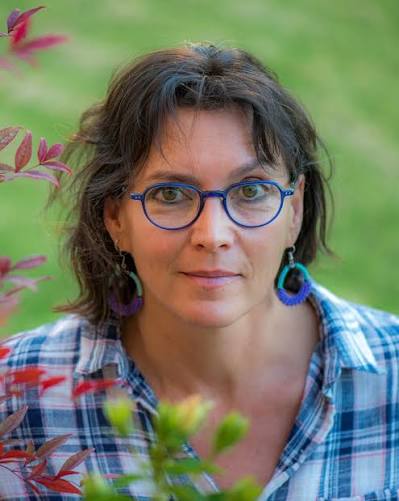
Born in Johannesburg in 1969, Blecher's family emigrated to Brooklyn in 1981 as apartheid made life untenable for her Jewish Lithuanian-South African parents; she studied film at NYU before returning to South Africa in 1992 to work as a journalist and documentary producer. Her 2011 debut feature, Otelo Burning, about township teenagers who find freedom through surfing against the backdrop of apartheid-era political violence in Durban, won 17 international awards and was later named one of the decade's ten best African films by CNN.
Speaking to AFP about the film's resonance, she said, "It's a very important story for SA now because it talks about freedom and what you do with freedom." Her 2015 follow-up Ayanda premiered at the BFI London Film Festival and was distributed in the US through Ava DuVernay's ARRAY, and she went on to co-found Sisters Working in Film and Television, an organisation advocating for gender parity across the Southern African industry.
Wanuri Kahiu (Kenya)
Born in Nairobi in 1980 and trained at UCLA's film directing program, Kahiu made her name with the 2009 Afrofuturist short Pumzi, which premiered at Sundance and won the Città di Venezia award at the Venice Film Festival. Her 2018 feature Rafiki, a same-sex love story between two young Kenyan women, became the first Kenyan film selected for Cannes' Official Selection, and was banned in Kenya over its subject matter until Kahiu successfully sued the Kenya Film Classification Board over the country's constitutional protections for freedom of expression.
She is the co-founder of AFROBUBBLEGUM, a media collective championing "fun, fierce and frivolous" African art, and was named to TIME's 100 Next list in 2019. She has since directed the Hulu series Washington Black and Netflix's Look Both Ways, and is attached to direct Disney's Once On This Island.
Kemi Adetiba (Nigeria)
Born in Lagos in 1980 to advertising veteran Dele Adetiba and Mayen Adetiba, the first female civil engineer elected to the executive committee of the Nigerian Society of Engineers, Adetiba studied at the New York Film Academy before building a career as one of Nigeria's most sought-after music video directors, working with Wizkid, Tiwa Savage and Olamide.
Her 2016 directorial debut, The Wedding Party, opened as the City-to-City spotlight film at the Toronto International Film Festival and became the highest-grossing Nigerian film of its time. She followed it with the 2018 crime thriller King of Boys, starring Sola Sobowale as a ruthless businesswoman with political ambitions; the film's success led to a seven-part streaming sequel, King of Boys: The Return of the King, in 2021. Adetiba also created and hosted King Women, a web documentary series interviewing prominent Nigerian businesswomen about the obstacles they've overcome.
Hawa Essuman (Kenya)
Born in Hamburg, Germany, in 1980 to Ghanaian parents who raised her in Nairobi, Essuman worked in theatre and television before directing her breakout 2010 feature Soul Boy, made with the support of German director Tom Tykwer, which screened at more than 40 festivals worldwide. Her 2017 documentary Silas, co-directed with Anjali Nayar, followed Liberian environmental activist Silas Siakor's fight against illegal commercial logging, and won the Amnesty International Durban Human Rights Award along with prizes at festivals in Zanzibar, Warsaw and Washington, D.C. Essuman remains based in Nairobi, working across feature film, television and commercial production.
Shirley Frimpong-Manso (Ghana)
Born in 1977 in Kwahu Pepease in Ghana's Eastern Region, Frimpong-Manso graduated from Ghana's National Film and Television Institute in 2000 and worked as a radio presenter in Accra before founding her own production company, Sparrow Productions, one of West Africa's most prolific film and television houses.
Her 2009 film The Perfect Picture and its sequels became touchstones of Ghanaian cinema for their "fierce female leads," and in 2010 she won Best Director at the 6th Africa Movie Academy Awards. Her 2019 feature Potato Potahto was picked up by Netflix, and in 2013 she was ranked the 48th most influential person in Ghana by E.tv Ghana. She has since launched Sparrow Station, a streaming platform for Ghanaian film, and told AFP-syndicated press that she still sees room for Ghanaian cinema to grow beyond its borders: "Our stories need to be able to cut across borders."
Conclusion
There is no single way to describe contemporary African women's filmmaking. These directors are working across vastly different countries, languages, genres and production systems, from Senegalese speculative cinema and Ghanaian experimental film to Kenyan Afrofuturism, Zambian surrealism, Moroccan intimate dramas and South African genre cinema.
And perhaps most importantly, their films make it increasingly difficult to talk about African cinema as one thing.


Member discussion