


Jumoke Adeyanju, known also by her artist name mokeyanju, has spent the last decade building. A poet, dancer, Selekta (responsible for selecting, curating, and playing the music for an audience), vinyl selector, radio host, and curator, she is the kind of interdisciplinary artist for whom the word ‘interdisciplinary’ still feels insufficient. Her work moves between performance and publishing, between sonic experimentation and community archiving, unfolding in galleries, museums, festivals, and cultural spaces in Kenya, Brazil, Germany, UK, Nigeria, Ghana and Senegal.
Born in a Yorùbá household in Germany and raised between multiple African diasporic communities, Jumoke has spent her life building bridges between cultures she loves and, when no bridge exists, constructing one herself. That instinct is what gave rise to Poetry Meets, the international multilingual platform she founded in Berlin in 2014. What began as Poetry Meets Hip Hop, an open mic night in a small Berlin bar with space for around 50 people, has since evolved into a consistently sold-out cultural event series filling venues of up to 800, bringing together poetry, soul, jazz, dance, Highlife, and more, with editions reaching cities including Nairobi, Salvador de Bahia, Amman, Accra and Lagos. In 2023, she received the Berlin Music Commission Honour Award for her role in shaping the city’s music landscape.
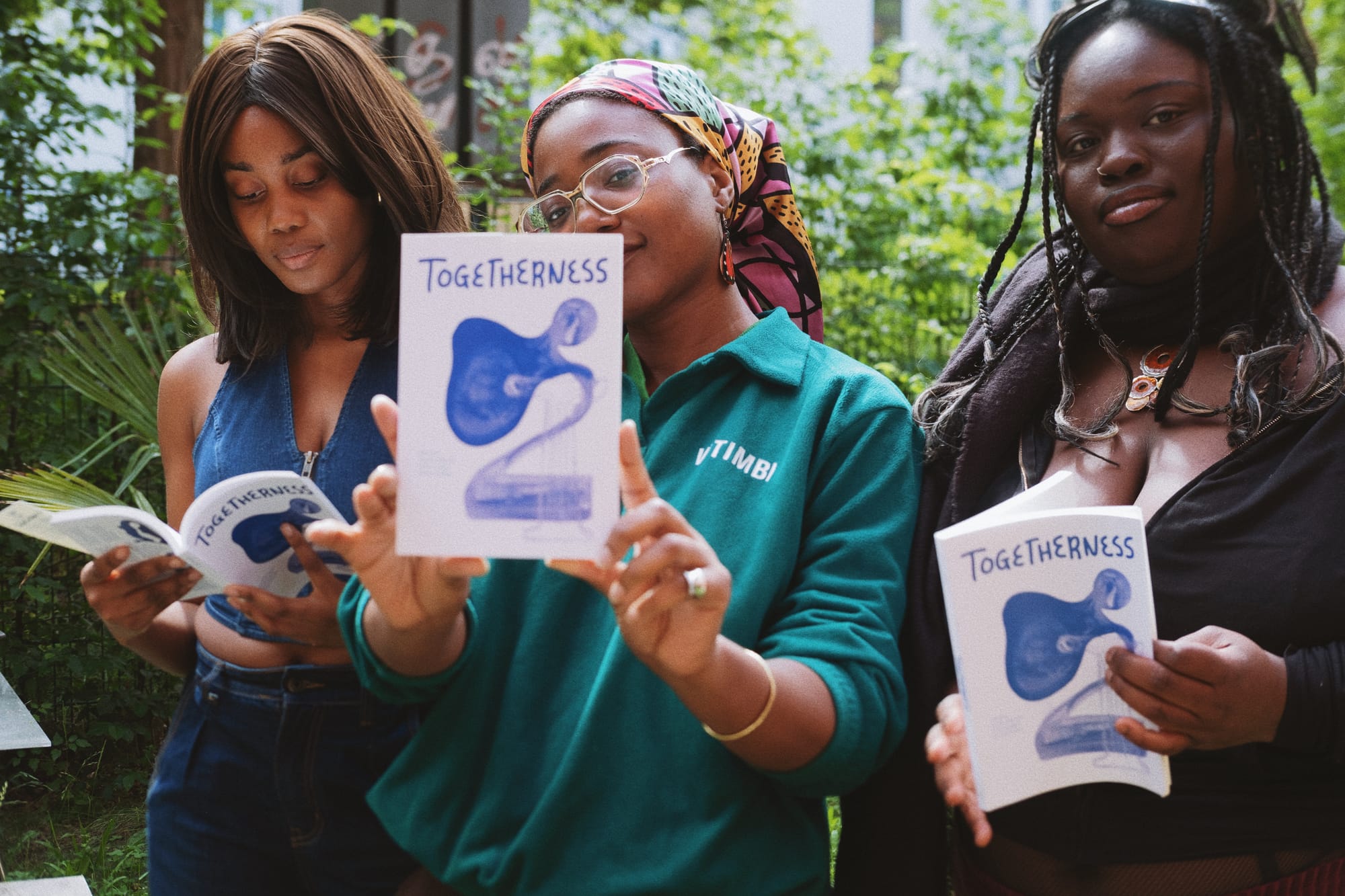
Her vinyl collection tells a parallel story: Somali funk, Congolese rumba, Thai funk, Japanese jazz, East African taarab, Calypso. Through her radio show Sauti ya àkókò on Refuge Worldwide, and as co-host of the station’s Breakfast Show, she brings these discoveries to listeners across the world. Her debut anthology as editor-in-chief, Togetherness: A Poetry Meets Anthology, published by Archive Books and featuring 40 international artists in multiple languages - including Yorùbá, Tamil, Korean, Swahili and German Sign Language, is a landmark document of a decade of community-making.
We spoke with Jumoke about growing up as a cultural sponge, the physical joy of vinyl, and what it means to belong while always living in-between worlds.
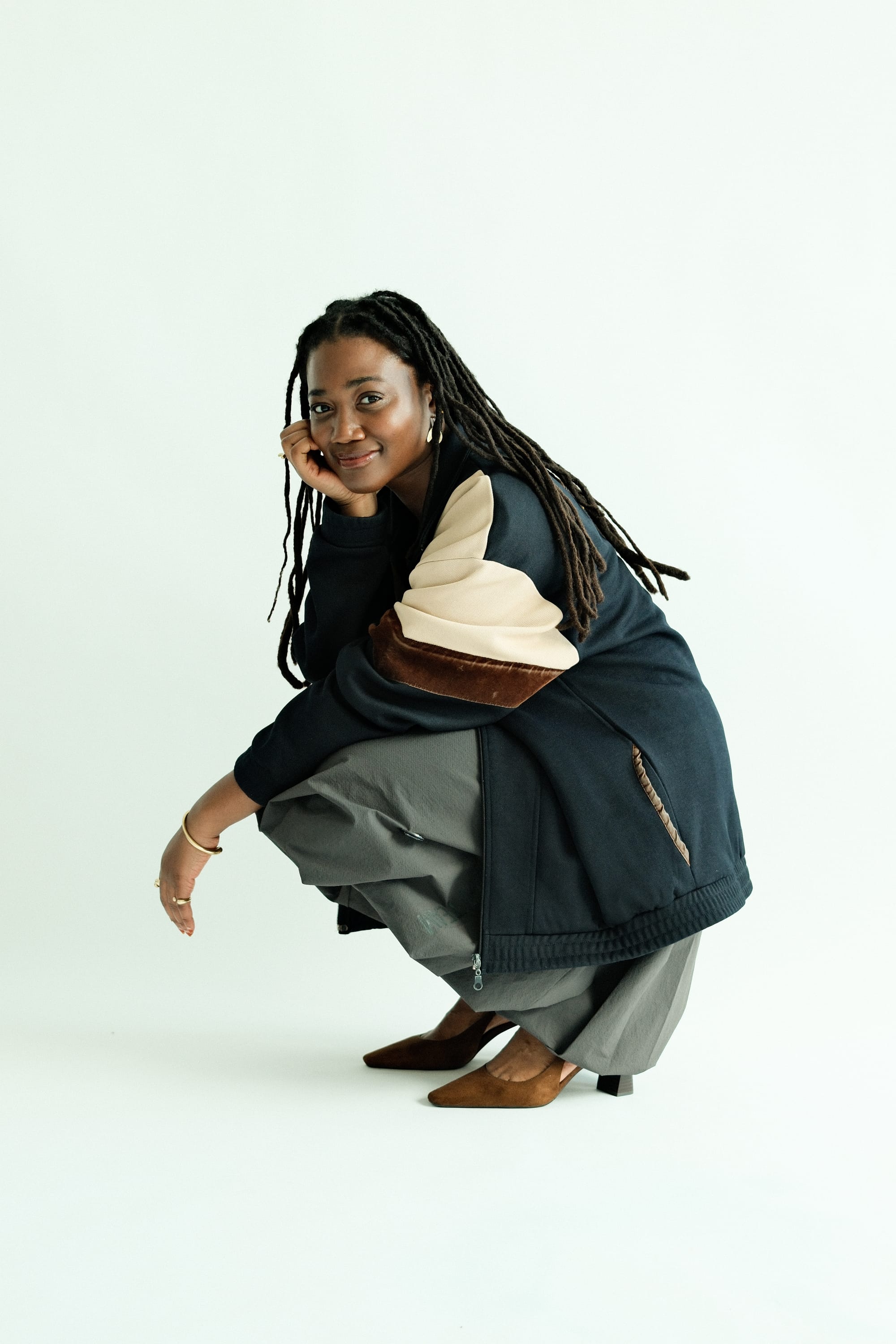
Can you tell me about yourself, your background, where you come from, and how you would describe your practice?
I’m an interdisciplinary artist and curator with a background in dance, poetry, sonic practices, and radio broadcasting. The closest thing that defines my artistic practice is probably Poetry Meets, which I started in 2014 to bring together communities that feel like home. I grew up in a Nigerian household, and I spent time in Tanzania working as a translator, speaking Swahili better than my mother tongue, Yorùbá, as people always like to point out. I’ve spent so much time in Tanzania and Kenya that people joke I should hand back my Nigerian passport.
I moved to Berlin for my studies, and I was missing that sense of home. Poetry gave it to me, and I wanted to share that with the community here and beyond. I started Poetry Meets Hip Hop because I wanted to make poetry exciting, to give it a more accessible entry point. The idea was that poetry meets you. Poetry is meeting your own world; you don’t have to go to it. So there’s always music, a short film, maybe a musician or a talking drum, different ways of drawing people in before the words even begin.
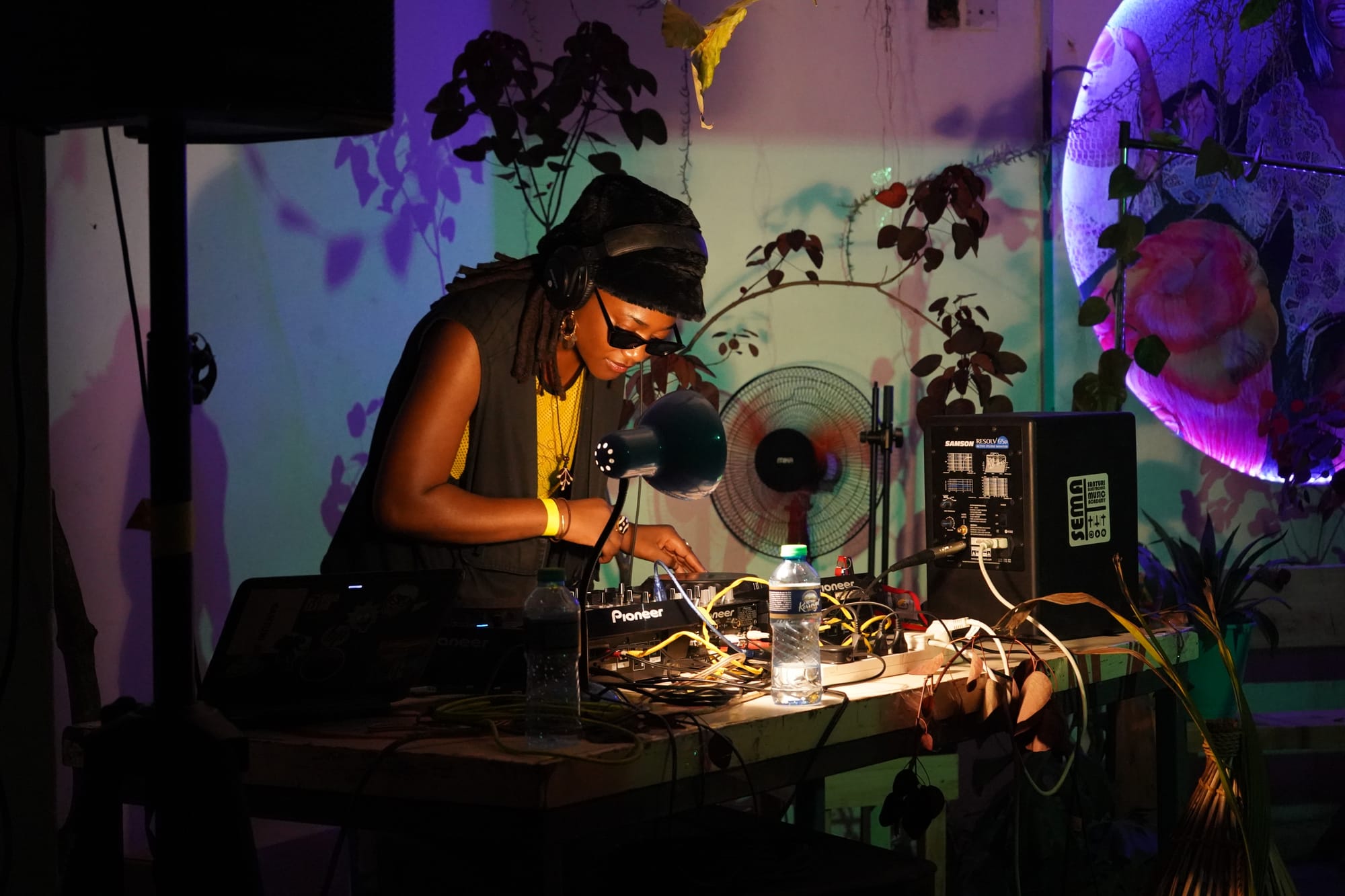
Thank you for sharing. Speaking of the different environments you’ve moved through, how have they shaped your relationship to music, movement, and storytelling?
Being a Yorùbá person, growing up in a Yorùbá household, that’s the blueprint. But I also found my own taste through Hip Hop culture. I danced in a crew growing up. And beyond that, I had the privilege of being surrounded by so many different African identities: Ivorian, Moroccan, Ghanaian, communities from the church, the mosque, and indigenous traditions. I’m like a sponge when it comes to languages and people’s cultures.
Growing up around different African identities, I was always looking for a bridge, and if there wasn’t one, I would try to build it. That’s why I find myself gravitating towards community work, and languages tend to come to me quite quickly; they’ve felt like a gateway into people. I remember learning Turkish in secondary school because the only alternative was Christian religious studies. Years later, I travelled through western Turkey as a blogging journalist, road-tripping from Istanbul to Edirne, down to Çanakkale and Izmir, collecting people’s favourite songs to build a kind of sound archive of where I was - something I still do today. I think my influences really come from this intrinsic curiosity about getting to know people through understanding their languages and then finding the similarities between our cultures. There’s this unification I’m always searching for. When I recently moderated the Berlin MUBI release panel for My Father’s Shadow by Akinola Davies Jr., a friend in the audience said the film reminded him of home: Indonesia. It made me smile - a small confirmation of something I often notice, how similar places can feel.
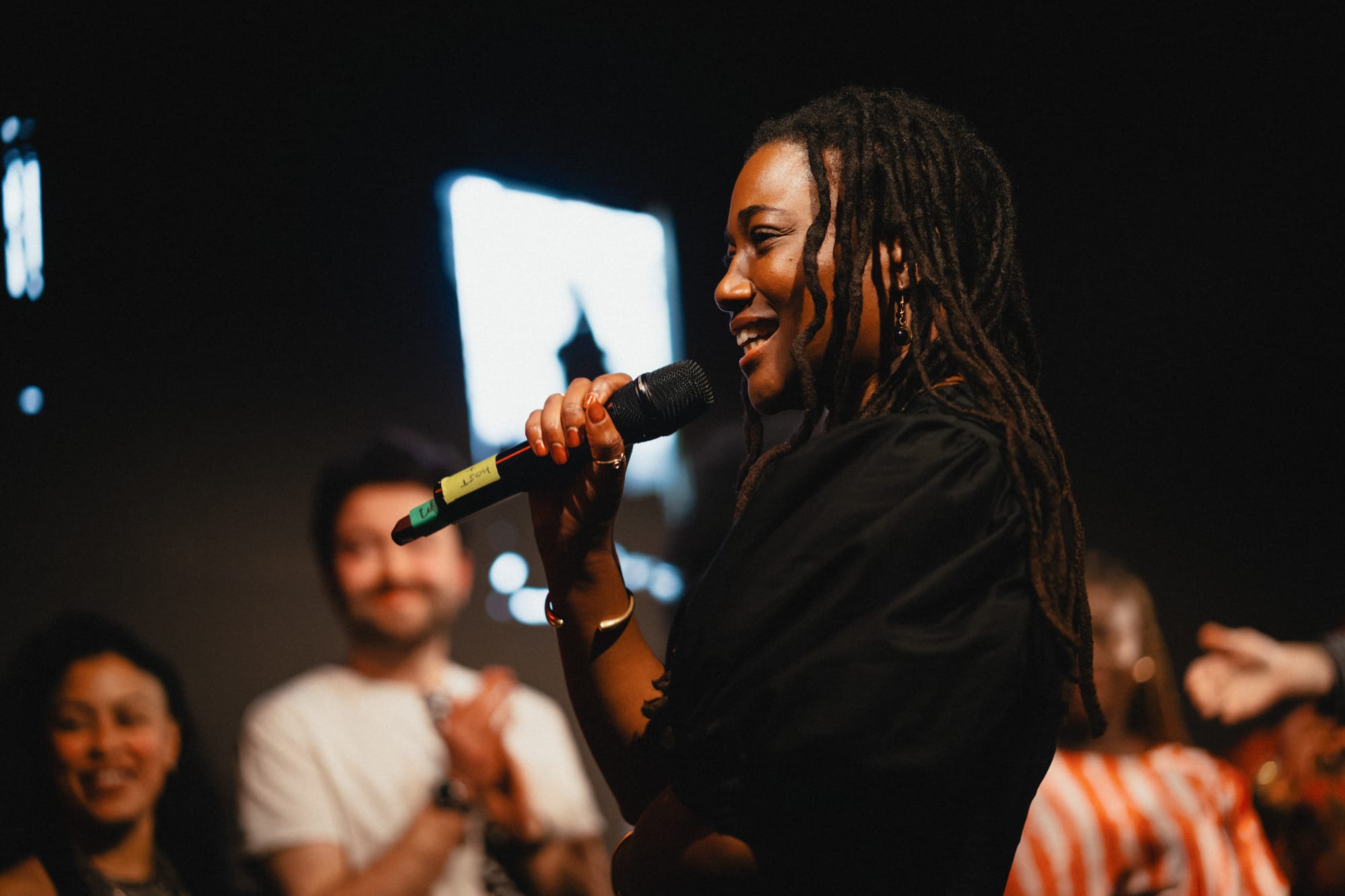
I love that. There's something powerful about the way culture carries memory across generations and borders. In your work, how do you think about cultural transmission — what gets preserved, what travels, and what transforms when stories or practices move between communities?
I think it starts from a perspective of ownership, authorship, and reclaiming oneself, which means learning about the people who came before us and keeping their stories alive. Creating archives. It could even be something as intimate as documenting a family member. Once we understand the value of documenting our own stories, we also begin to understand the value of protecting what we have: our space, our history, our sense of self. But when everything is about survival, preservation becomes a luxury. That’s when the outsider finds an opportunity to plunder. So to protect yourself from being stolen from, you also have to understand what you actually have, the value of what you hold. Everything is quite connected to that.
When I was in Brazil for a residency, I went to a Yorùbá temple. I had never been to a Yorùbá temple in Nigeria, but there it was in Bahia. The Yorùbáness was alive and being practised in full. It reminded me of how flexible and open our culture has always been; you can be Yorùbá, a herbalist, a Christian, and a Muslim at once, somehow. That openness is something I deeply appreciate. It’s also something easily misread by those who don’t understand its depth.
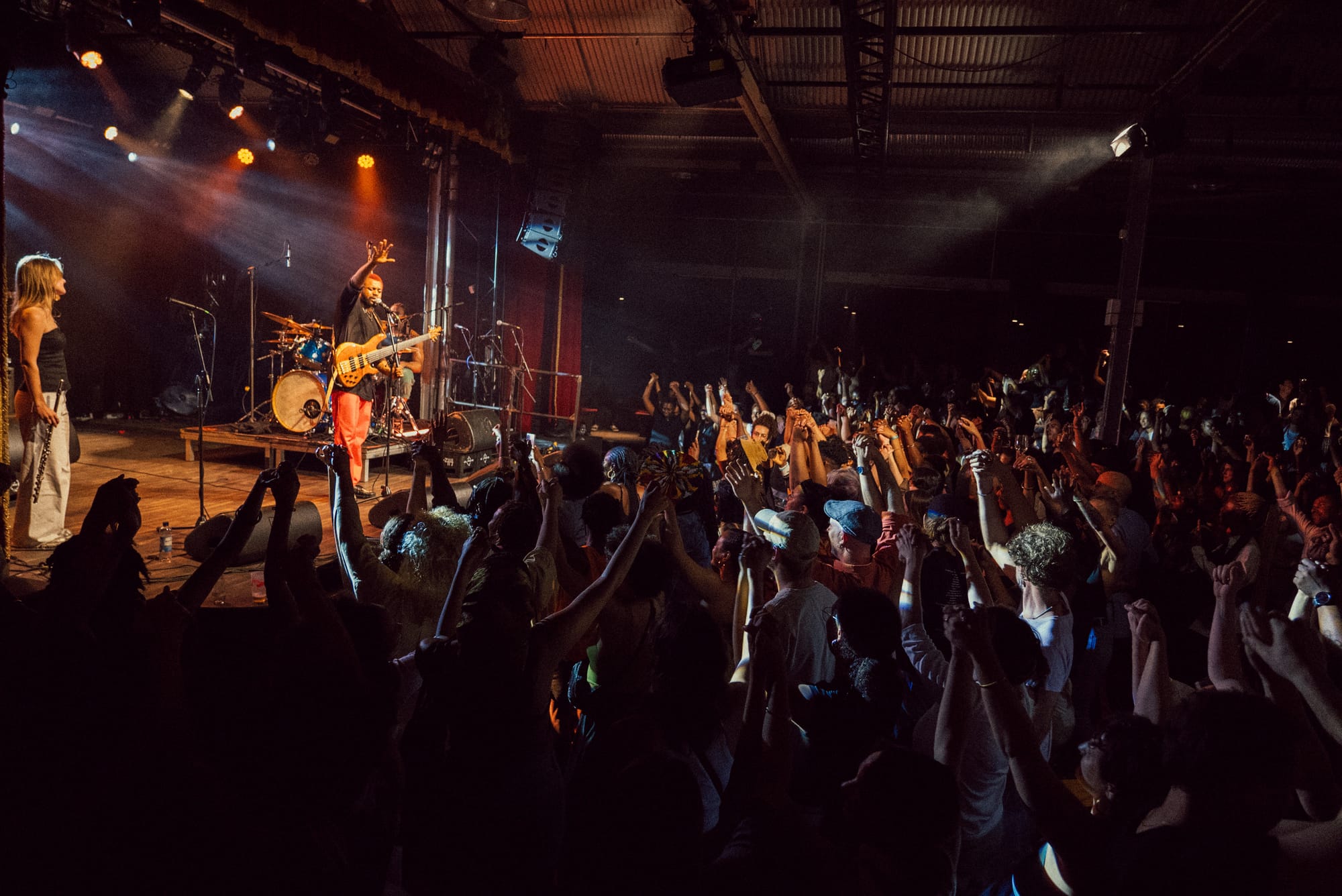
You’re right. It’s hard to see value when you’re fighting to survive, but when you create, in the midst of that, things evolve. And what you do primarily is to create, you work across dance, writing, sound, and curation. Do you have to become a different version of yourself for each practice, or do they all speak the same language?
In the beginning, I did have to embody almost different personas because I was seeing them as separate categories of myself. But now it’s more of a middle ground. That’s also why I identify as an interdisciplinary artist; I’m trying to bring these practices together rather than see them as separate. It’s almost like the mind-body-soul thing: in a lot of European or Western culture, it’s seen as divided, but actually it’s all connected. I’m very interested in that connectivity between sound, image-making, and movement. Symbiosis, really.
On sound, your vinyl collection feels both archival and deeply personal. What does it say about you, and what are you listening for when you choose a record?
My collection is a diverse introspection into my taste and maybe my openness. From Somali funk to Congolese rumba to Thai funk to Japanese jazz. I’m very much into samples. Hip-hop sample culture was actually my entry point into every other sample culture. I’ll listen to an album and notice a track sampled from a Somali band from the 1970s, and then I’m deep in a rabbit hole. It’s almost journalistic, tracing the migration routes of music.
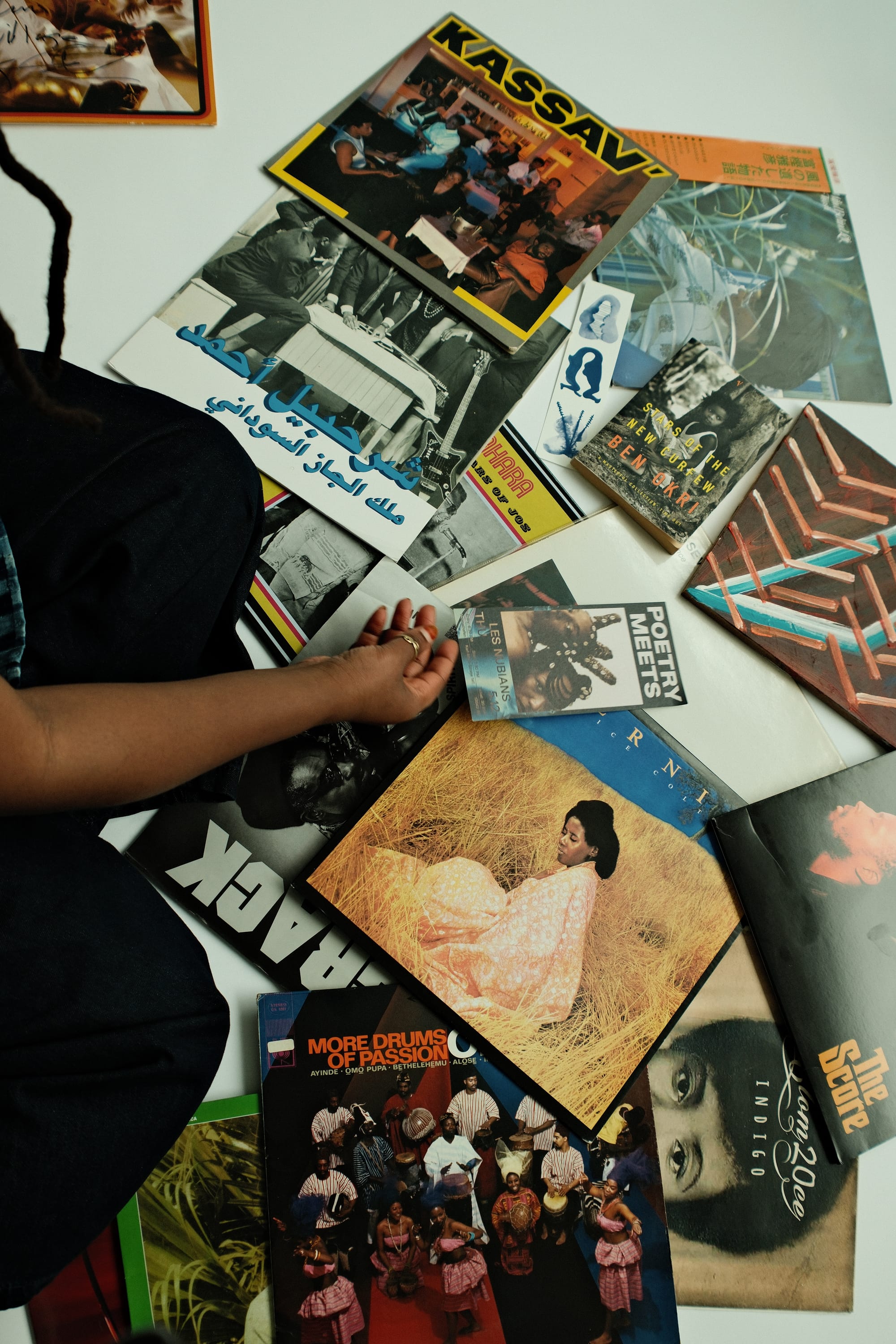
I’m also always on the lookout for music by women, because they’re still so underrepresented in the archives. I once discovered Ettab, a Hausa woman who became famous in the Arab world, singing in Arabic, known across the Gulf and when I played her on the radio, a Kuwaiti friend said, “We play this at our weddings.” That’s the kind of synergy I live for.
As for the physical act of collecting, I wish I were a digital person, honestly, because vinyl records are expensive. But I’m drawn to them in the same way I’m drawn to books and to analogue photography. I love the ritual of opening a record like a book, reading the liner notes, finding out who produced it, who engineered it and then disappearing down another rabbit hole. This person engineered that other session? And off you go.
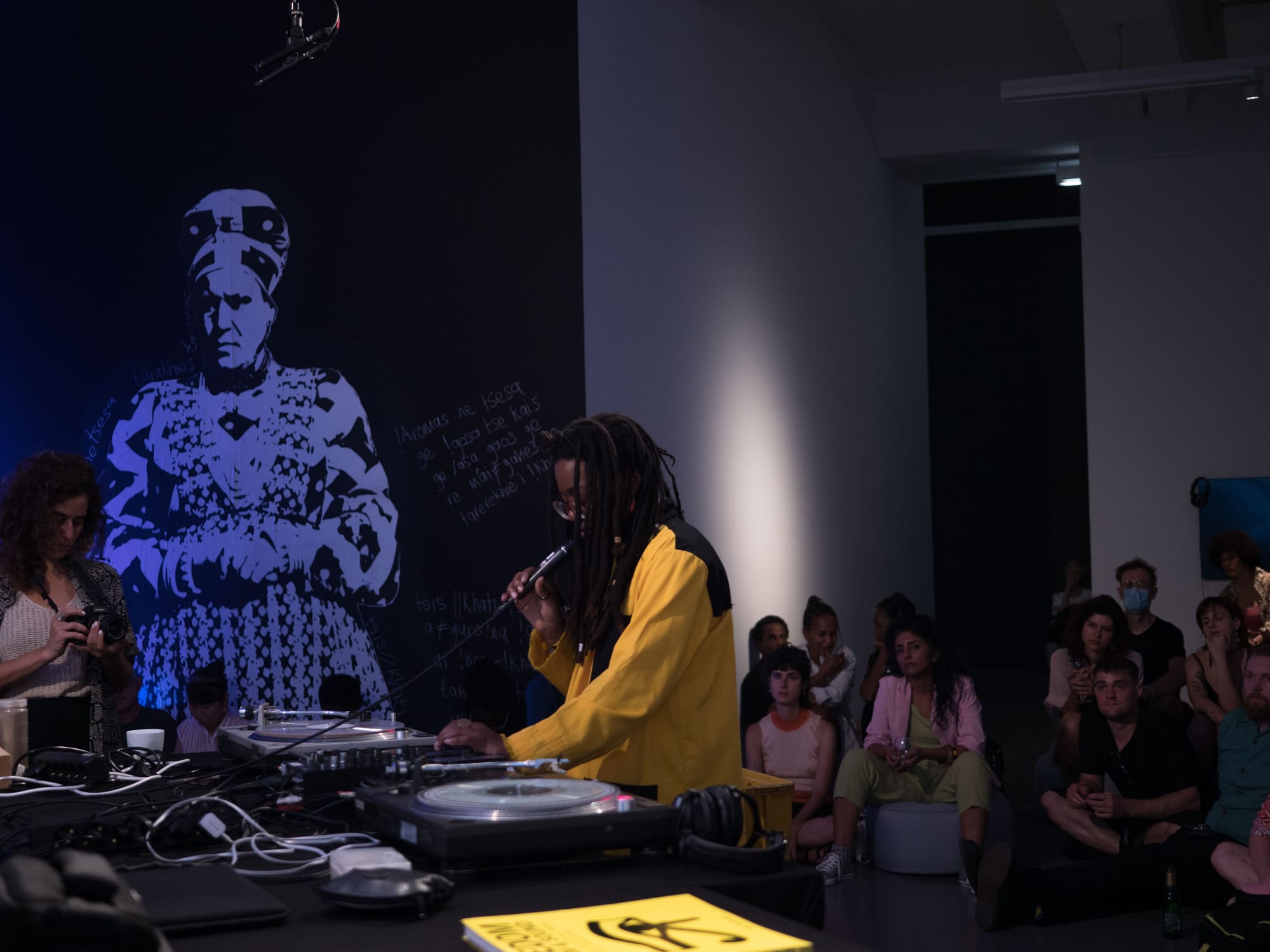
Do you ever get overwhelmed with just how much music there is to explore?
Oh no, it excites me. I love finding new music, especially as a curator. I’m always happy when people share new music with me. What might overwhelm me is the kind of music optimised for social media. That fast-paced, easy-to-digest music. Not that there is anything wrong with momentum. For example, Mara music is having a real moment right now. But when the hype dies down, it’s on to the next. Whereas with music from the 70s, 80s, and '90s, there’s a timelessness to it.
I'm curious about what remains once the attention moves on. The music that stays with people, the music that people return to decades later. That’s harder to find in a lot of contemporary production, where things move so quickly and die just as fast. I love what’s happening with Afropop, Singeli or Amapiano, but the hype cycle is ruthless. The true fans are always there when the hype dies down. And what remains after the hype is usually where the real thing is.
That's true. I’m going to shift slightly from music to poetry. You mentioned Poetry Meets earlier and how it started as an intimate Berlin open mic and has now reached cities across the world. How has the vision evolved over the years?
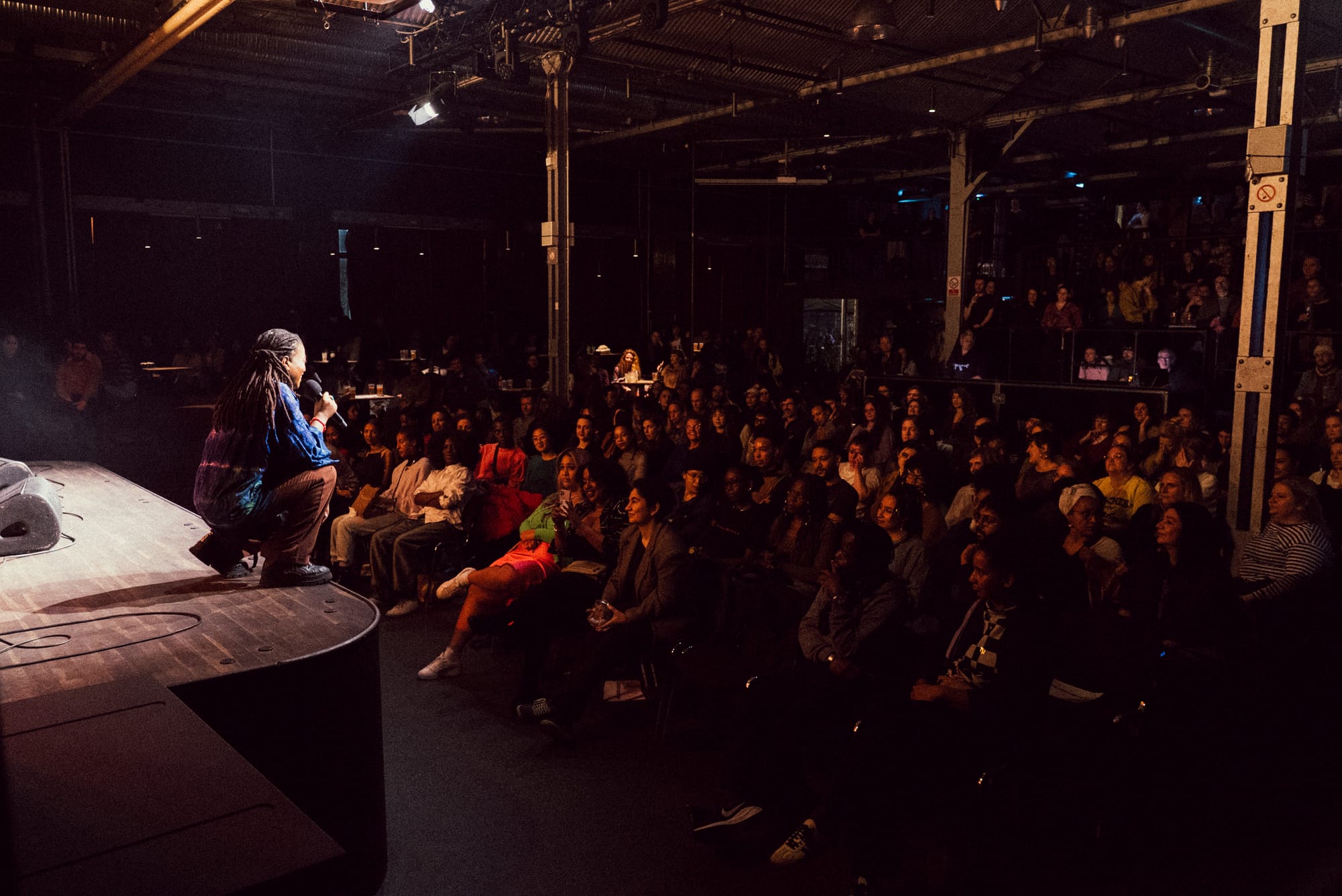
With the anthology Togetherness, which we published in celebration of our 10th anniversary, I really committed to the idea that we need more books. Looking back, it's incredible to see how far Poetry Meets has come. Over the years, we've welcomed artists such as aja Monet, Baloji, Les Nubians, Tank and the Bangas, Salin, and, in 2024, brought The Cavemen to Germany for the first time. What started as an open mic in a small Berlin bar quickly grew into a consistently sold-out event series, filling venues of up to 800 people. We’ve hosted editions and collaborations in Lagos, Accra, Nairobi, Amman, and Salvador de Bahia.
For me, the anthology became a way of archiving that journey; bringing together 40 artists in multiple languages, including German Sign Language, and for many of them, it was their first time being published. Togetherness is truly a homage to the artists, communities, and conversations that helped build Poetry Meets. The goal now really is to find pockets of prose everywhere, connecting with local communities who have been doing the work for years.
Collaboration is central to that. We’ve had wonderful partnerships, shout out to all these independent organisations and community spaces. It’s a constant struggle of sustainability, but the more we collaborate, the better. The more we connect, the better. The more we find spaces together, the better.
People still show up for these events in an increasingly digital world. What do you think that tells us about what people are actually hungry for?
Connection. Real tenderness and intimacy. There are so many listening sessions happening right now, even in Lagos. People are running toward more warmth, more presence. COVID forced us into digital spaces out of necessity, and I think many of us realised that it was putting us in a mental place we didn’t want to be in. The world is unravelling in a lot of ways right now. Art is a reminder of life. That’s what it can give us, a reminder that we’re still here, still human.
The anthology’s final chapter is called ‘(Be)longing’, a word play on being and longing. What does belonging mean to you, personally?
That wordplay is important to me. Belonging, for me, really means being present within myself but also becoming more communal. Especially in Berlin, where people can be quite individualistic. It means belonging to a community, to something larger than yourself. And beyond questions of where you come from, it’s really about where you are striving to go. For me, that can mean an alternative future, something we’re reimagining together.
That’s beautiful. What feels most urgent for you to explore right now? Where is your practice going next?
I’ve been moving into the sonic world, collaborating with a Kenyan artist, [Monrhea], on a track based on a sound installation I did at NCAI, which came out of my research on dreams in Nairobi. I asked people, including children, about their lucid dreams and began categorising them through a Yorùbá philosophical framework: the unborn, the living, and the ancestral realms. That research is feeding into new work now.
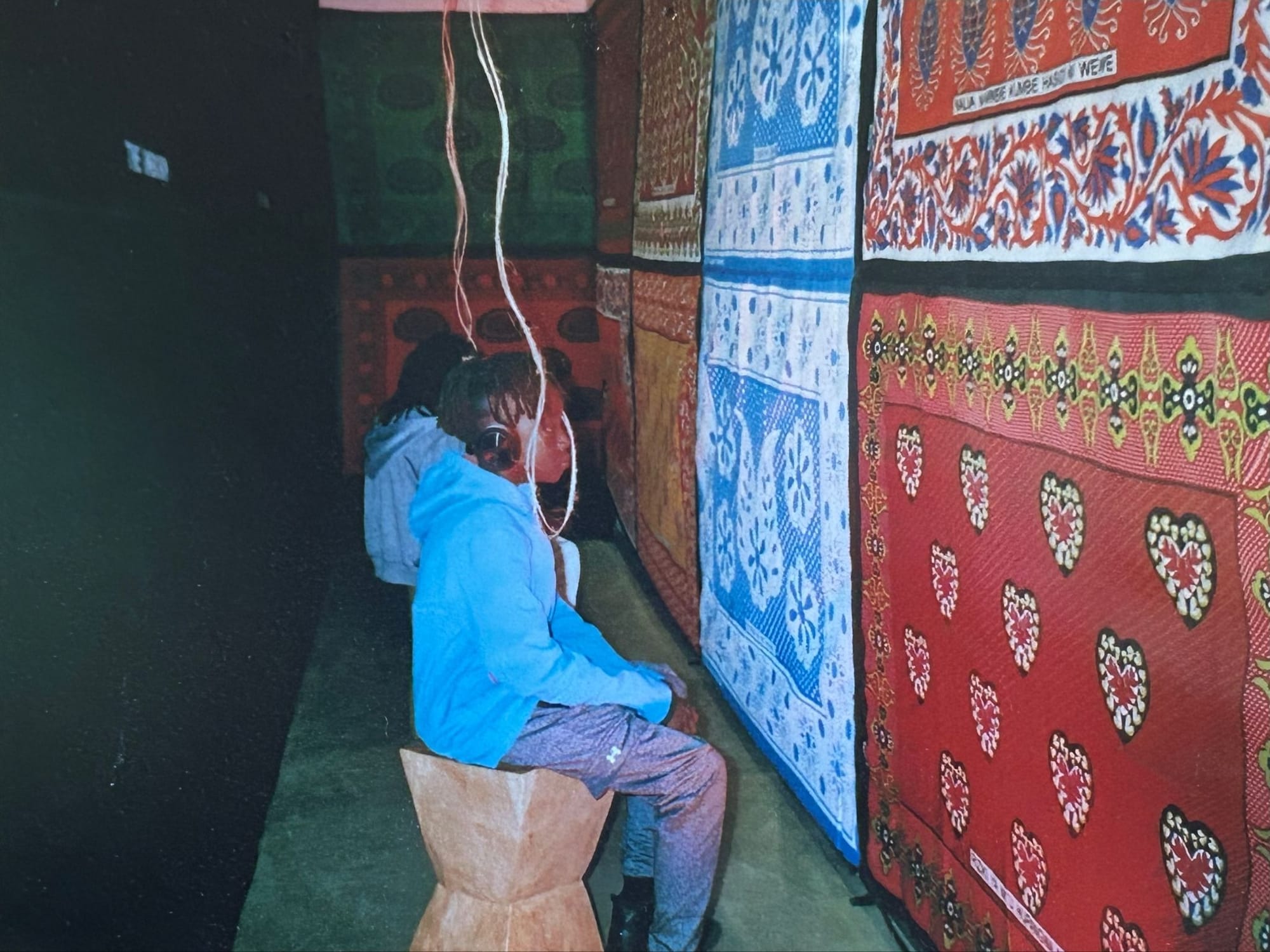
Sound has a way of holding memory and emotion. And I keep coming back to dreams, translating them into textures. I’m also spending more time on the continent. Working with people from the continent. That’s where I want to be right now.
I’m excited! Thank you for speaking with me. I enjoyed this.
Jumoke Adeyanju (mokeyanju) hosts Sauti ya àkókò and the Breakfast Show on Refuge Worldwide. Find Poetry Meets at @poetrymeets__.



Member discussion