


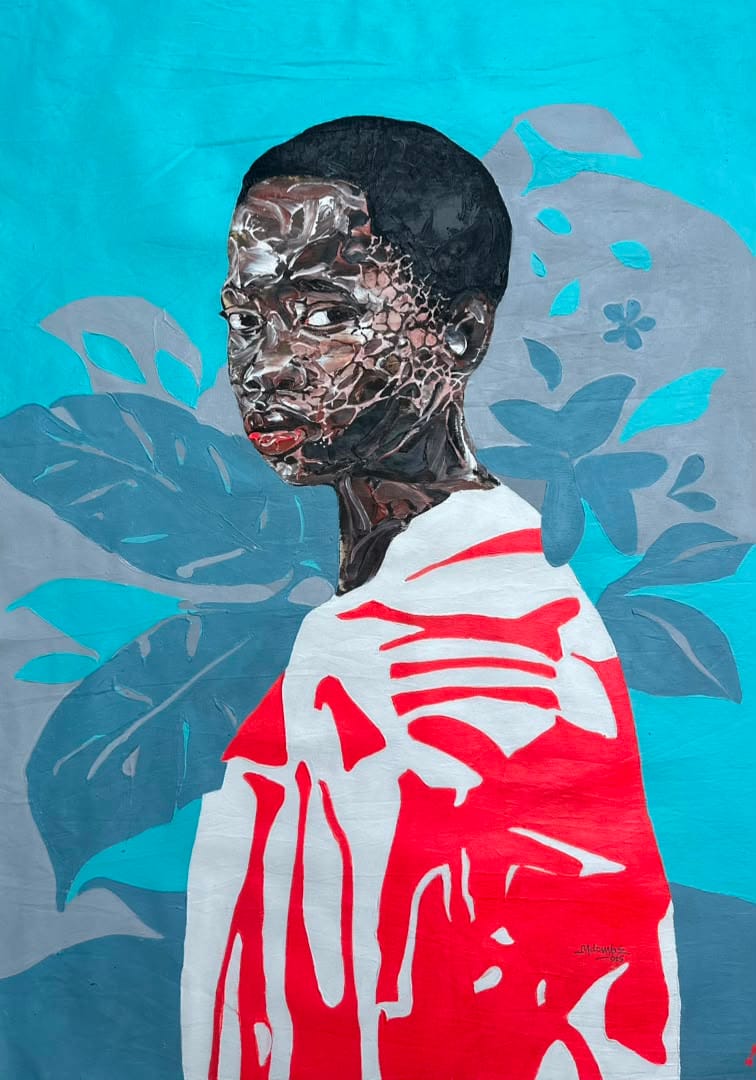
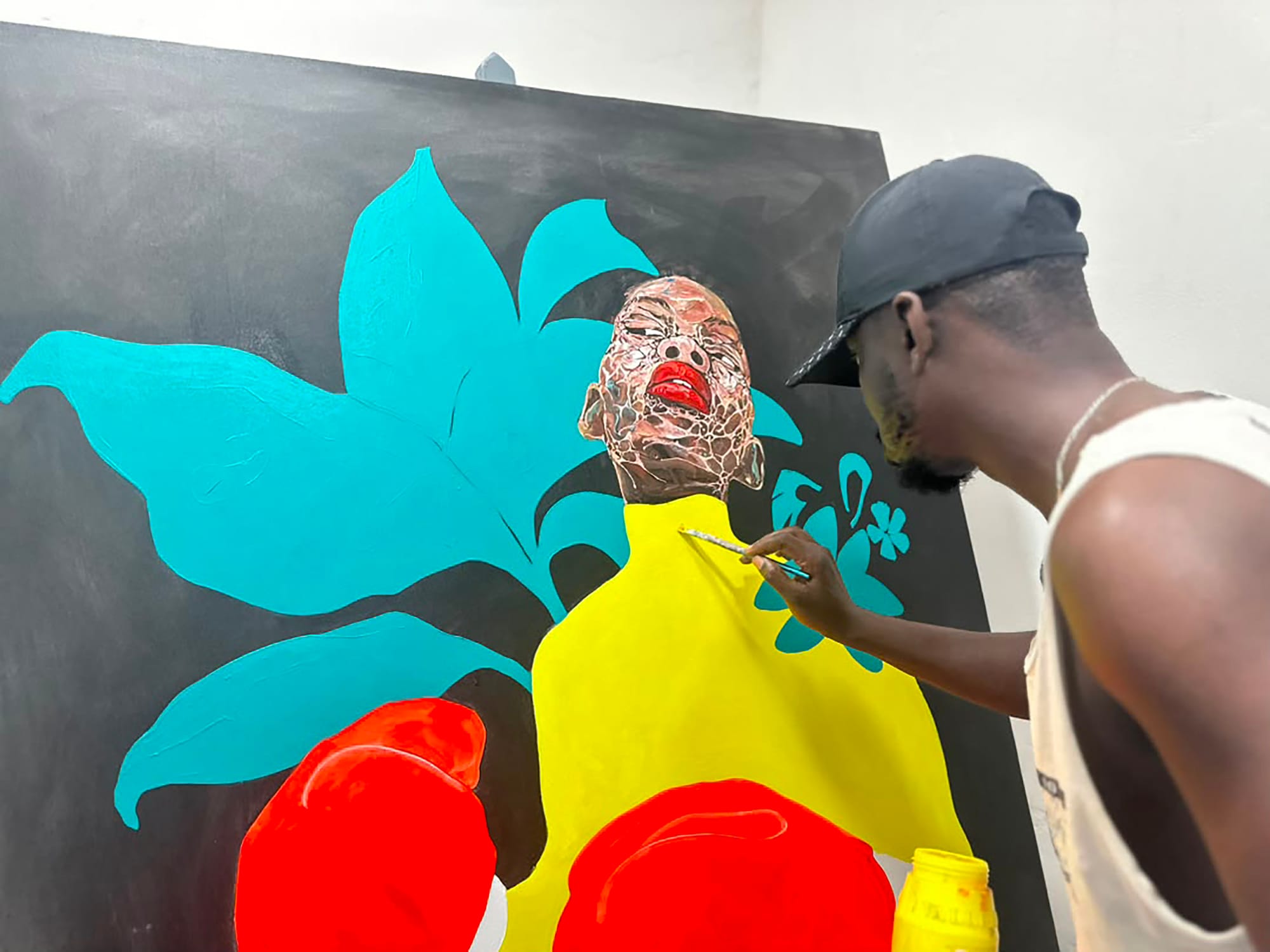
Sisqo Ndombe Akisieful, known as Lenoir, is a Congolese painter born in 1985 in Kikwit and raised in Kinshasa, where he trained at the Academy of Fine Arts. He paints portraits that centre on the eyes, characters whose gazes hold the viewer in place and carry the weight of the human experience while drawing inspiration from the realities of Congolese society. Working mostly with his fingers rather than brushes, he builds up his signature cracked, textured surfaces, marks he describes as symbols of the wounds and resilience that life leaves on people. His work centres on the gaze as a silent language between the subject and the viewer, while also exploring collective memory and, in some works, ancestral hairstyles and craft traditions. His work has since been presented internationally, following growing recognition from collectors and galleries after his paintings gained wider visibility through Instagram in 2021.
In this conversation, we spoke with Sisqo about how growing up around Kinshasa's mural painters shaped his eye, the meaning behind his portrait series Nos Regards (Our Gazes), his process of painting with his fingers, and how Africa's social and political shifts inform the questions he's asking through his art, particularly around youth and collective responsibility.
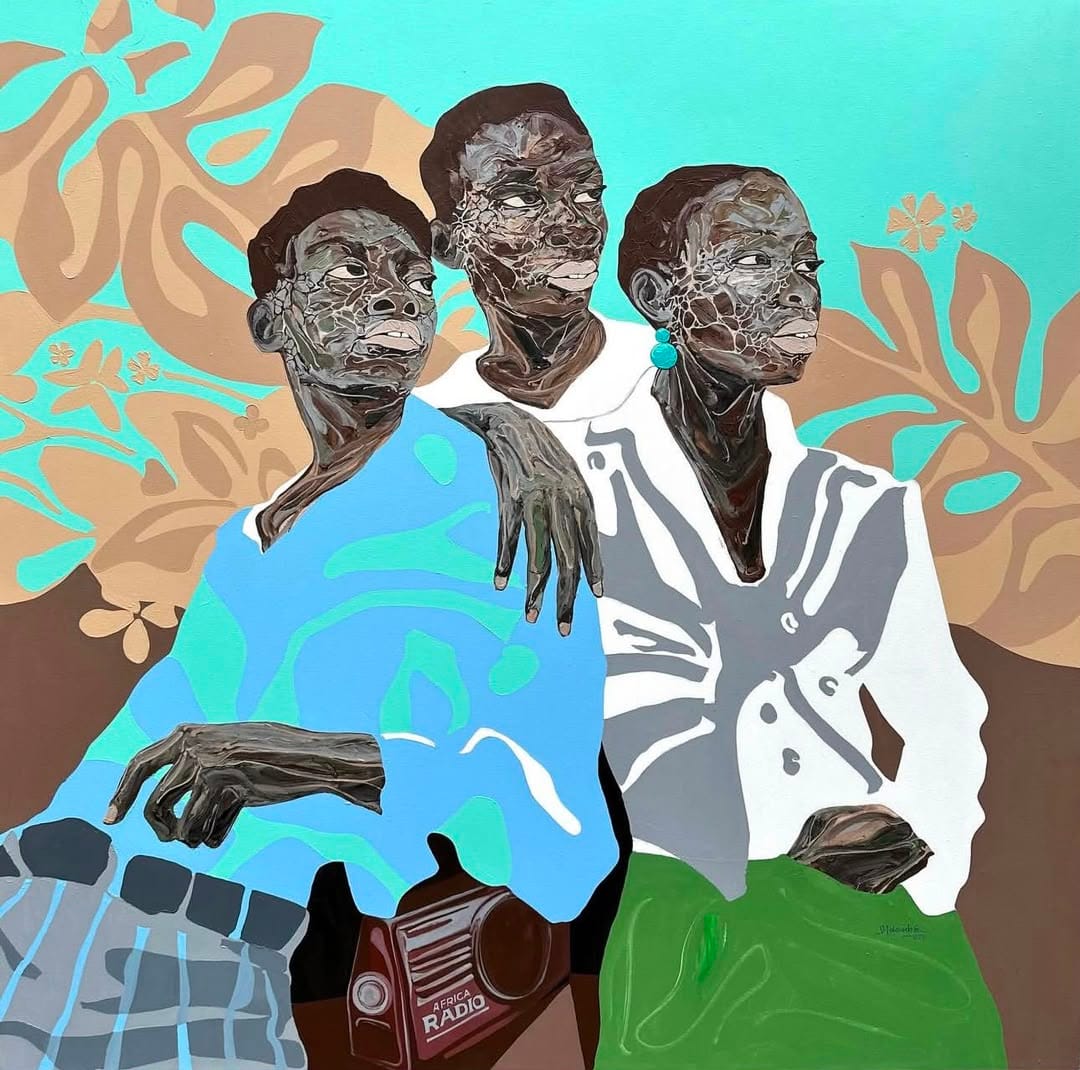
You were born in Kikwit and later studied at the Academy of Fine Arts in Kinshasa. Looking back, what experiences, people, or environments most shaped the way you see the world and approach your work today?
My story has been one of perseverance and resilience. I discovered drawing at a very young age, and even in primary school, my teachers were impressed by my ability to draw. Art has always felt natural to me; it is something that has been part of who I am for as long as I can remember.
Growing up in a creative environment surrounded by mural painters had a profound influence on me. I spent hours observing their work, learning from them, and challenging myself to improve. This spirit of observation and constant growth continues to shape my practice today.
Later, I studied at the Academy of Fine Arts in Kinshasa, where I refined both my technical skills and my artistic vision. My education helped me better understand the role of art as a way of exploring identity, emotion, and the human experience.
A major turning point came in 2020 when I began my portrait series, “Nos Regards” (“Our Gazes”). Through this body of work, I became increasingly interested in the power of the human gaze as a way of expressing dignity, resilience, and emotion. In 2021, collectors discovered my work through Instagram, which opened the door to collaborations with galleries and new artistic opportunities.
Looking back, I would say that the people and environments that shaped me most are those of everyday life in Congo. Their stories, struggles, and hopes continue to inspire my work and remain at the heart of my artistic practice.
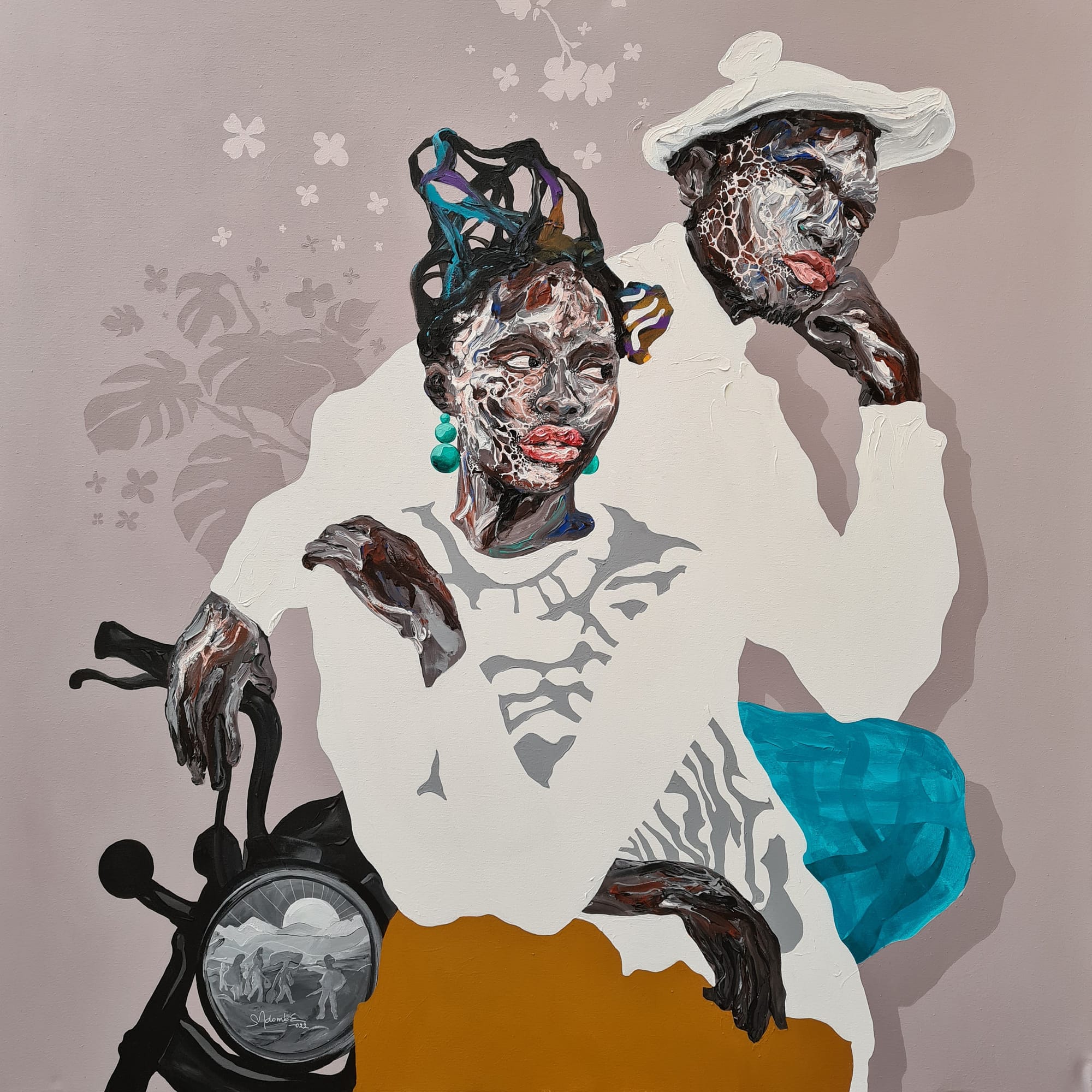
You have said that you paint everything that touches the human being. What continues to move or concern you most about the human experience, and how has this changed over the course of your career?
What continues to move me most about the human experience is our ability to endure, heal, and keep moving forward despite life’s challenges. I am deeply interested in human emotions, especially resilience and the invisible wounds that people carry within themselves.
Many of us experience pain, doubt, loss, or struggle, yet we often find the strength to continue. That capacity to rise above difficulties is something I find both powerful and inspiring. Through my portraits, I try to capture not only the visible appearance of my subjects but also the emotions and stories that lie beneath the surface.
The gaze is central to your paintings. When you first began exploring this idea, what did the gaze represent to you? Has your understanding of it changed over time, and if so, how?
The gaze is one of the most important elements of my work. Through it, I seek to create a direct connection between the viewer and my subjects. For me, the gaze is a universal language that does not require words to be understood. It invites the viewer into the painting, evokes emotions, and creates a silent dialogue between the artwork and the person experiencing it.
I am particularly interested in the idea that viewers can see a part of themselves in my subjects. Each person brings their own memories, emotions, and experiences, and the gaze becomes a meeting point between these different realities. My portraits do not seek to provide answers; rather, they invite reflection. Through the eyes of my subjects, I hope viewers can connect with something deeply human, regardless of their cultural background or personal story.
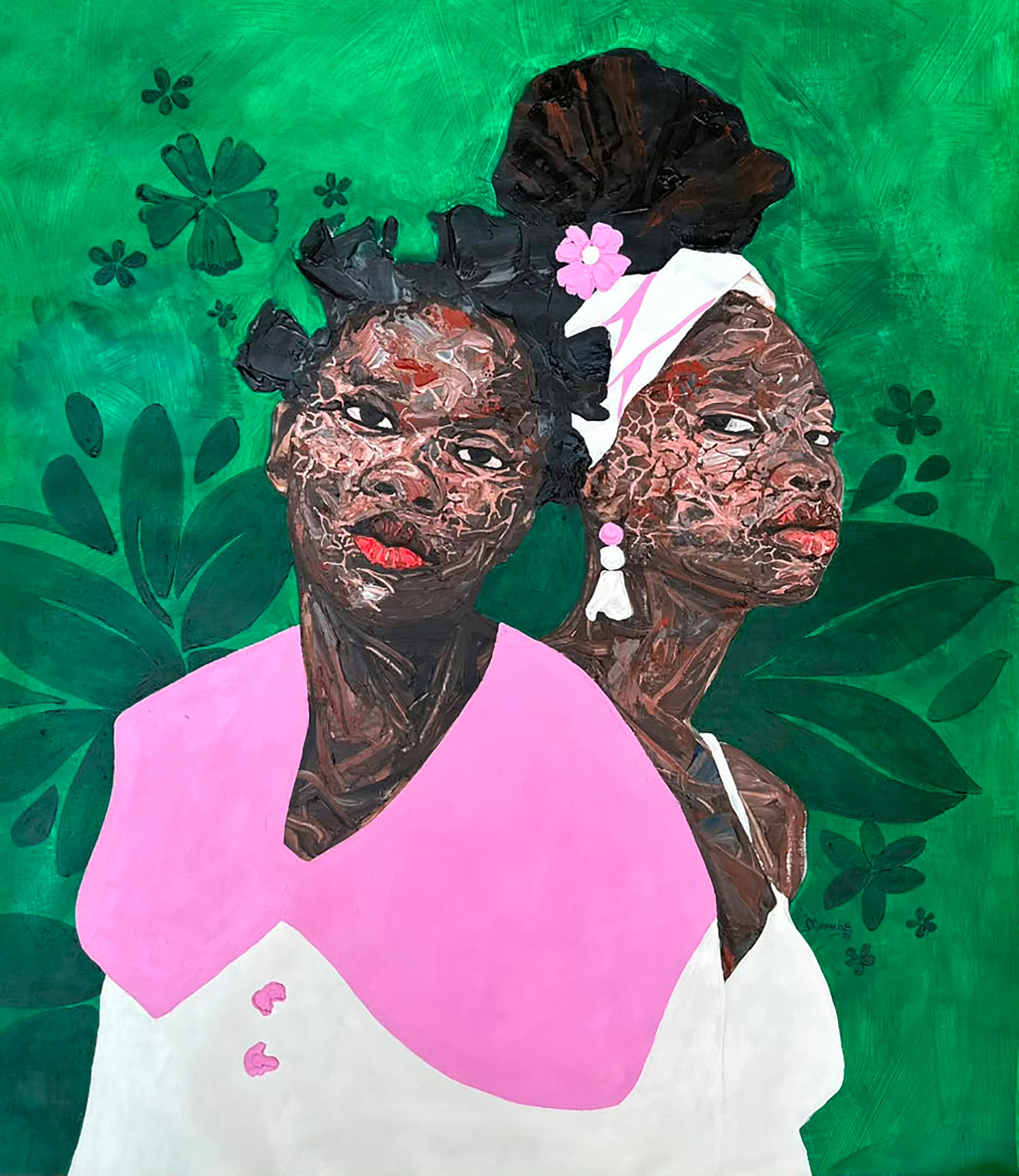
Many of your works reflect on Congolese society while also speaking to broader African realities. As Congo continues to evolve politically, socially, and culturally, how do these developments influence the questions you ask through your art today?
The political, social, and cultural changes taking place in Congo deeply influence the questions I explore through my art. I am particularly concerned about the challenges facing young people today. We live in a society where the youth represent a tremendous force for change, yet they are often influenced, manipulated, or distracted from recognising their own power and responsibility.
Through my work, I hope to encourage greater awareness and reflection. I believe that the future of our country depends largely on its youth and their ability to think critically, engage with society, and take an active role in shaping their future. My art is not about providing answers or making political statements; rather, it seeks to raise questions and inspire dialogue. In that sense, my work reflects my hope for a generation that is more conscious, more empowered, and more committed to creating positive change within their communities and beyond.
We are interested in the relationship between art, craft, and community. Your work draws on symbols such as ancestral hairstyles, textures, and techniques that carry cultural meaning. How do you see your practice connecting to Congolese craft traditions, collective memory, and community life?
My work often incorporates ancestral hairstyles because I see them as much more than aesthetic elements. They are part of our cultural heritage and carry stories, knowledge, and traditions that have been passed down through generations. In many African societies, hairstyles have historically reflected identity, social status, community belonging, and even personal history. By including them in my paintings, I seek to celebrate and preserve these cultural markers while reconnecting them to contemporary narratives.
More broadly, I am deeply interested in the idea of collective memory. I believe that art has the power to keep memories alive and to create a bridge between the past and the present. Through my portraits, I explore the traces of history, culture, and shared experiences that continue to shape who we are today. In this sense, my work is not only about individual identities but also about remembering and honouring the stories, values, and traditions that connect us as a community.
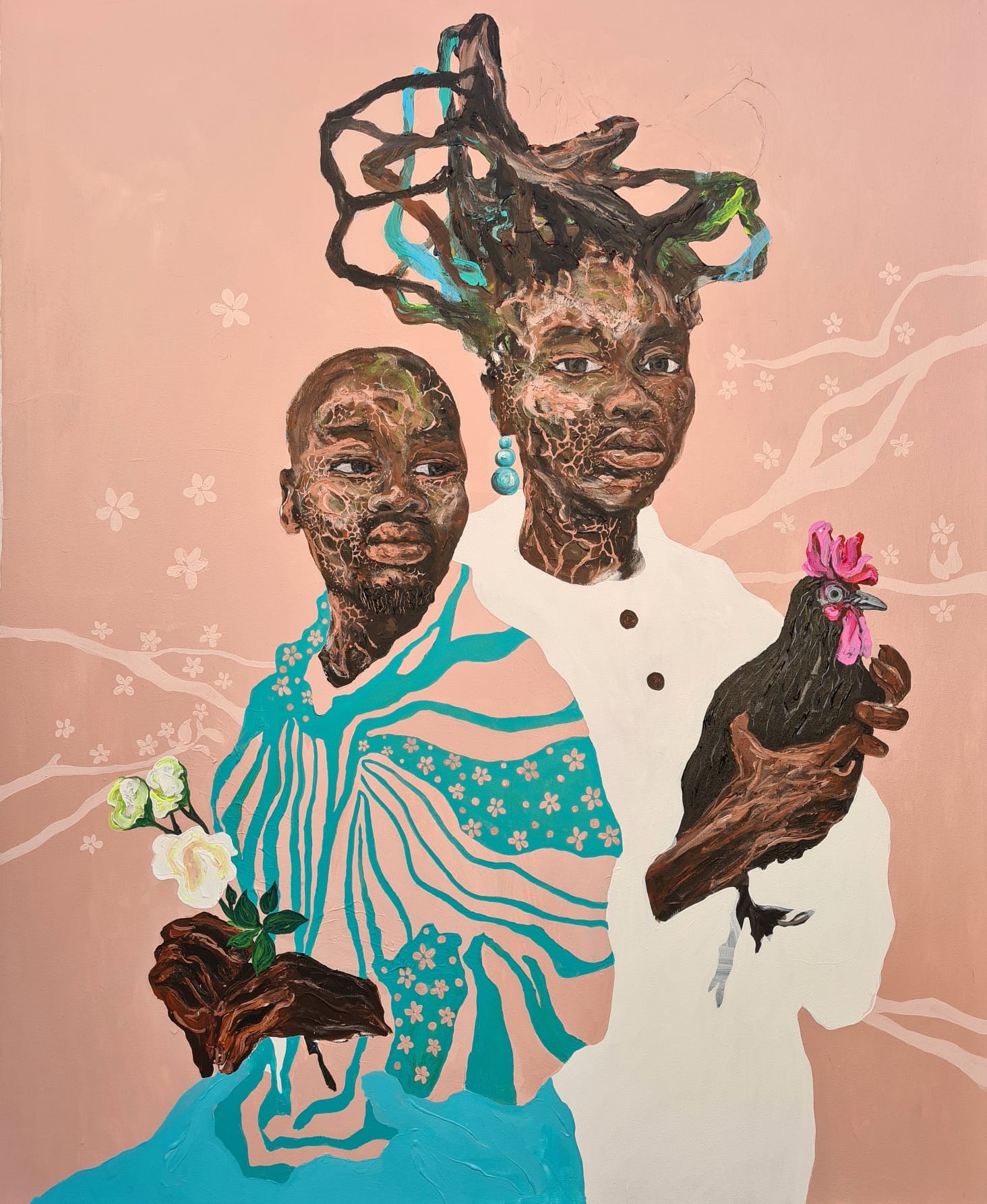
Your paintings often feature symbolic elements, including cracks, lines, colours, and patterns. Could you share how you think about symbolism in your work? What roles do colour and line play in communicating emotion, memory, or meaning?
Symbolism plays an essential role in my work. Every visual element serves a purpose beyond aesthetics and contributes to the narrative of the painting. The cracks, for example, are a recurring feature in my work. They symbolise the wounds, struggles, and experiences that life leaves on each of us. They speak to human vulnerability, but also to resilience, because despite these fractures, people continue to move forward, rebuild themselves, and carry their stories with dignity.
Colour, lines, and patterns help me communicate emotions and meaning. Together, these elements allow me to explore themes of identity, memory, and the human experience, while inviting viewers to connect with the work in their own personal way.
Your paintings invite viewers into a dialogue through the eyes of your subjects. Has the way you think about your audience changed over time? What kind of encounter or reflection do you hope your viewers leave with today?
Over time, the way I think about my audience has evolved. Today, I see the viewer as an active participant in the work rather than a simple observer. My paintings are not meant to deliver a fixed message; instead, they create a space for reflection, interpretation, and personal engagement.
What I hope viewers leave with is a moment of introspection and, perhaps, a sense of questioning. Through the gaze of my subjects and the emotions they convey, I invite people to reflect on themselves, their experiences, and their relationship with others. If my work can encourage even a small shift in perspective or inspire a deeper understanding of the human condition, then I feel it has fulfilled its purpose.
As digital technologies increasingly shape how art is created, shared, and experienced, what are your thoughts on digital art and its place within contemporary African artistic practice? Do you see it as opening new possibilities for storytelling and connection?
I remain deeply attached to traditional painting, to the gesture, the materiality, and the physical presence of the artwork. However, I recognise that digital tools have transformed the way African artists share their work, tell their stories, and connect with international audiences.
In my own journey, social media has played an important role in allowing collectors, galleries, and art enthusiasts from around the world to discover my work. In my view, digital technology does not replace traditional forms of artistic expression; rather, it serves as a complementary tool that fosters exchange, expands visibility, and encourages dialogue across cultures.



Member discussion