


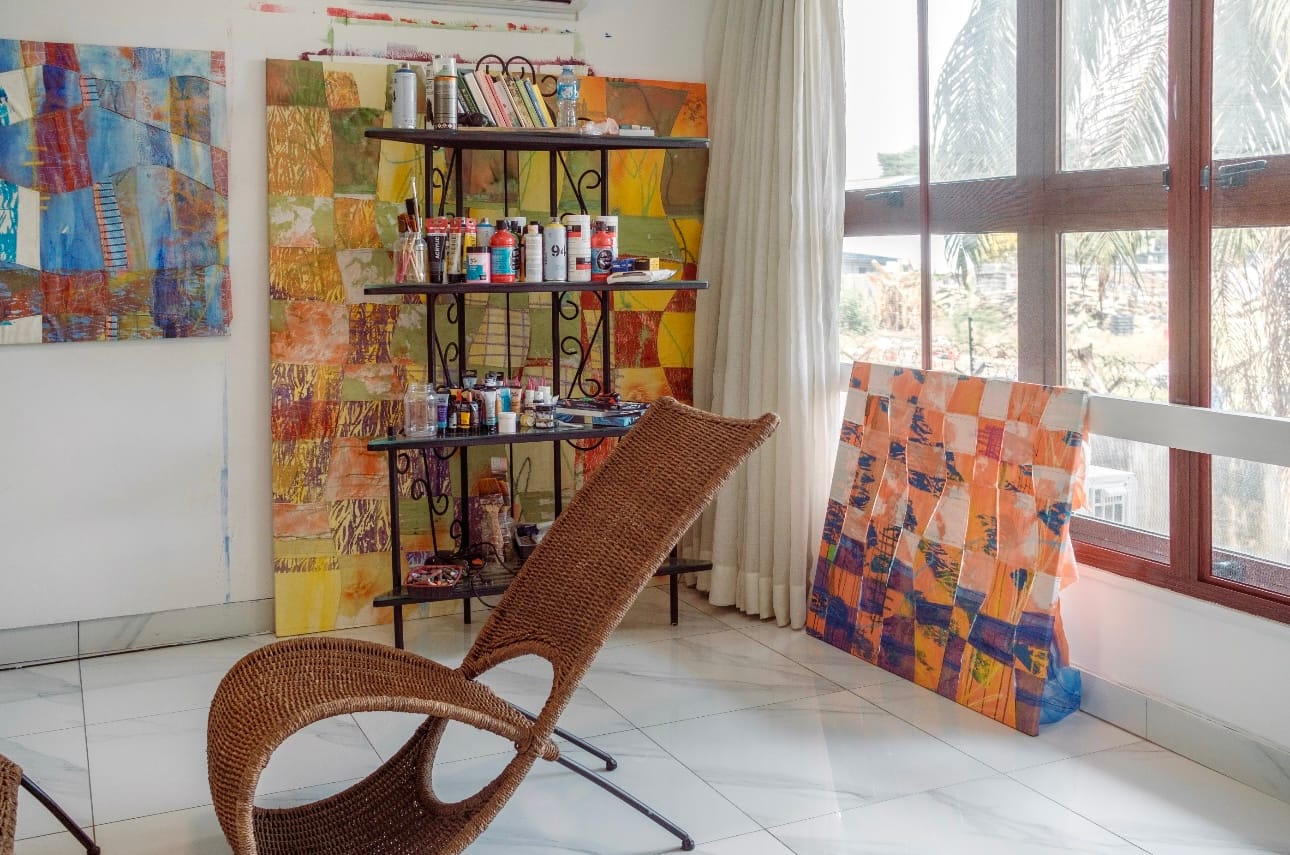
Nola Ayoola is a Lagos- and New York-based interdisciplinary artist whose practice moves across portraiture, sculpture, and woven abstract compositions. Working in what she calls “hybrid-scapes”, layered, dreamlike environments that merge abstract vision with tactile, textured form, Nola translates memory and emotion into a visual language shaped by weaving, hand printing, and collage. Her compositions often carry symbolic materials rooted in her Yoruba heritage, from interwoven textiles to cowrie shells, forming a visual vocabulary that is culturally grounded yet open to collective interpretation.
Named one of Artsy’s “5 Artists on Our Radar” in 2025, Ayoola has shown work at international fairs including The Hamptons Art Fair, Latitudes Art Fair, and Investec Art Fair, and has been featured in public installations including a New York Fashion Week collaboration with Head of State and Nike.
In this conversation, we talked about the places that have shaped her practice, the Yoruba traditions that inform her technical process, how art has helped her hold grief and uncertainty, and what she hopes people recognise in themselves when they encounter her work.
Your work is often described around memory, belonging, and cultural continuity. What are the places and histories that have shaped you, from your family roots in Nigeria to the different environments you’ve lived in?
I feel like my work is heavily based on lived experience and identity. We’ve always carried places with us, even when we’re no longer there, and these places form who we are as people. My connection to Nigeria and specifically Lagos, where I grew up in my formative years, has been shaped by different experiences across generations. My family’s ancestral hometown, where my grandparents lived, has served as my grounding, my compass.
Spending time with my grandparents meant stories, rituals, and understanding what it means to be from where I’m from; values that are still instilled in me as a modern Yoruba woman. I’ve also lived in the UK for most of my formative years, and later moved to New York. So my work is essentially a hybrid of different life experiences, the different places and people I’ve carried with me. I’m really interested in how we carry people, community, and histories within us, and how they continue to shape us long after we’ve left them.
Speaking on being a modern Yoruba woman. How do Yoruba mythology and cultural tradition, even histories from before you were born, shape the way you think about identity, memory, and image-making?
They shape so many things, even the technical way I work. I’m really drawn to traditional craftsmanship: textiles, indigo. That’s where the whole concept of weaving in my work came from, and how I turned it into my own visual language. I work in portraiture, sculpture, and what I call my abstract ‘scapes,’ but what I value isn’t just the imagery; it’s being tactile, incorporating traditional skills, and then iterating on them through my own lens.
Yoruba tradition has taught me that memory isn’t just personal; it’s carried through generations, the way skills were passed on. I remember watching people weave baskets and dye cloth growing up, and I know those skills existed for centuries before my time. So this is me carrying them on. Rather than illustrating mythology, I’m interested in making work that holds space for different realities, histories, and emotions to coexist, weaving these elements together.
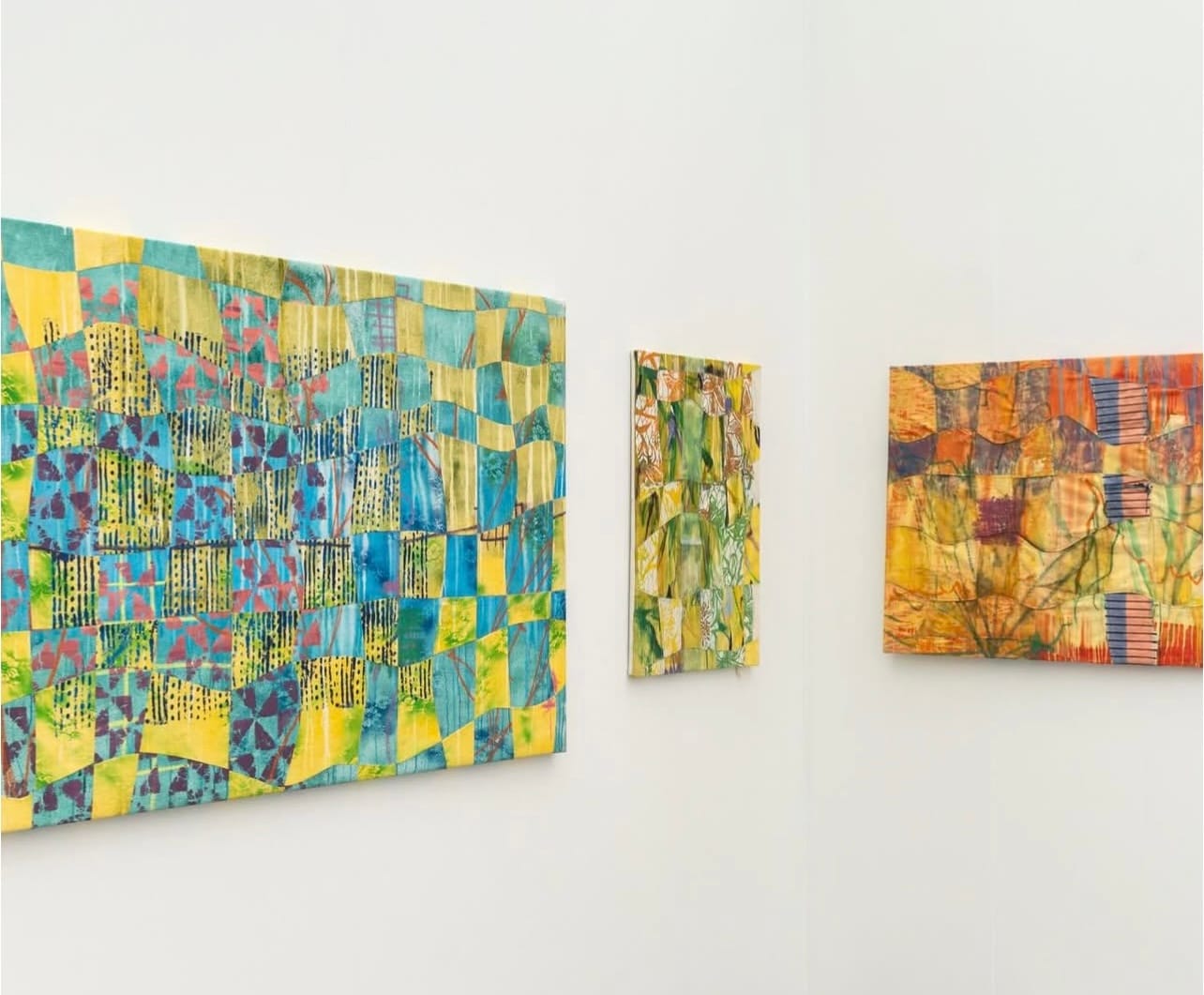
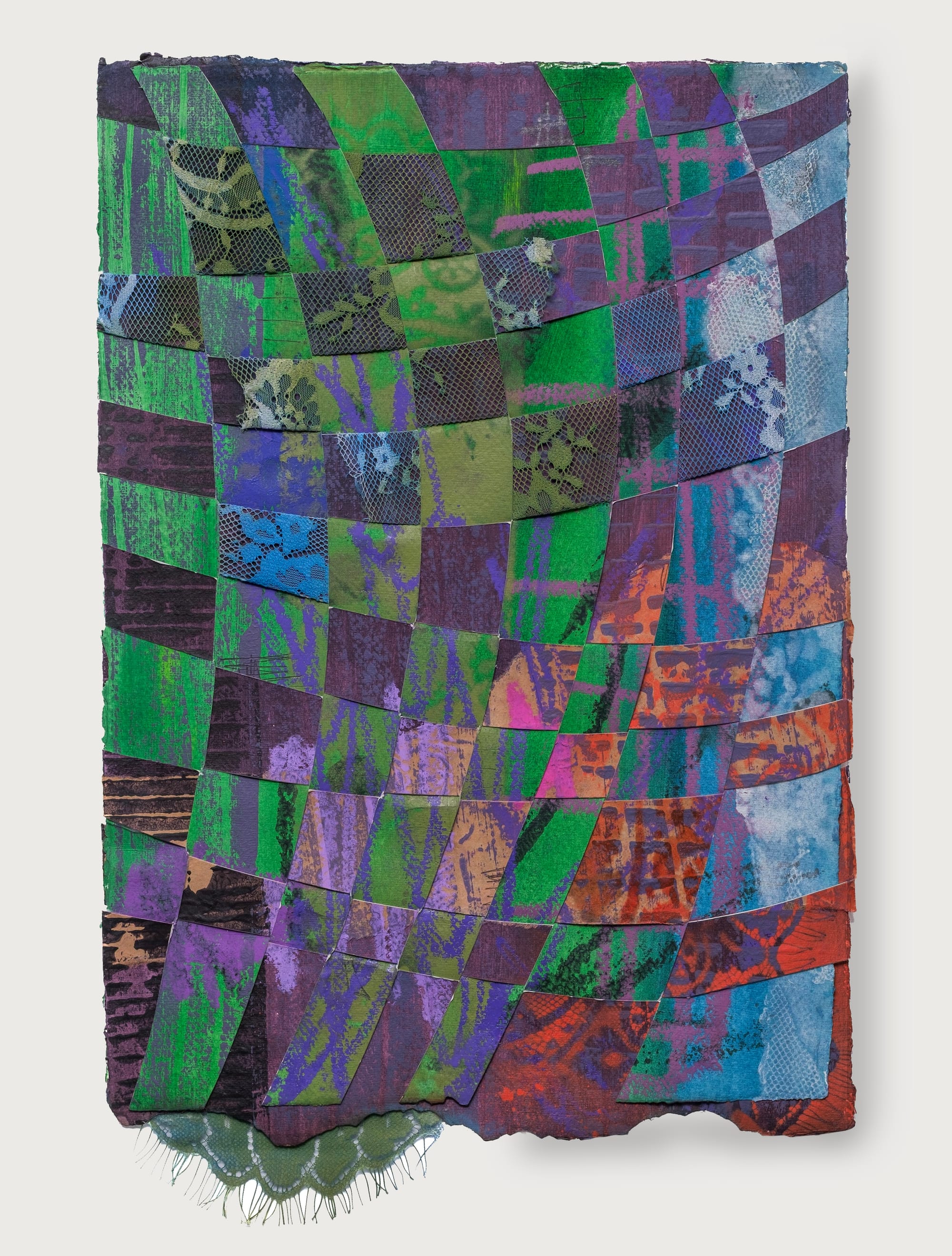
Cierra Britton gallery: Solo presentation, Untitled Art Fair, Miami, 2025 || A place I could carry, 2026 Acrylic, oil pastel, lace, ink, collage, pencil, spray paint, archival paper, woven 56.13 x 48.51cm, 22.1 x 16.5 in
That process has been described as a form of visual journaling. What are the questions you keep coming back to, and how have they evolved since you were a child watching people weave baskets?
As a child, I was probably more intrigued by the process itself. The older I got, the more I started to interrogate things: deeper things, like emotions and life experience, and how they translate through art. Why the colour blue? What were the weavers thinking? My studio is a place for interrogation; I’m always asking questions, and the process is just as important to me as the finished work.
Sometimes I even get sad when a piece is finished, because I really enjoy the process, the stitching, the weaving, the asking. It’s almost like I’m studying, and the audience is watching me study, or seeing me bring up things they hadn’t thought of. It’s like tearing things apart and piecing them back together, almost like a puzzle. That’s how I view my practice.
I always enjoy seeing curiosity in art. How has making art changed the way you experience your own emotions outside of the studio?
Emotions can be overwhelming and hard to put into words, and my practice has become an outlet for expressing what I’m not able to articulate otherwise. I’m an interdisciplinary artist, so sometimes I can tell a story through portraiture, and other times something is heavier, and that’s where my abstract work speaks for me.
Making hasn’t made emotions any simpler, but it’s helped me stay with them, or make sense of things I can’t make sense of with just my thoughts. The studio has taught me that not everything needs to be understood immediately; sometimes things need to pass through your hands, or sit there, before they become clear. It’s given me a different relationship with uncertainty: that it’s okay to sit in the in-between feelings. If you’re going through grief, which I have, it’s a rollercoaster: one day you’re coping, one day you’re happy, one day you’re sad, one day you’re numb. There are so many in-between spots people can’t necessarily put into words. My practice has allowed me to create those in-betweens, to give shape to things there’s no language for.
I love that. What do you think art can confront that conversation, books, or even protest can’t, and why does that feel important right now?
I think art reaches places that language may not. Conversations tend to ask you to explain yourself; sometimes, books ask you to follow an argument. Art just allows you to experience something before you’ve fully understood it.
When it comes to confrontation, I’m not trying to create shock; I’m thinking from a place of honesty. Art has a way of bringing things to the forefront and letting us face what we’ve probably been avoiding: grief, joy, memory. A lot of my titles have a direct connection to the piece, and once people see the title and then the work, they’re able to piece things together; it often brings a sense of nostalgia, which links back to memory. It also allows for tenderness, and sometimes contradiction. Everything is so fast-paced now; there’s something about creating moments where people can just pause and feel.
Has there been a moment where a viewer’s interpretation of your work shifted or expanded your own understanding of a piece?
One hundred per cent, that’s the beauty of abstract work especially. I might know why I made something; I might have a personal experience behind it, but I don’t like to impose that narrative on people. I want people to think critically for themselves and bring their own emotions to it.
When people come to the studio or to a show, I try not to talk too much about the work, because I want them to connect to it in their own way. I’m always curious what they see, how it makes them feel. And I’m often surprised, because I realise people are more connected than we give ourselves credit for. I might paint someone close to me, and someone else will see it and tell me they had an aunty who used to sit exactly like that. People carry similar stories of community and life experience, even through abstract or sculptural work. That’s the whole purpose of art for me, for people to connect to it however they want, and for us to come together and talk about what we each feel. That emotional connection is extremely important to my practice.
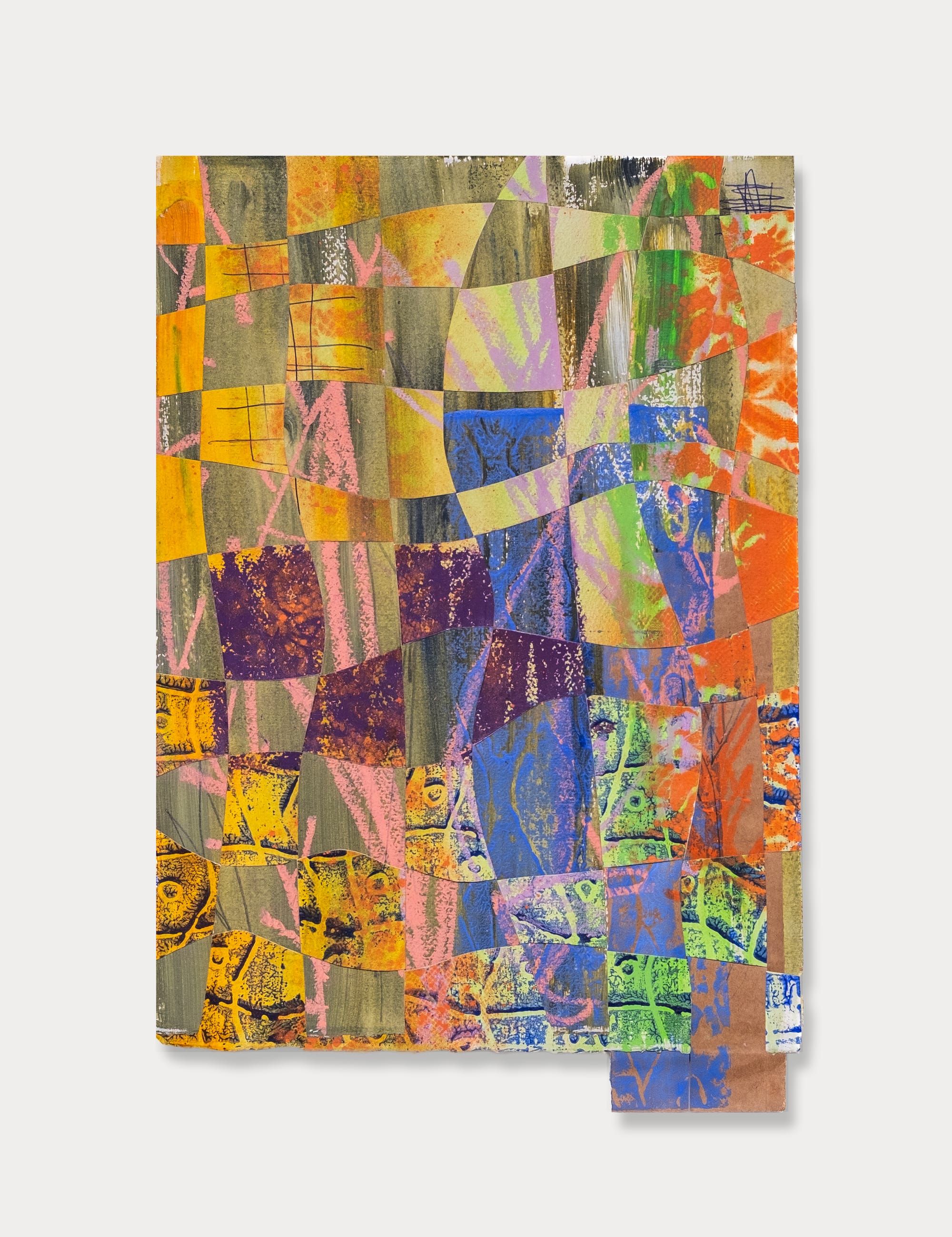
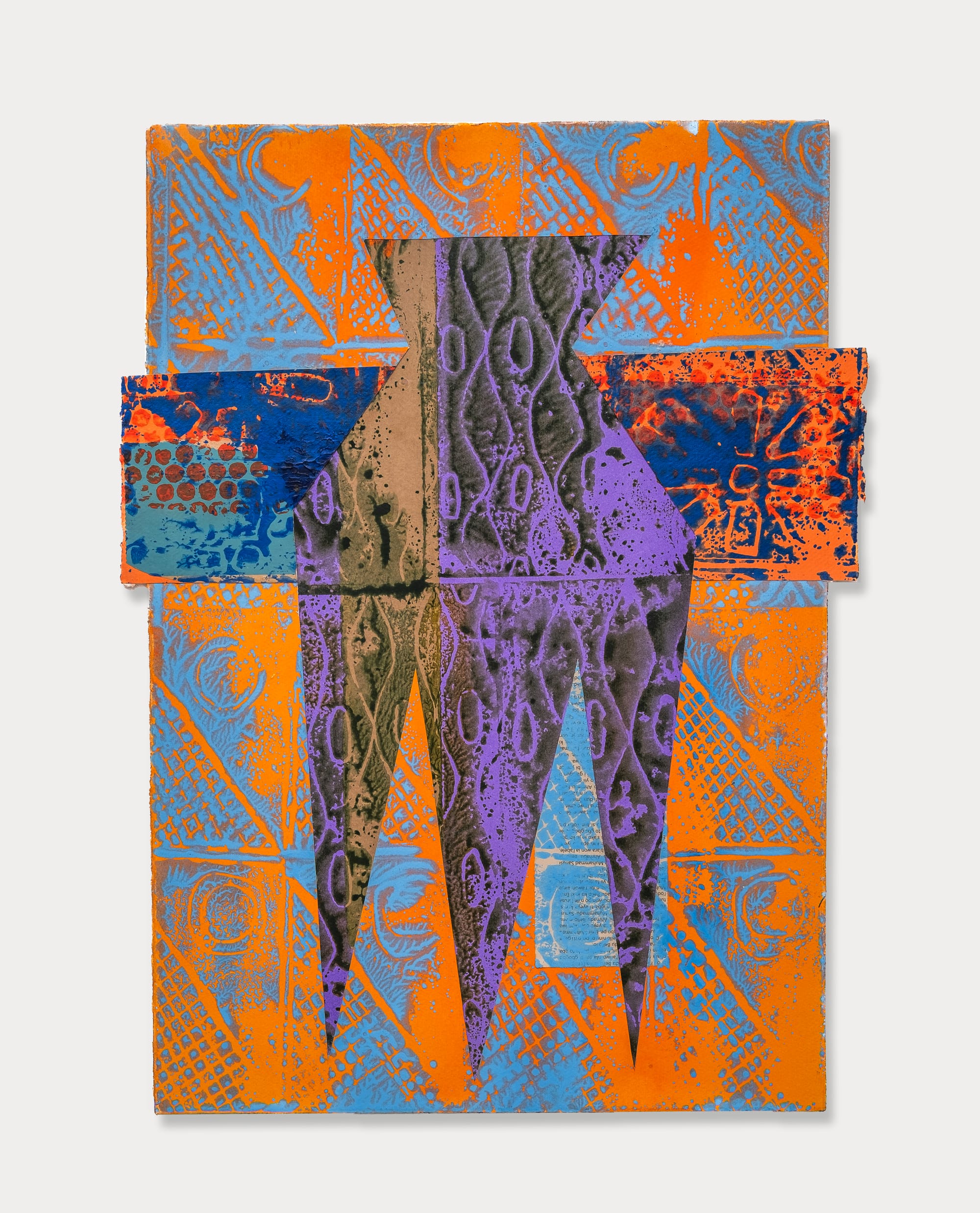
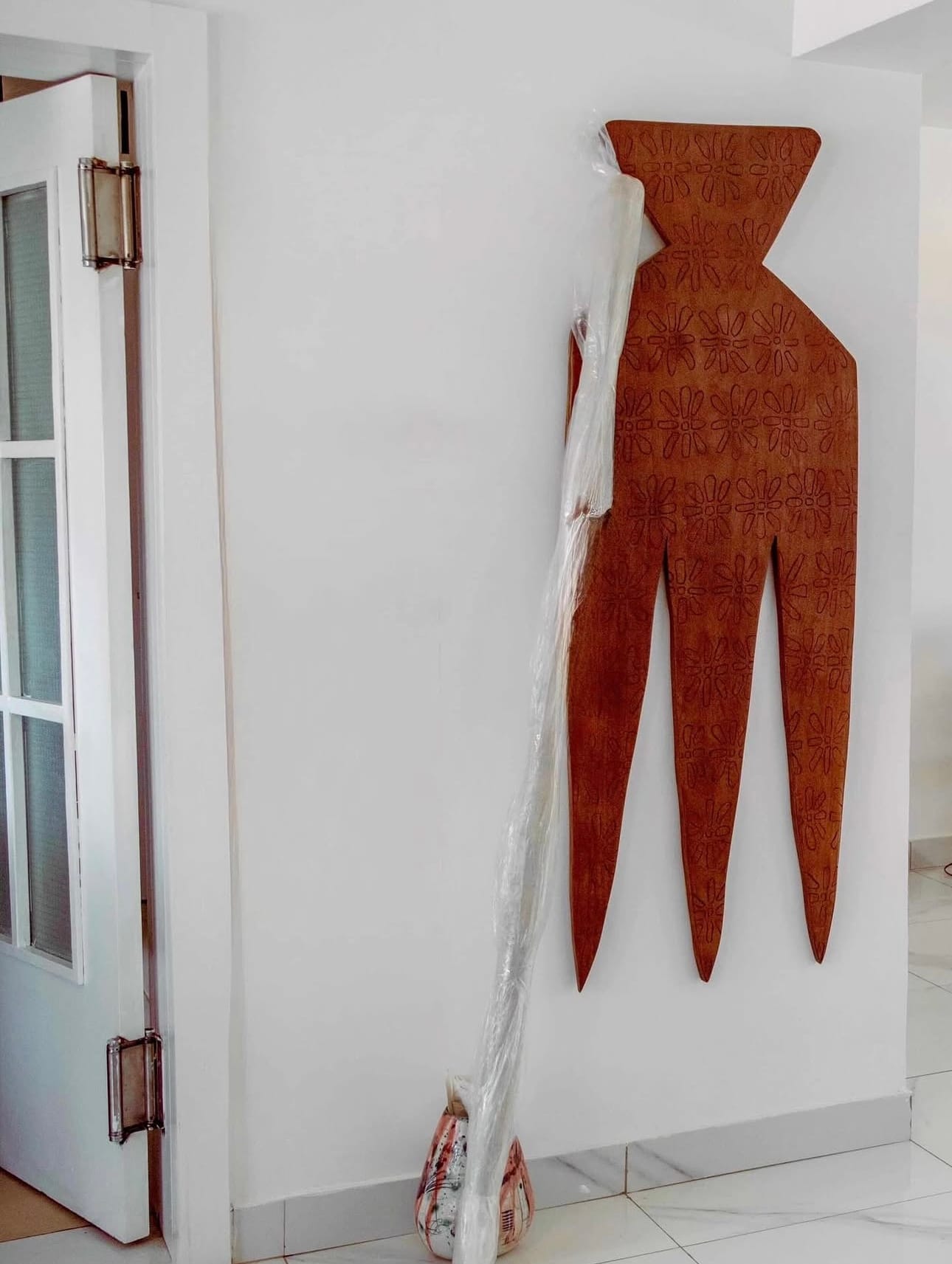
Violet Savannah' III (2025) 16.5 × 11 inches 41.91 x 27.94 cm collage, archival paper, oil pastel, acrylic paint, pencil, Ink, spray paint || Self Portrait' 9 ['Ilarun' (Comb) Series] (2025) 22 x 16.5 inches 55.88 x 41.91 cm Collage, archival paper, oil pastel, acrylic paint, pencil, ink
That’s beautiful. When people encounter your work, what do you hope they recognise about themselves?
I hope they connect to themselves on a deeper level. I hope it brings people together, and that they feel connected to each other. Even though my work is rooted in my culture, my tradition, Yoruba mythology, and my lived experience, I love that someone from across the world with a completely different culture can still resonate with it because there are universal feelings, universal emotions.
I want people to walk away and think. I want it to be therapeutic, meditative, with the landscapes and hybrid woven pieces especially; I want them to transport you into a psychological place you can just sit with.
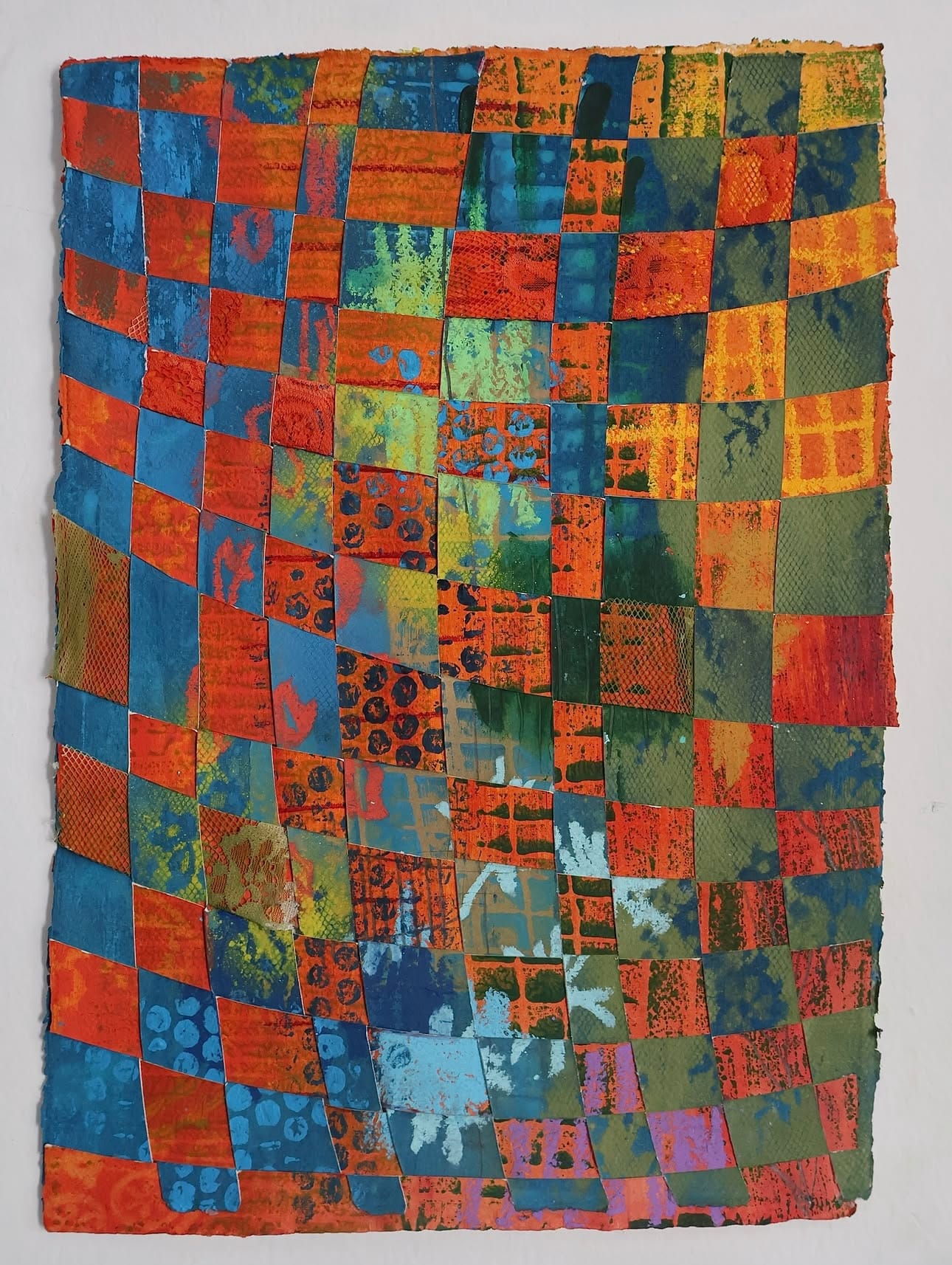
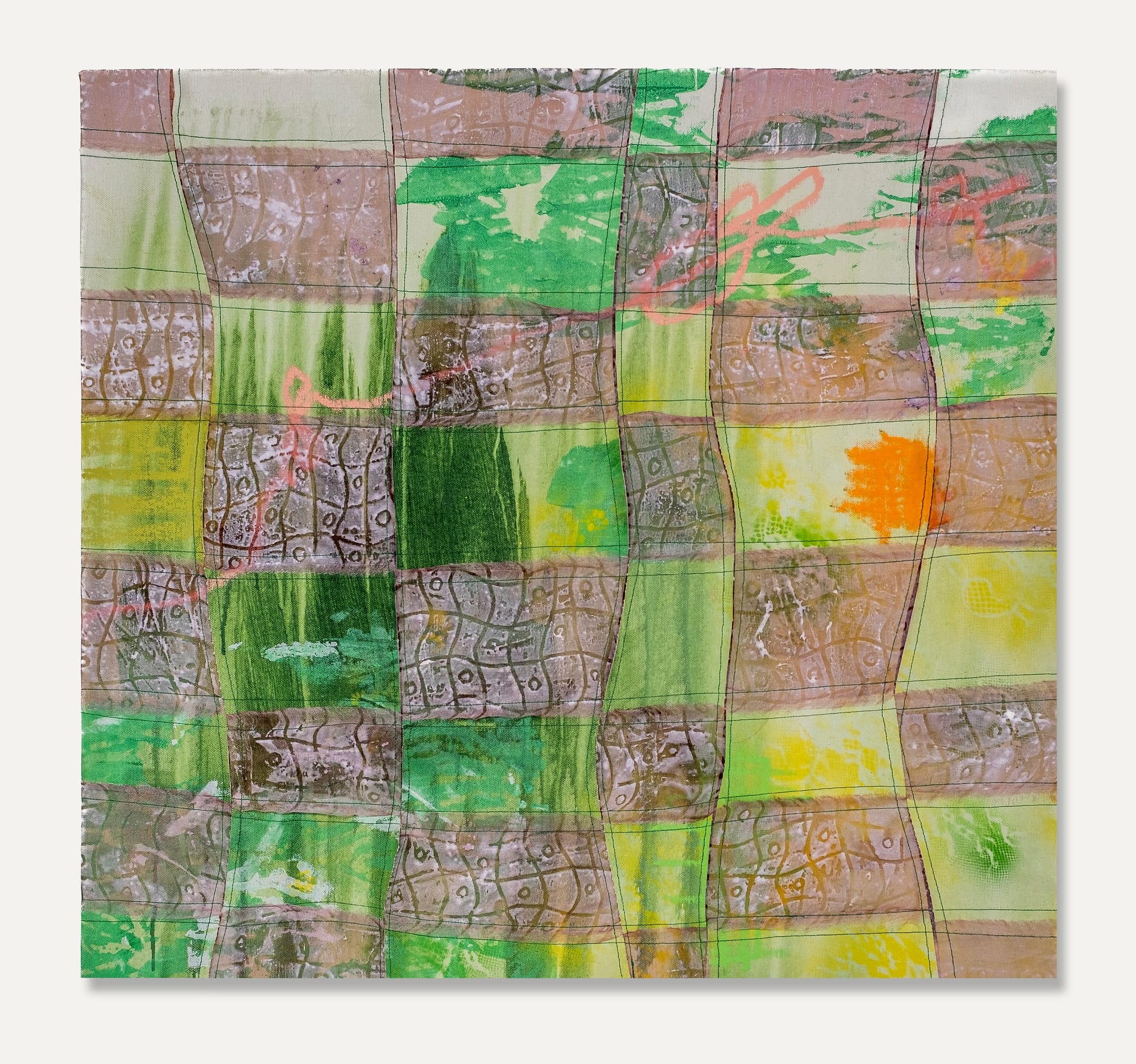
'All that followed me here' (2026) 16.5 × 11.6 inches 41.91 × 29.46 cm Acrylic, oil pastel, lace, ink, collage, pencil, spray paint, archival paper, woven || Green Haze' (2026) 26 × 28 inches 66.04 x 71.12 cm Woven: Canvas, organza, oil pastel, silk screen ink, dye, pencil, acrylic paint, thread, spray paint
Looking ahead, what territories, questions, or experiences are you interested in exploring next?
Probably scale. I want to create more immersive spaces that people can move through, rather than just observe. I’m also curious about how memory doesn’t only exist in objects. My sculptural work is based on objects and the meaning we attach to them, so I’d like to explore other objects that carry meaning, and what they tell us about our experiences in life.
I just want to keep following my emotions, keep asking questions, keep interrogating; it’s parallel to living life. Whatever I go through will show up in my work. I want to continue moving through life and to keep furthering my visual language.
Amazing! It was lovely speaking with you; I'm excited for what’s to come.


Member discussion