


Introduction
Africa has been building for a very long time. Long before concrete and steel, architectural schools and building permits, people across Africa were solving the same problems every builder faces today: how do you keep a home cool, make something that lasts, and tell people who you are? And they were solving them with extraordinary creativity.
The trouble is, a lot of this history has been overlooked and misattributed, which is a shame, because the things people are talking about in construction right now are things Africa has already figured out. Building in a hot climate without relying on air conditioning. Using local materials instead of importing everything from somewhere else. Holding on to the skills and knowledge passed down through generations, rather than replacing them with foreign techniques. These are urgent conversations today, but were everyday practice here for centuries.
This is not an exhaustive list, and it barely scratches the surface of a continent with over fifty countries and countless distinct building traditions. These are 9 features that we find ourselves drawn to, and wanting more people to know. We hope at least one of them does the same for you.
Earthen Mud Brick Walls
At first glance, a building made of mud might not sound very impressive, but once you step inside a well-built earthen structure on a hot afternoon, you'll immediately understand its genius. Mud brick construction has been practised across the Sahel, the Nile Valley, and North Africa for over 3,000 years, producing some of the most striking buildings the world has ever seen.
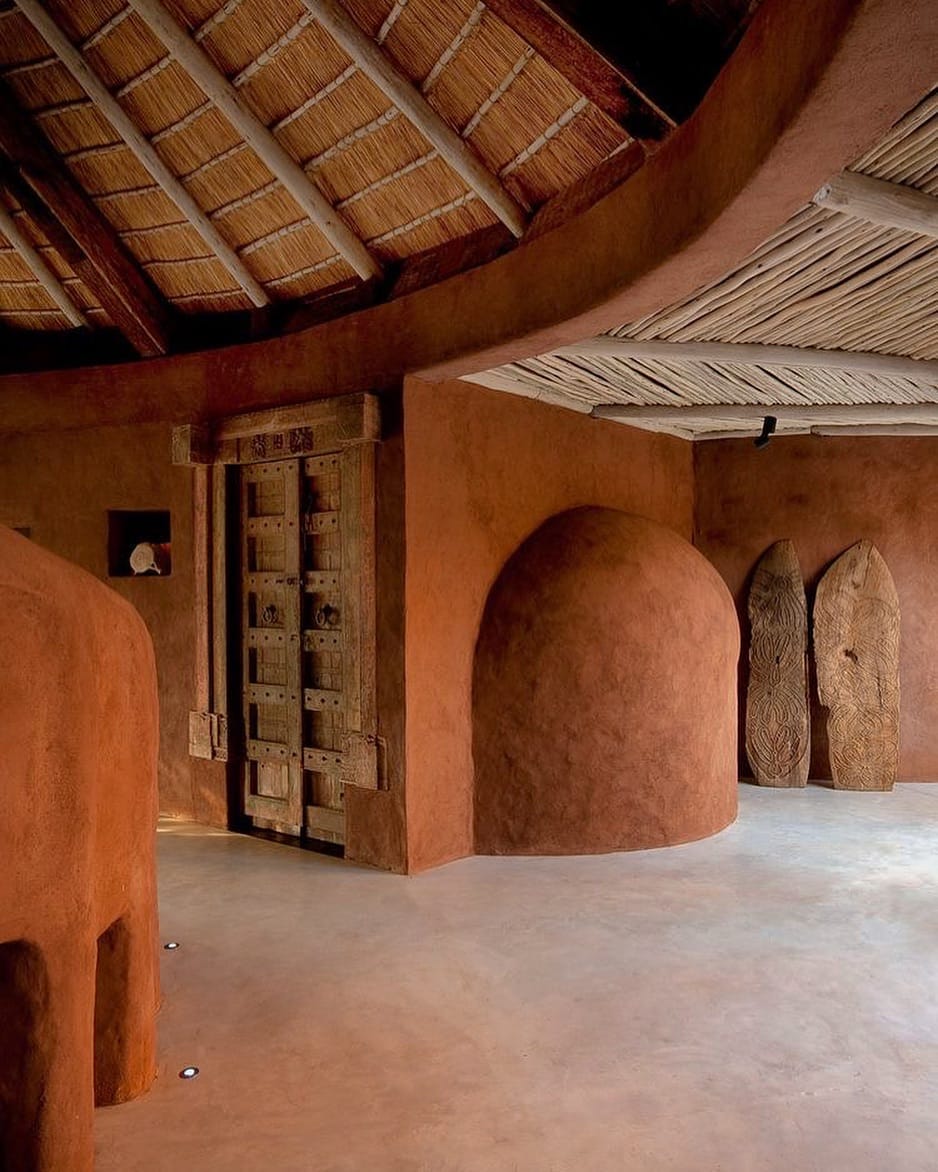
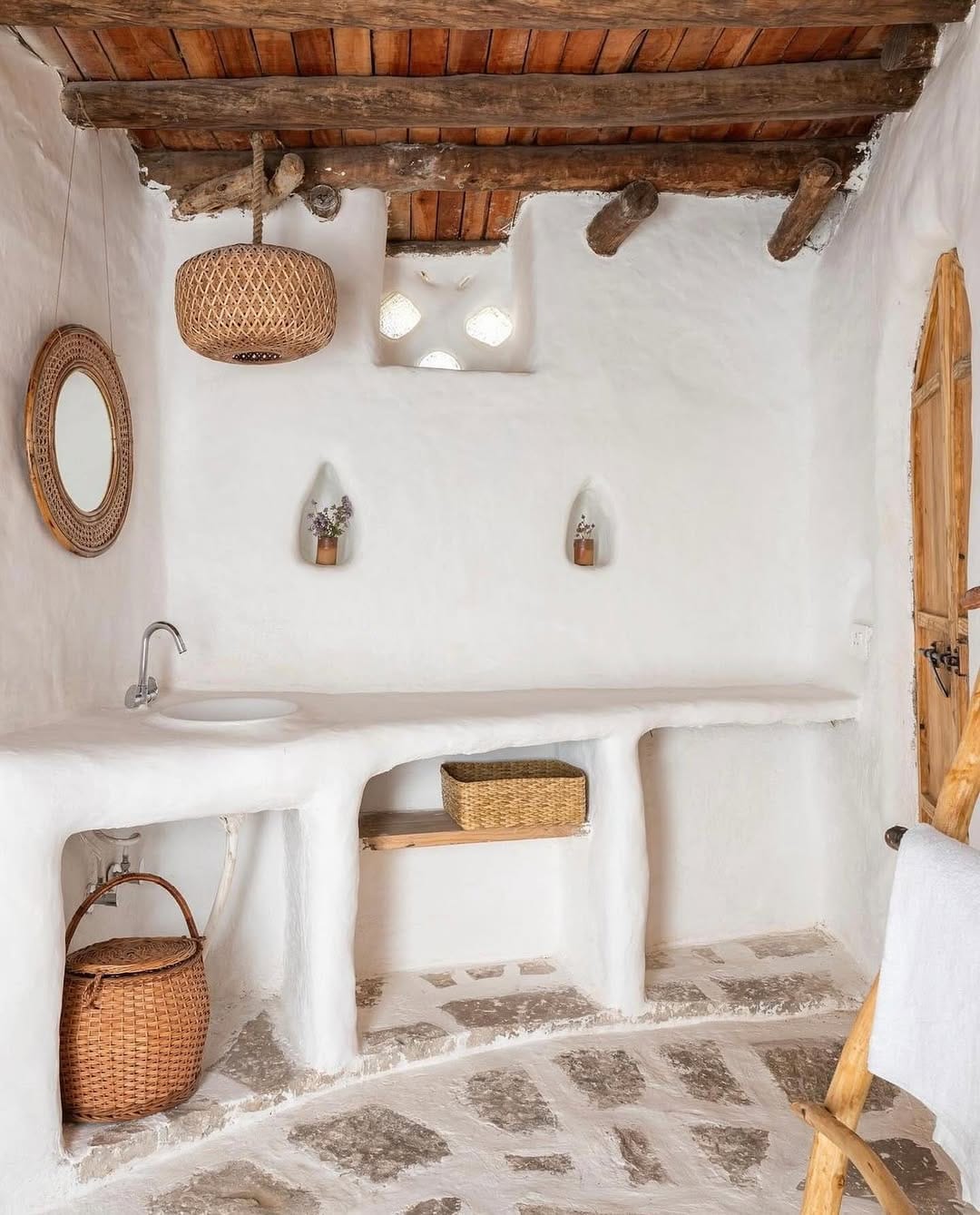
Mud bricks are made by mixing clay-rich soil with water and organic material, such as straw, dung, or rice husks; then shaping the mixture into blocks and drying them in the sun. The resulting walls are thick, incredibly strong, and thermally brilliant: they absorb heat during the day and slowly release it at night, keeping interiors naturally cool without a single air conditioning unit.
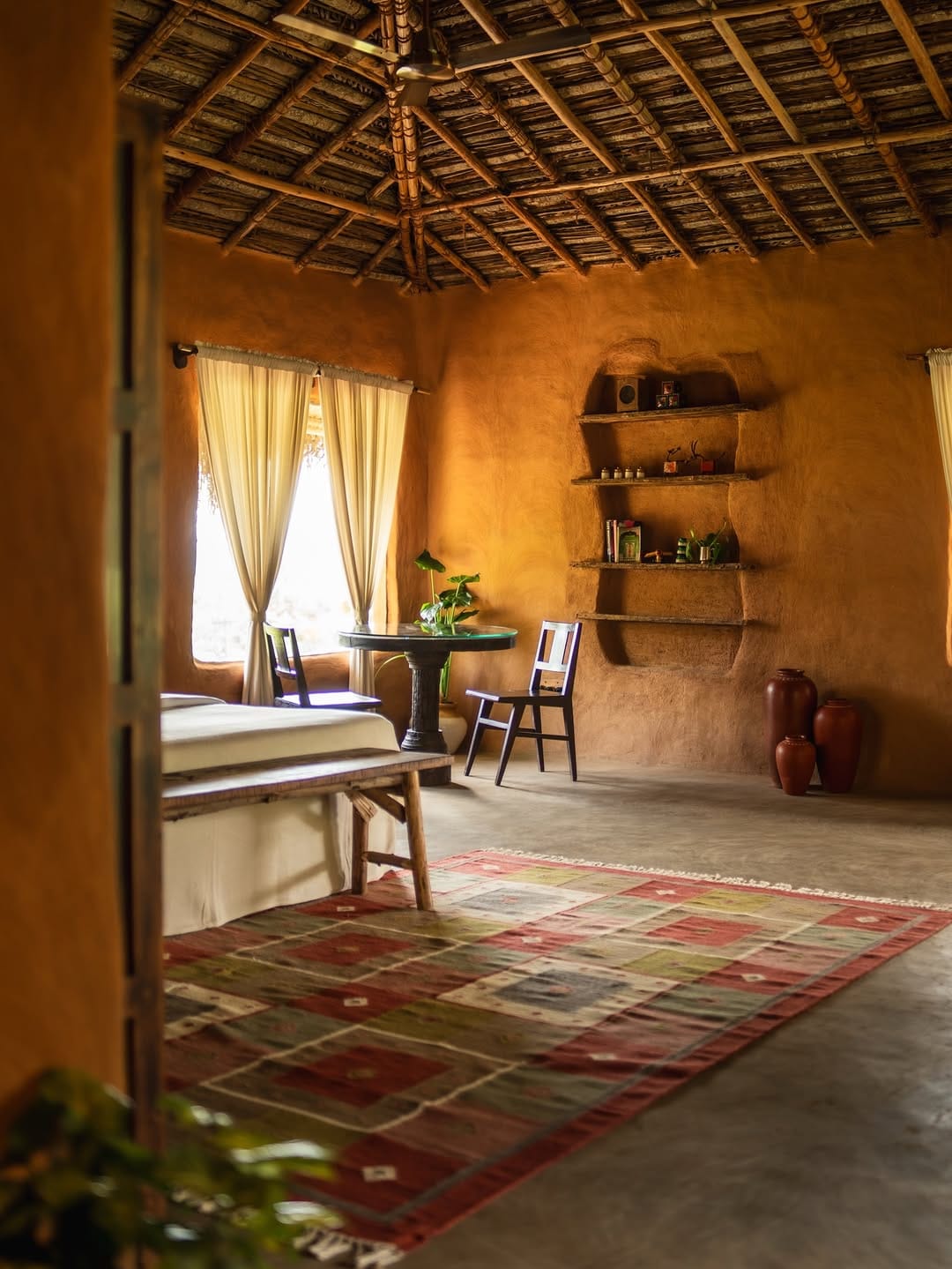
These walls also represent a deep relationship between people and the land they live on. Every building is quite literally made from the earth beneath its builders' feet. The most iconic example is the Great Mosque of Djenné in Mali, the largest mud brick building in the world, first built in the 13th century and lovingly maintained by the whole community every year.
Toron (Wooden Projecting Beams)
If you look closely at the famous mud mosques of West Africa, you'll notice bundles of wooden beams jutting out from the walls like porcupine quills. These are called toron, and they are one of the most distinctive features of Sudano-Sahelian architecture. The Djinguereber Mosque in Timbuktu, Mali (built 1327), and the mosques of Agadez in Niger are covered in toron that have been maintained and replaced by local masons for centuries.
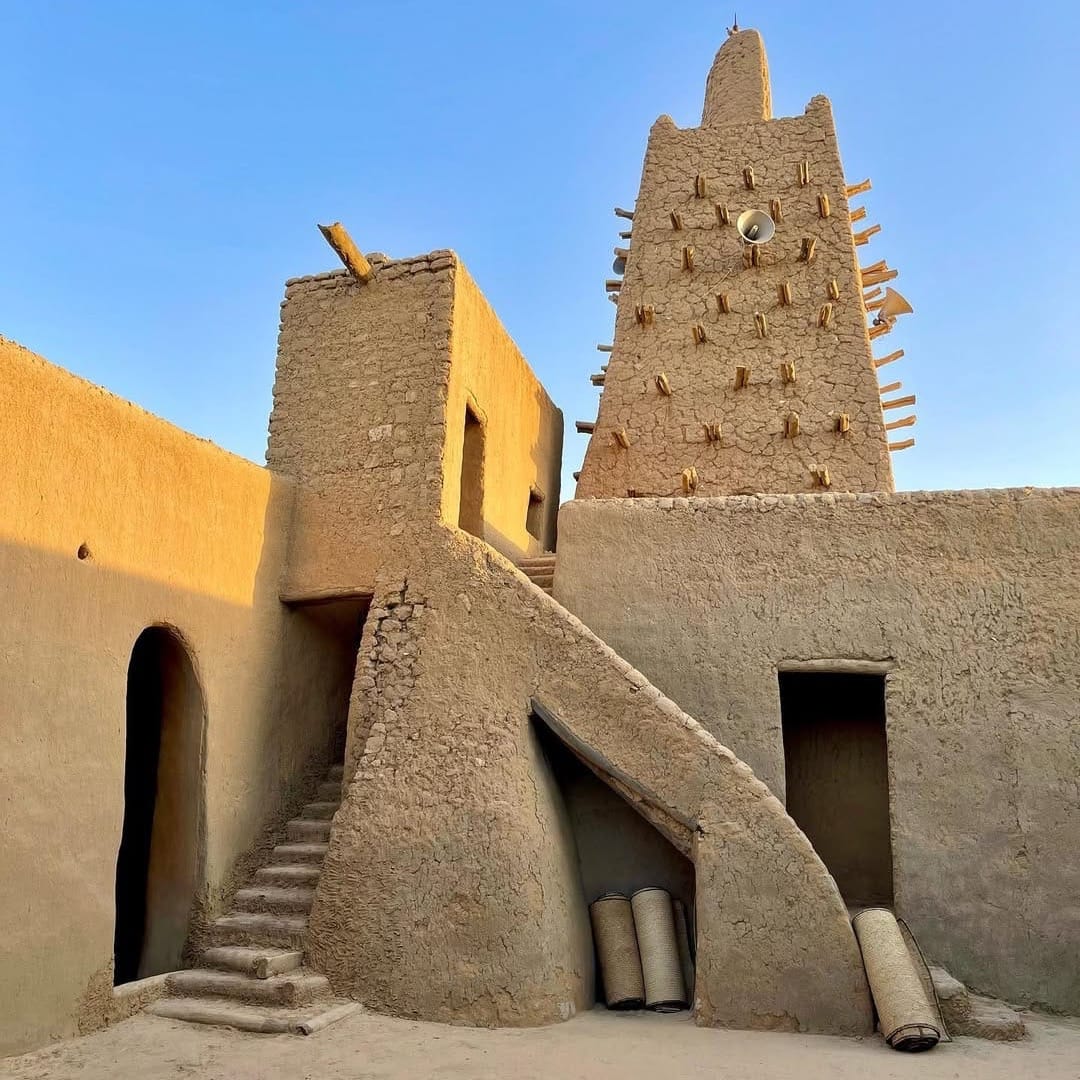
Toron is a permanent timber scaffolding, essentially built right into the wall. They serve two main purposes. Structurally, they reinforce the mud brick, binding the wall together from inside, and practically, they act as ready-made scaffolding during the replastering season. Toron also give Sudano-Sahelian buildings their unmistakable spiky, textured silhouette.
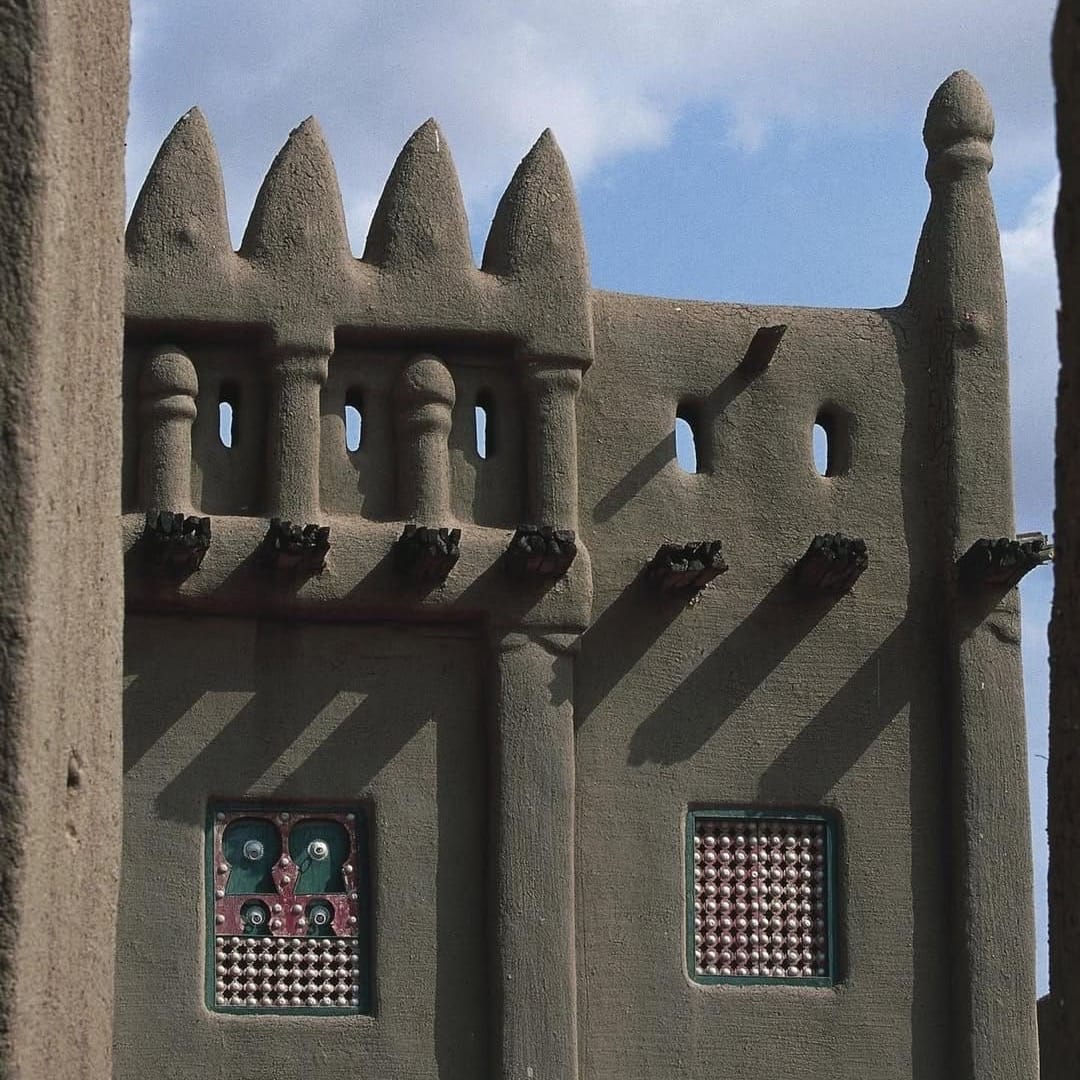
They’re a perfect example of how African architecture builds for structure and beauty at the same time.
The Central Courtyard
Across North Africa, the Sahel, and the Swahili coast, the most important room in the house was often one with no roof at all. The central courtyard, an open-air interior space enclosed by rooms on all four sides, has been a cornerstone of African domestic architecture for thousands of years.
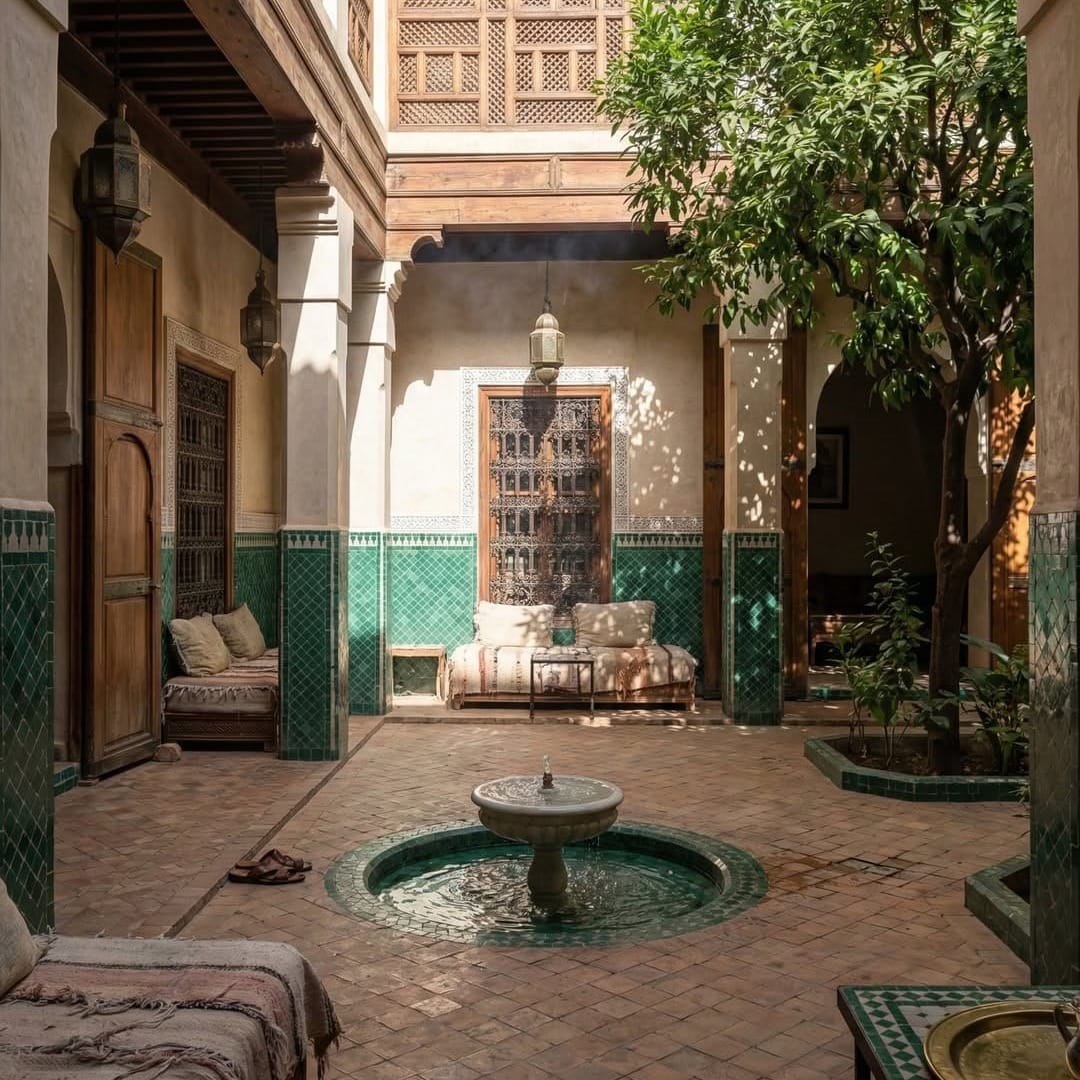
The logic is beautiful: by pulling the outside in, the courtyard creates a private outdoor space sheltered from street noise, dust, and unwanted eyes. During the day, shaded colonnades around the courtyard's edges stay cool, while at night the open sky allows the space to radiate heat upwards and cool down rapidly.
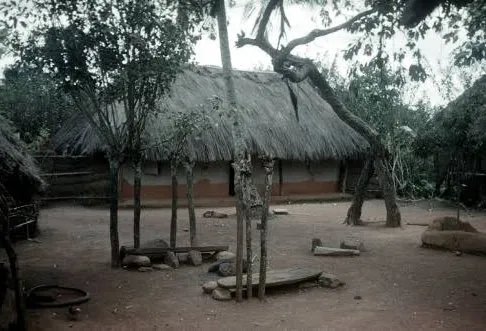
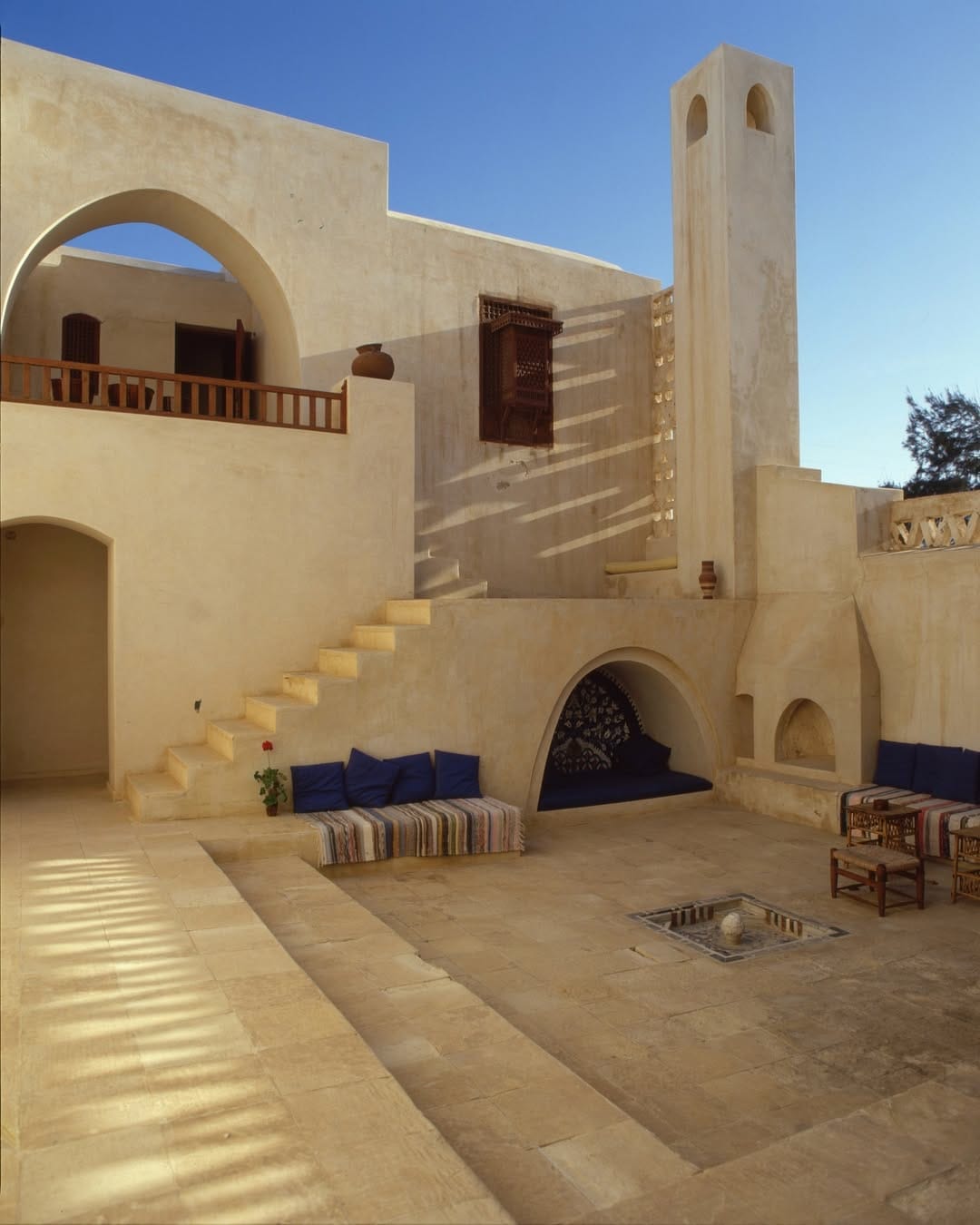
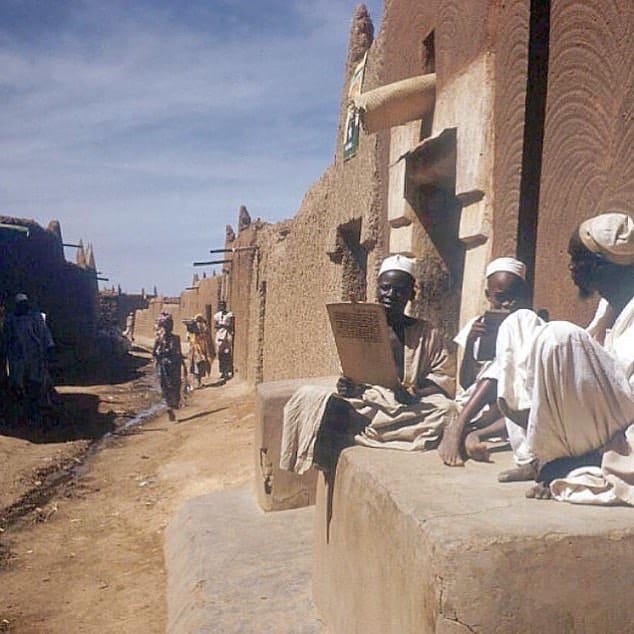
The historic Hausa compounds of Kano(Nigeria), family homes of Eastern Nigeria’s Igbo people and the Swahili merchant houses of Mombasa featured multiple interconnected courtyards, each serving different social functions, receiving guests, family gathering, women's quarters, and work areas. The courtyard was essentially the social engine of the house.
Decorative Geometric Wall Paintings
Few things in world architecture are as immediately joyful as a painted Ndebele home. Among the Ndebele people of South Africa, exterior wall painting is a tradition passed from mothers to daughters for generations. The bold geometric patterns feature sharp triangles, rectangles, and stylised motifs in vivid colours that communicate family identity and social status.
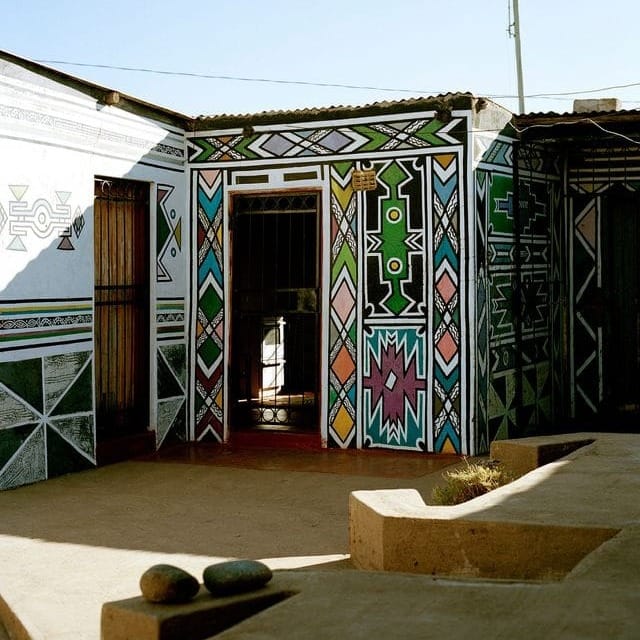
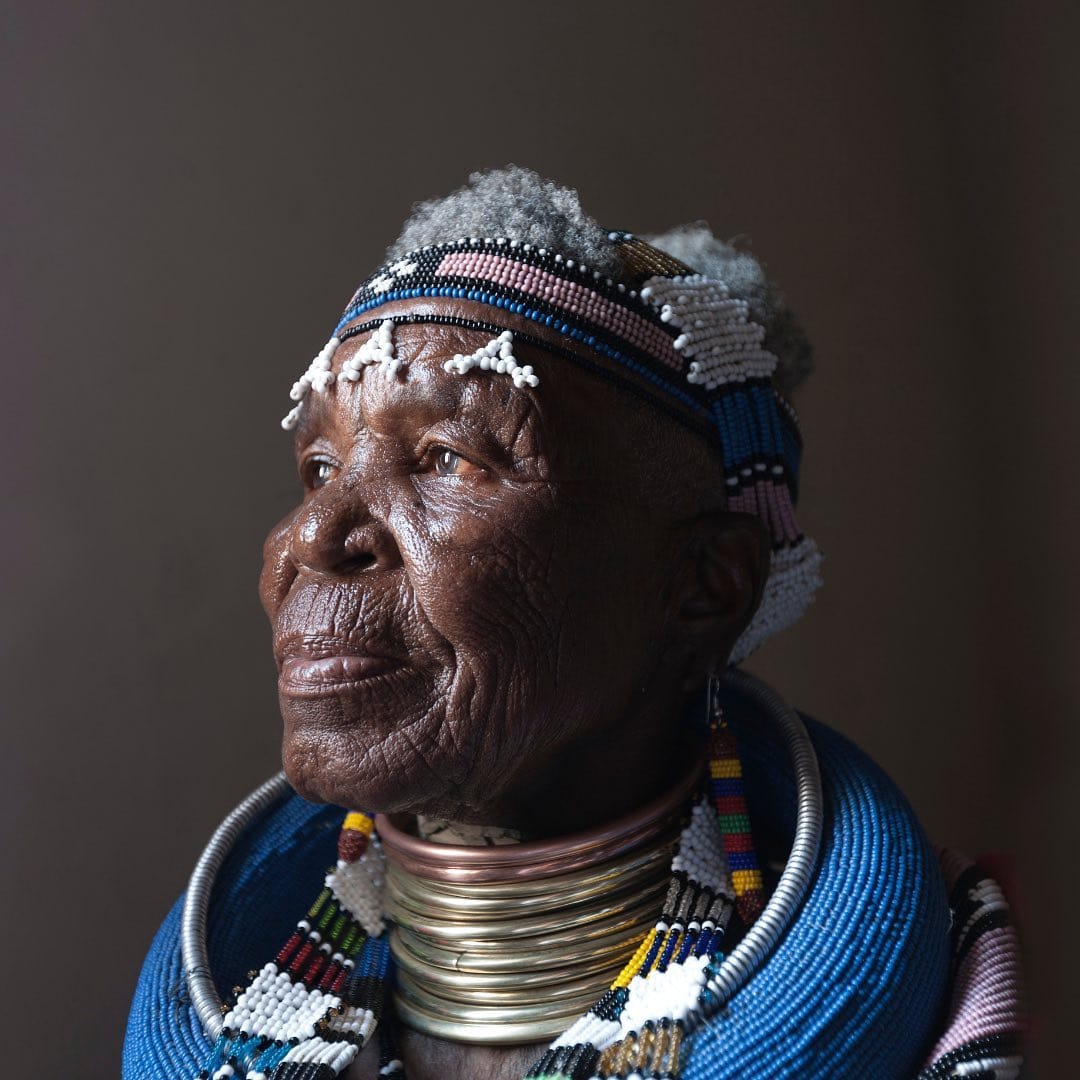
A similar tradition exists in Nubian villages along the Nile in Egypt and Sudan, where women paint colourful murals of palm trees, boats, and geometric shapes as a form of blessing and pride. Ndebele artist Esther Mahlangu has also taken this tradition onto BMW cars, airline liveries, and gallery walls worldwide.

Thatched Conical Roofs
Thatched conical roofing is among the oldest and most widespread architectural technologies in Africa, and it is far more sophisticated than it first appears.
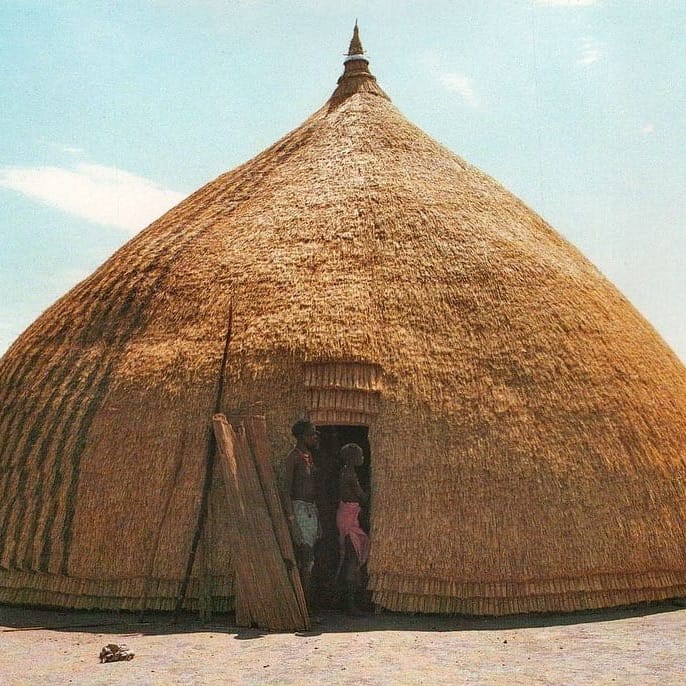
The best thatched roofs are built from tightly layered bundles of dried grass, reed, or palm frond, fixed to a framework of bent poles. When properly laid in thick overlapping layers (sometimes 30cm or more deep), the thatch becomes somewhat waterproof, and can last 30 to 50 years.
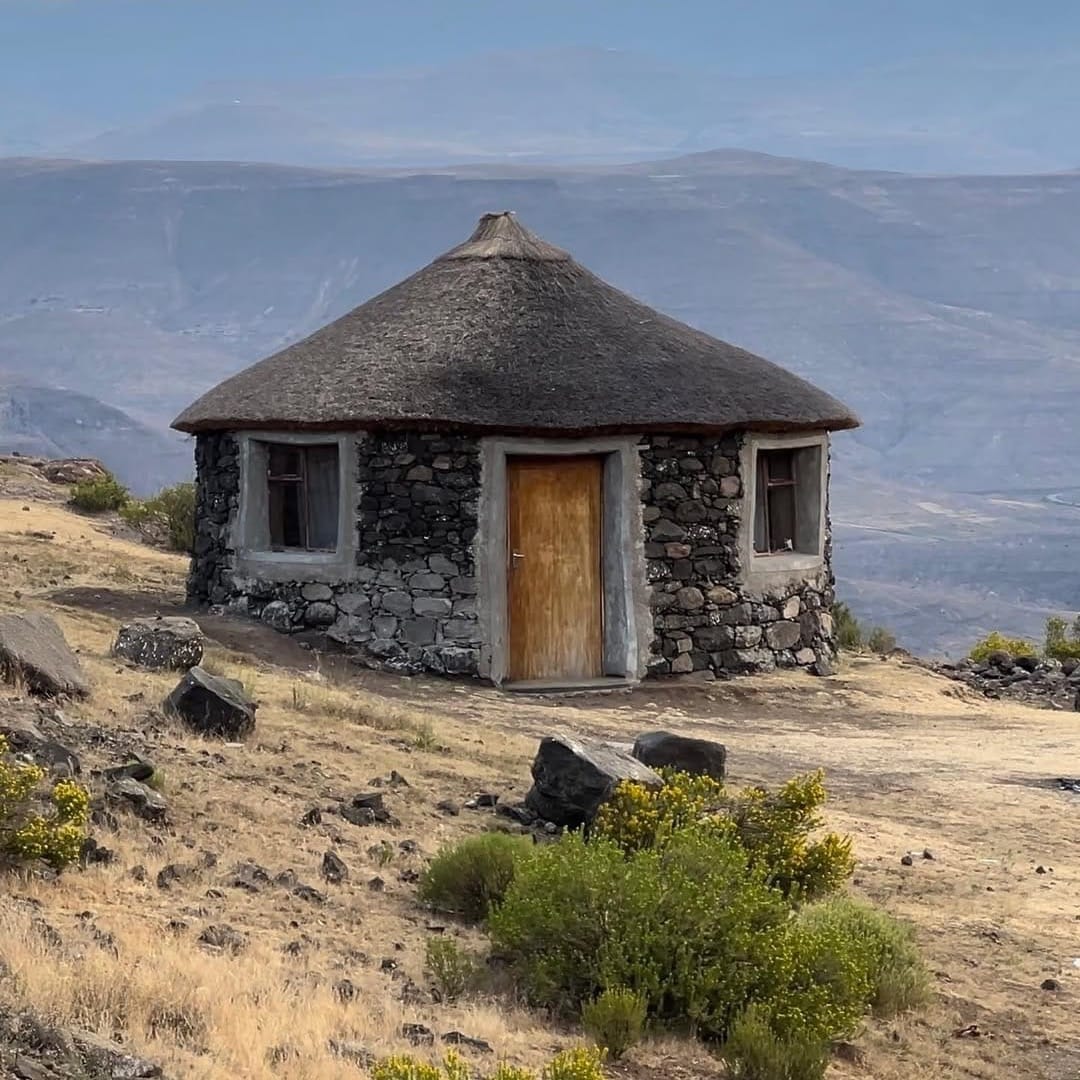
One of the most extraordinary examples of thatched construction comes from the Dorze people of southern Ethiopia, who build enormous beehive-shaped houses up to 12 metres tall. As termites slowly eat the lower sections of the walls, the entire structure is progressively raised and rebuilt from below; so it literally climbs upward over its lifetime
Carved Wooden Doors
In the old Swahili port cities of East Africa, particularly Zanzibar's Stone Town and the island of Lamu, the front door was both a statement and a work of art. Elaborately carved wooden doors have been a defining feature of Swahili coastal architecture for over five centuries, and they remain some of the most beautiful objects in African decorative arts.
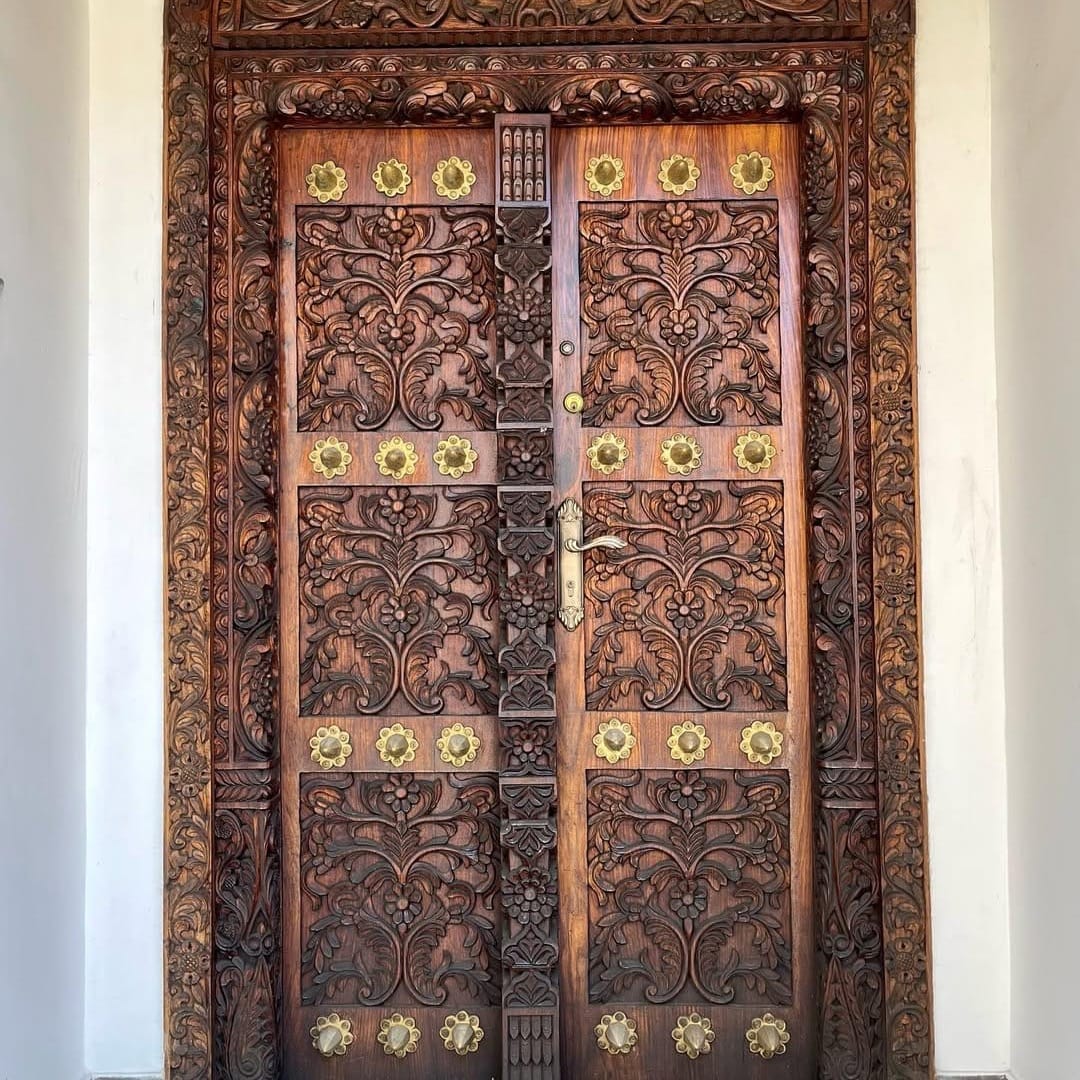
Traditionally, a merchant or nobleman would commission a carved door before even beginning to build his house. The door came first, and carvings typically featured chains and ropes (for protection and security), fish and sea motifs (for luck and good fortune), date palms (for prosperity), and beautiful geometric and floral patterns influenced by Arabic, Indian, and Persian culture.
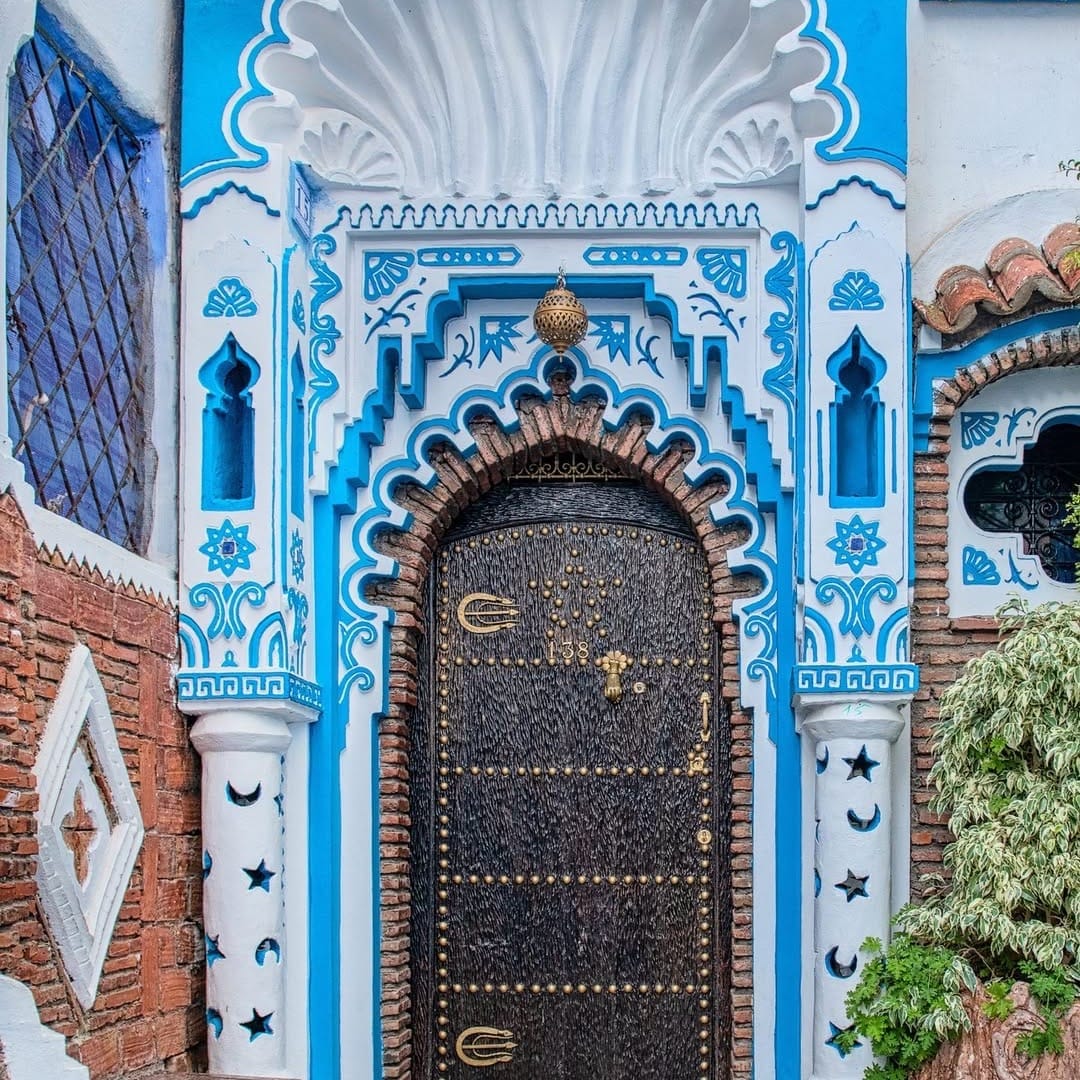
Hundreds of these doors, some over 200 years old, still stand in Stone Town and Lamu today, both UNESCO World Heritage sites.
The Circular Floor Plan
Across sub-Saharan Africa, the circle has long been the preferred shape for a home, and for good reason. A round building has no corners for wind to catch, making it storm-resistant. It also maximises interior space relative to the amount of wall material used.
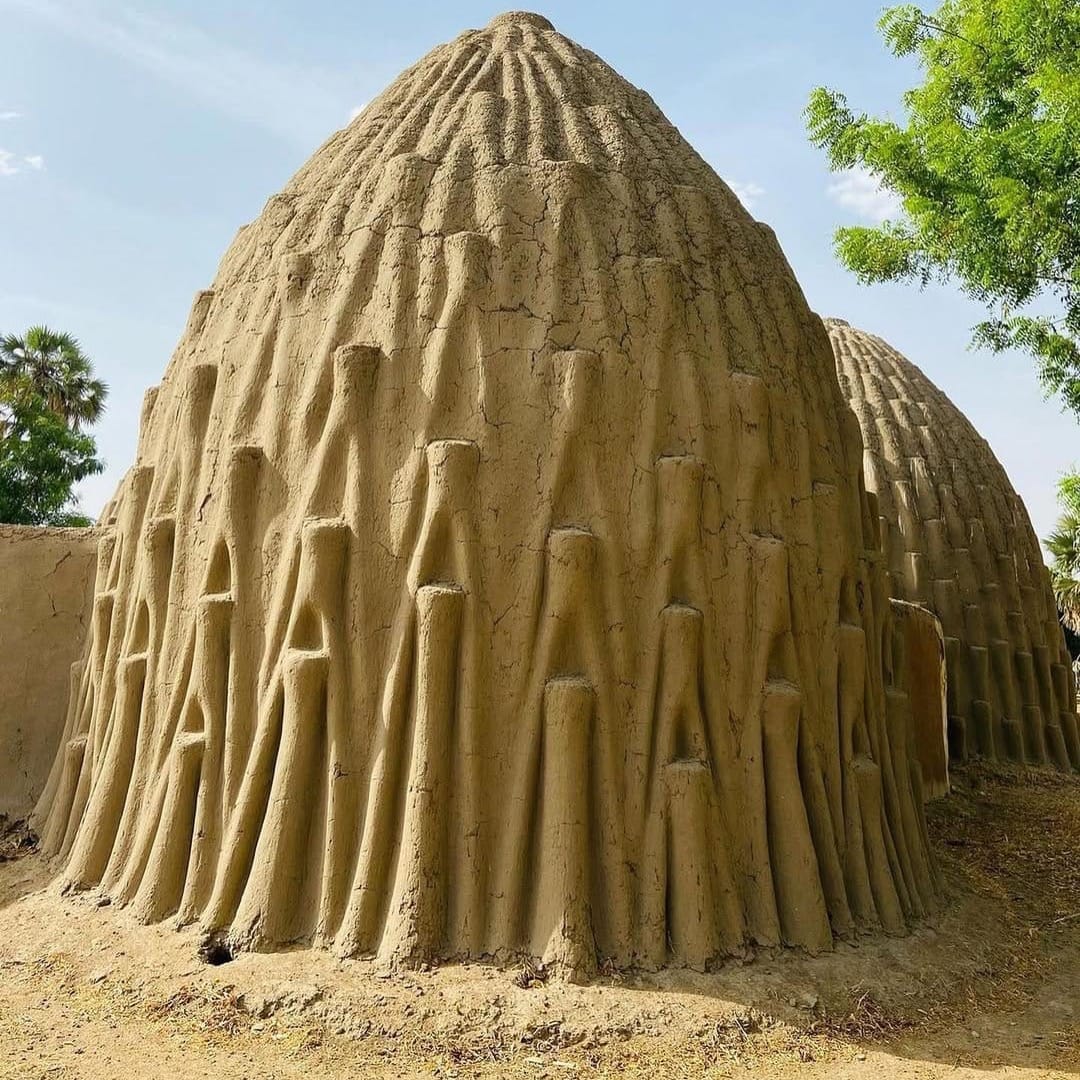
But there is meaning in the circle too. In many African cultures, it represents unity, community, and the cycles of life. The Zulu kraals of southern Africa and the extraordinary ribbed mud dome houses of the Mousgoum people of Cameroon are among the most striking examples.
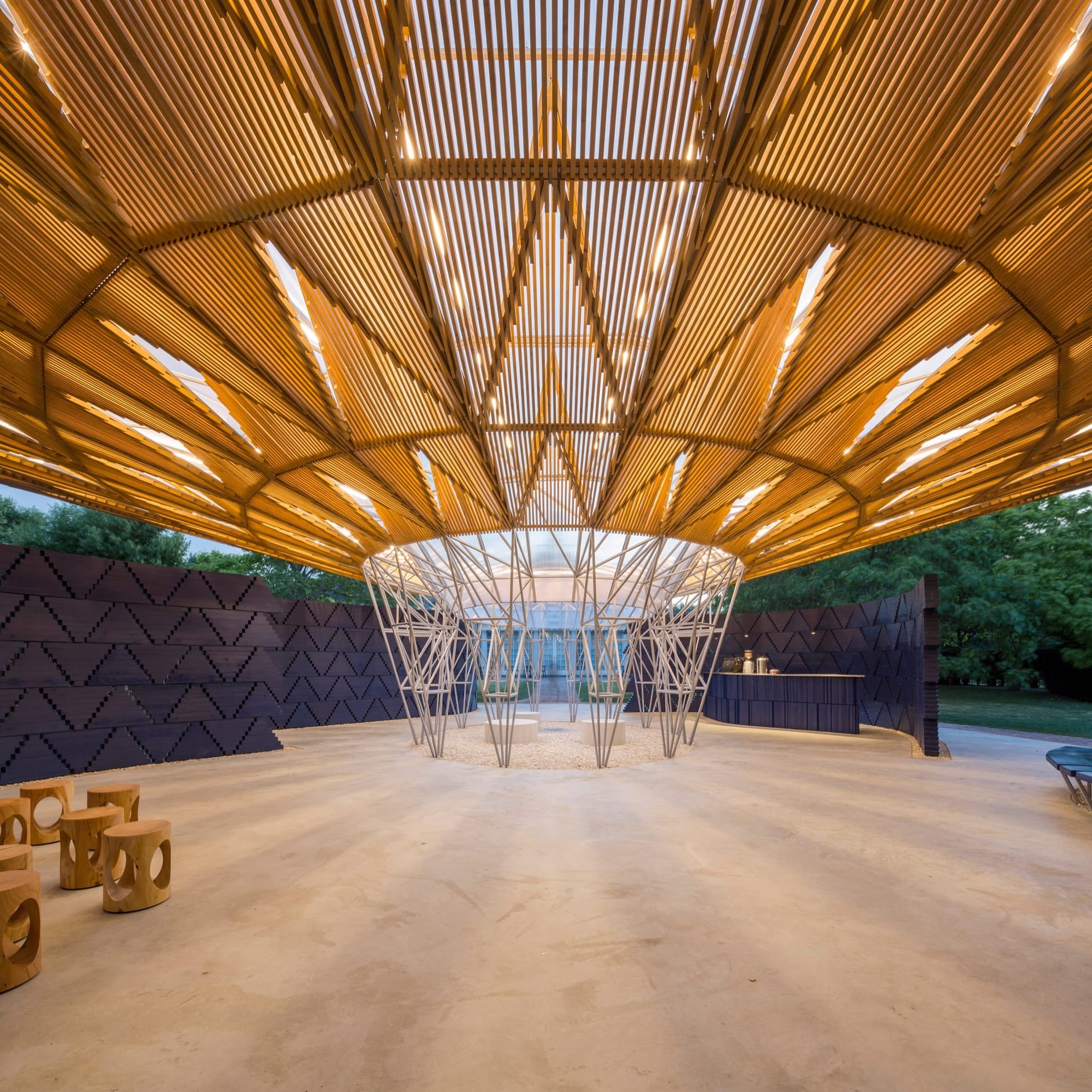
More recently, Francis Kéré's Serpentine Pavilion (2017) in London drew directly on this idea of the circle as a gathering space and was inspired by the communal shade tree at the centre of his home village.
Breeze Blocks (Decorative Screen Blocks)
If you've ever walked through an old government building, school, or family home in West Africa and noticed the walls made of patterned concrete blocks with geometric holes running through them, those are breeze blocks, and they are one of the great unsung design heroes of African architecture.
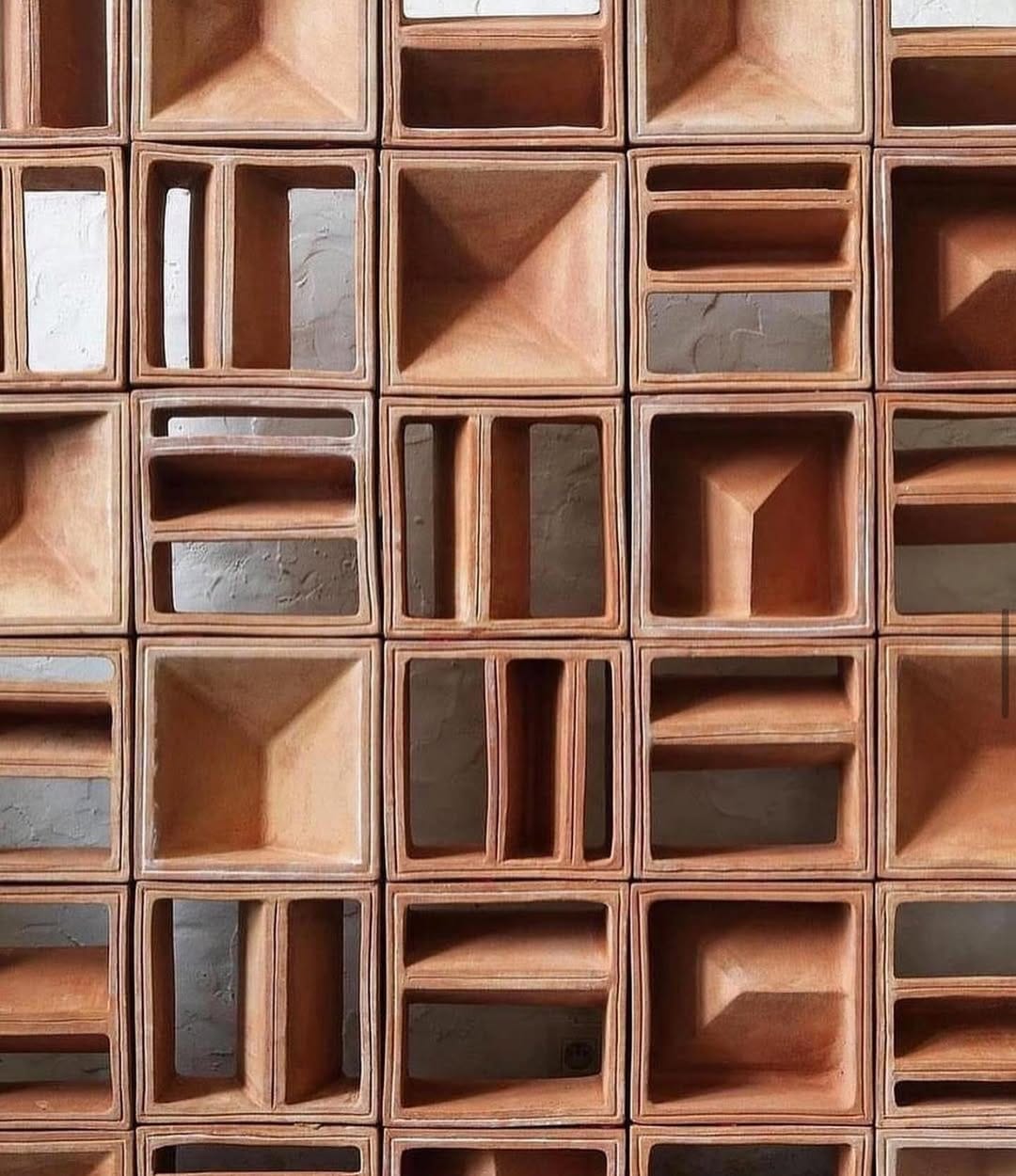
The blocks filter harsh sunlight into soft shifting patterns, allow constant cross-ventilation, reduce the need for air conditioning, and create a beautiful play of light and shadow on interior walls throughout the day. You can find them on everything from modest family homes in Accra and Lagos to the bold civic buildings of independence-era Dakar, where Senegalese architects used them to create a distinctly African modernism.
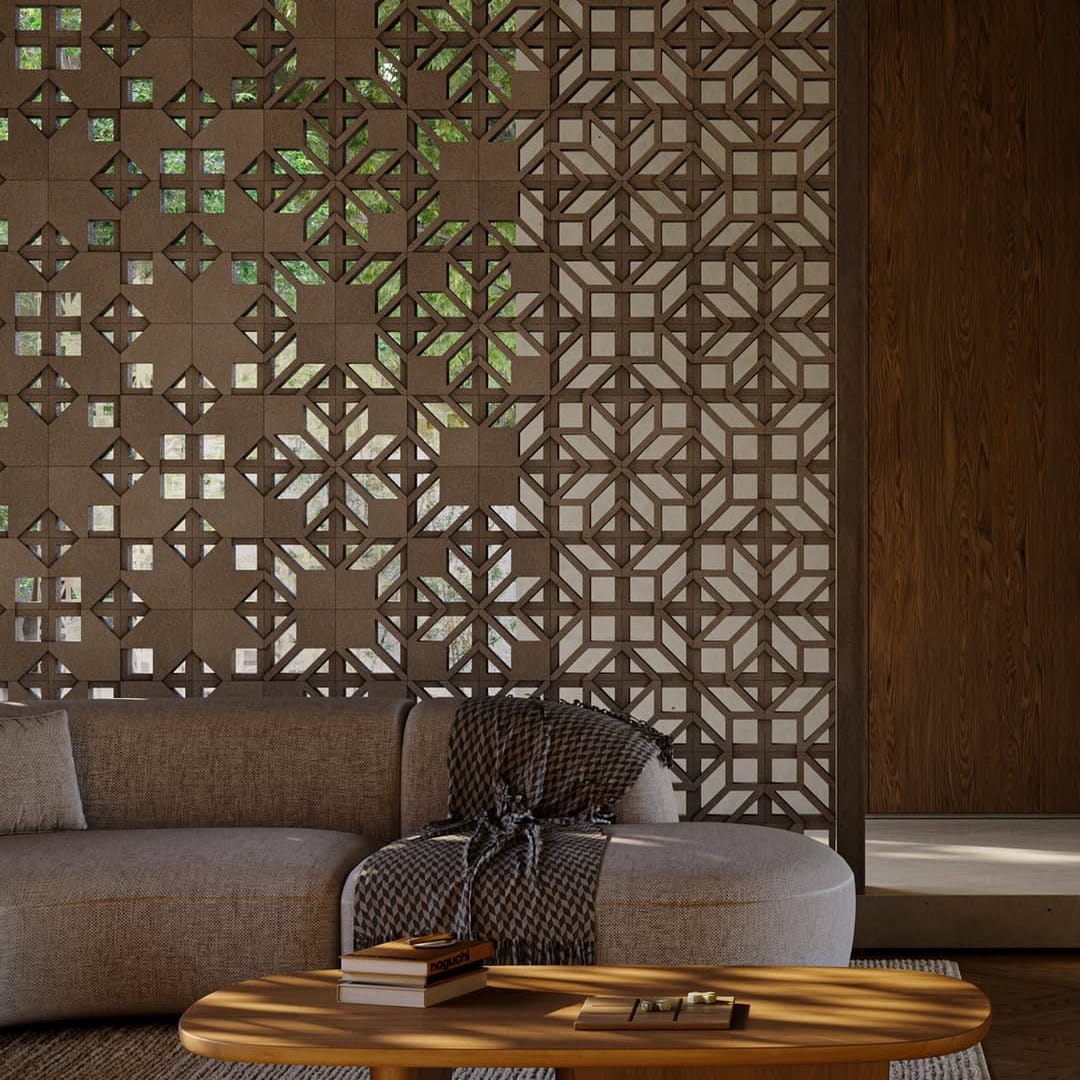
Today they appear in boutique hotels, cultural centres, and newer residential architecture across the continent, and are being appreciated all over again for exactly the reasons they were invented.
The Arch
The arch is one of the oldest structural ideas in the world. In ancient Nubia and Egypt, rounded and corbelled arches appeared in temples, tombs, and civic structures that were thousands of years old, and in the Islamic architecture of North and West Africa, the arch truly became an art form. The horseshoe arch, which is wider than a semicircle, curves back inward before it meets the ground and defines the colonnaded courtyards of the great mosques of Kairouan in Tunisia and Córdoba's Great Mosque.
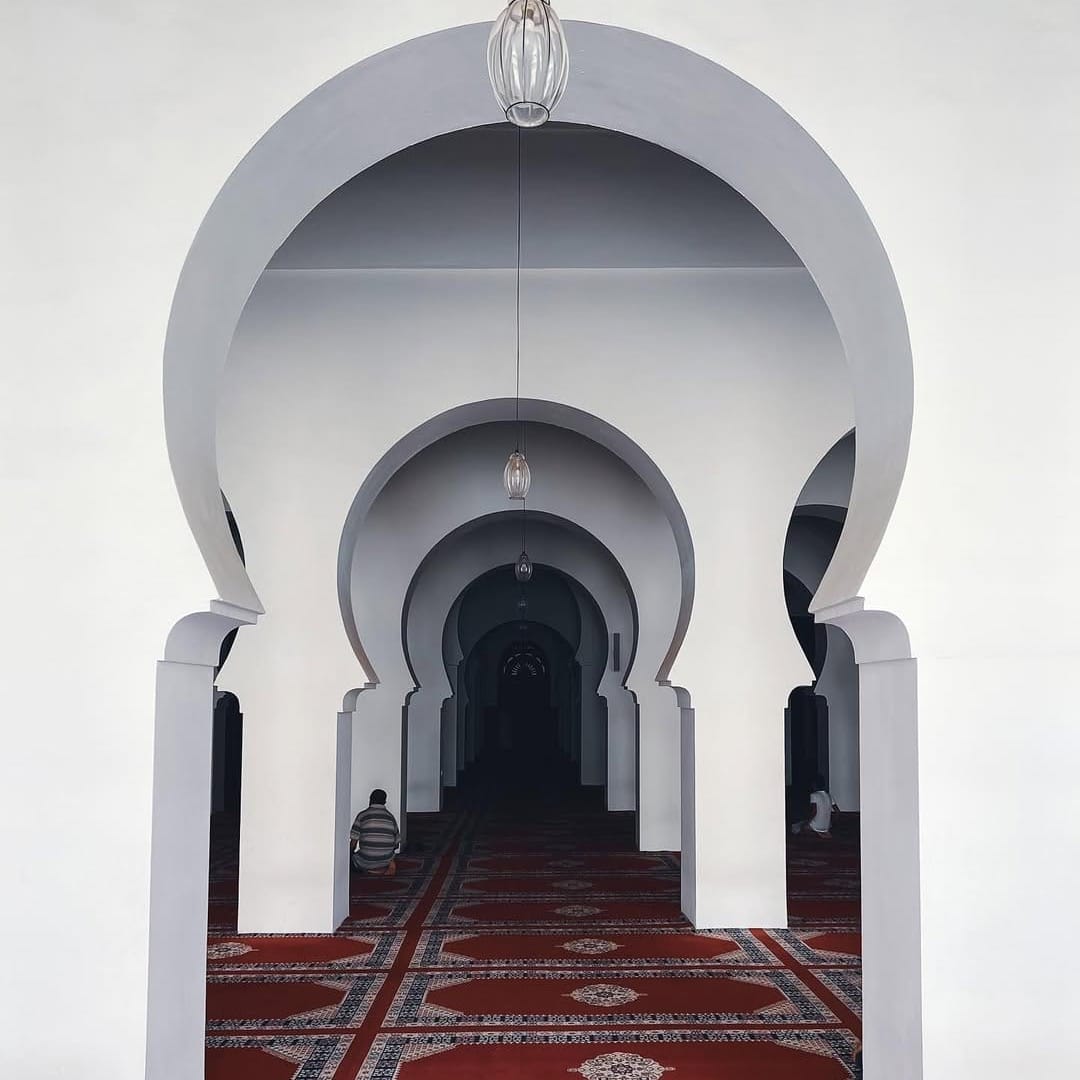
The elegant pointed arch fills the gateways and interiors of old medinas in Fez and Cairo, and in Swahili architecture, arched niches called zidaka line interior walls beautifully.
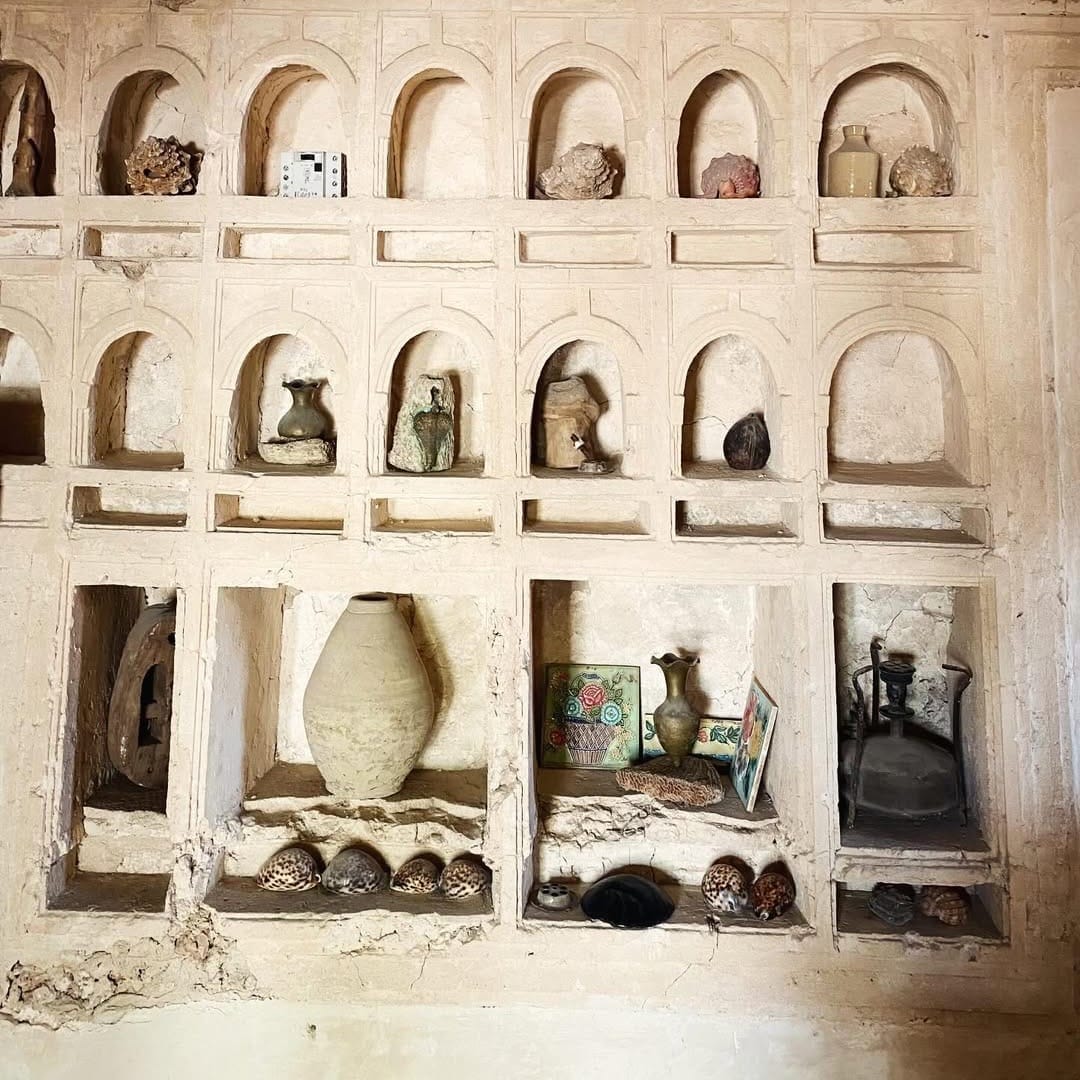
What makes the African arch remarkable is how it adapted across different cultures and climates, absorbing influences from Arabia, Persia, and the Mediterranean while remaining distinct.
Conclusion
African architecture stretches back thousands of years, across dozens of climates and hundreds of distinct cultures, and it's always been driven by the same instinct: solve the problem in front of you, and do it well.
Every choice, from the curve of a wall and the angle of a roof to the holes in a block, were doing real work. Today, as architects around the world wrestle with questions about climate, materials, and how buildings should actually feel to live in, they keep landing on answers that builders across Africa worked out centuries ago. There's a lot here worth knowing. And honestly, this list barely scratches the surface.



Member discussion