


Cinthia Sifa Mulanga is a contemporary artist working across painting, printmaking and collage, known for her layered depictions of Black women set within carefully constructed interiors. Born in Lubumbashi, in the Democratic Republic of Congo, and raised in South Africa from the age of nine, she trained as a printmaker at the Artist Proof Studio in Johannesburg before her practice evolved into the mixed-media approach she is known for today, combining acrylic, oil pastel, charcoal and collage.
At the centre of her work is the representation of Black women, not as fixed portraits but as composites, layered, contradictory and never reduced to a single narrative. Mulanga's figures appear within bedrooms, living rooms and increasingly public spaces that function less as backdrops than as psychological environments, places that hold memory, aspiration, tension and belonging all at once. Her recent recognitions include a solo exhibition at Goodman Gallery Johannesburg, inclusion in the touring exhibition When We See Us: A Century of Black Figuration in Painting, and a 2022 collaboration with Gucci reimagining the Diana tote bag. She lives and works in Johannesburg.
We spoke with Cinthia about growing up between Congo and South Africa, how duality and layering shape her materials and her storytelling, why architecture and fashion carry as much meaning in her work as the figures themselves, and what she is building next.
Looking back, how has growing up between Congo and South Africa shaped the way you understand identity and belonging, and the stories you choose to tell?
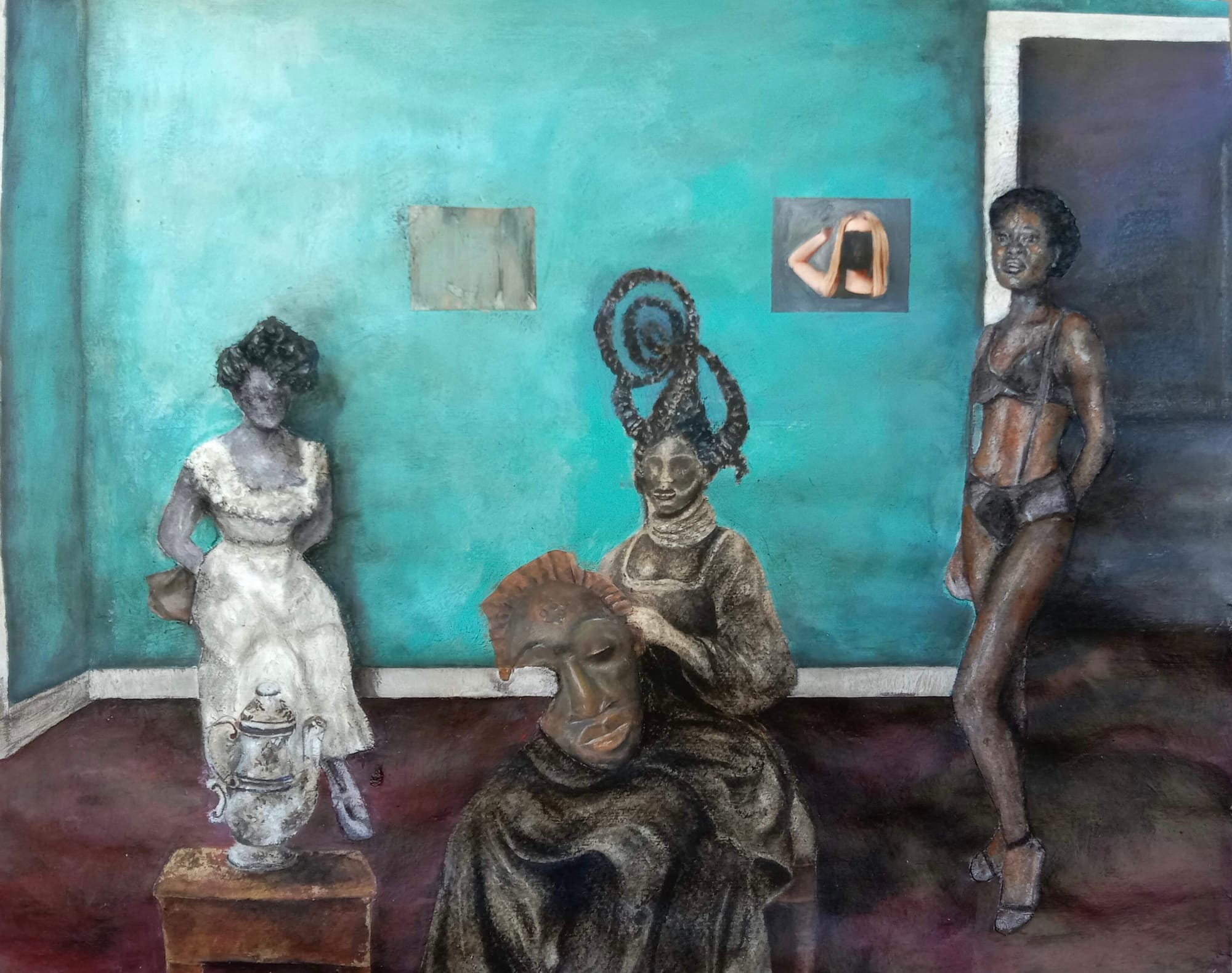
There's so much, but what comes up most often is culture. I've found that Congolese and South African cultures are actually very similar, but some things differentiate us too, the way we live, the way we speak, and the way we make our homes. Being born in Congo, I grew up quite conservative. My siblings and I were mostly indoors, partly because of the war.
Moving to South Africa was a culture shock. We were so reserved, and South Africans are proud in a way we weren't used to. That contrast shaped how I think about carrying identity, and it shows up in how the women in my work are depicted. Some are hiding, or not fully visible, because there was a period when we had to conceal where we came from just to feel like we belonged. We had to put certain parts of ourselves aside to adapt. That isn't loud in the work, but it's there. Some figures are loud and proud, and some are still concealed, still figuring out how to present themselves within the space.
That leads me well into my next question: you bring a lot of duality into your work, multiple figures, multiple emotions, multiple perspectives within one composition. What interests you about contradiction and layering?
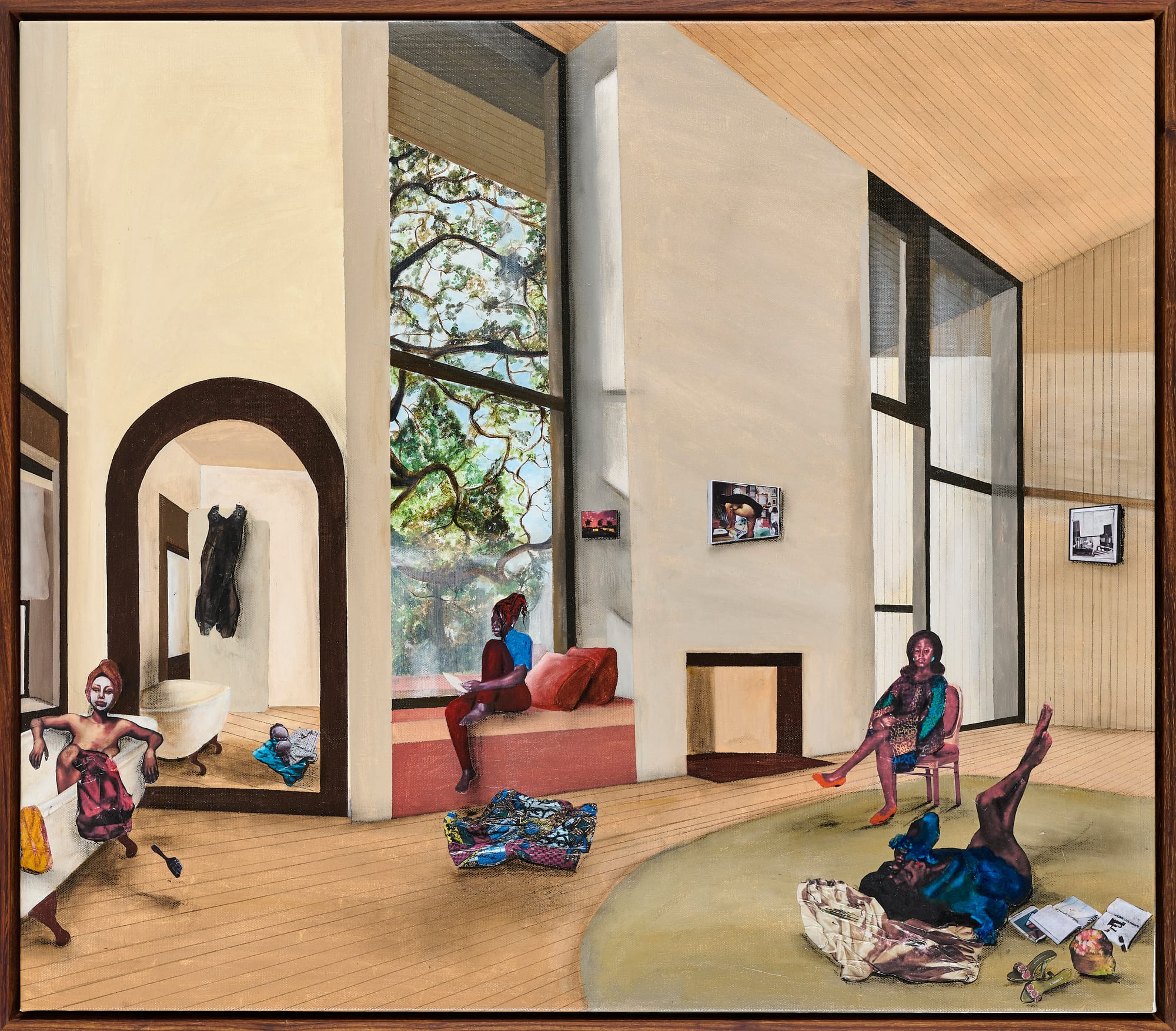
It started with the material itself. For me, the medium informs the story, and the story informs the medium; it's a constant give and take. My brother taught me to draw, and I joined an organisation he was part of while I was still in high school. We worked across oil pastels, charcoal, painting and a bit of printmaking, and that's where I was introduced to the discipline I'd later study formally. I always felt I wouldn't be doing the themes of Black womanhood, belonging and identity justice with paint alone. Once I was working across multiple printmaking techniques and collage, alongside studying art history and movements, layering simply made sense. The same way you'd sketch a drawing and then build on top of it with paint, fabric, collage, that layering mirrors the woman herself. There's so much more to a person than what's visible on the surface. You see a soft, gentle woman, but there are values, upbringing, and history underneath that aren't necessarily gentle at all. My materials let me speak to that contrast, the journey of becoming a woman.
I'm interested in how things, people, histories overlap rather than compete. In some paintings, I'll place an object from Europe alongside an artefact from Africa, not because one is competing with the other, but because they coexist, the same way someone can be born in Congo and raised in South Africa. I made a series called Competitive Sisterhood about exactly this: how two people can be from the same place and still be entirely different. I like exploring that duality, one thing existing in the presence of another without diminishing it.
It’s one of my favourite topics to talk about. You've spoken about pulling from the history of African art and tradition. How does that knowledge inform your storytelling now?
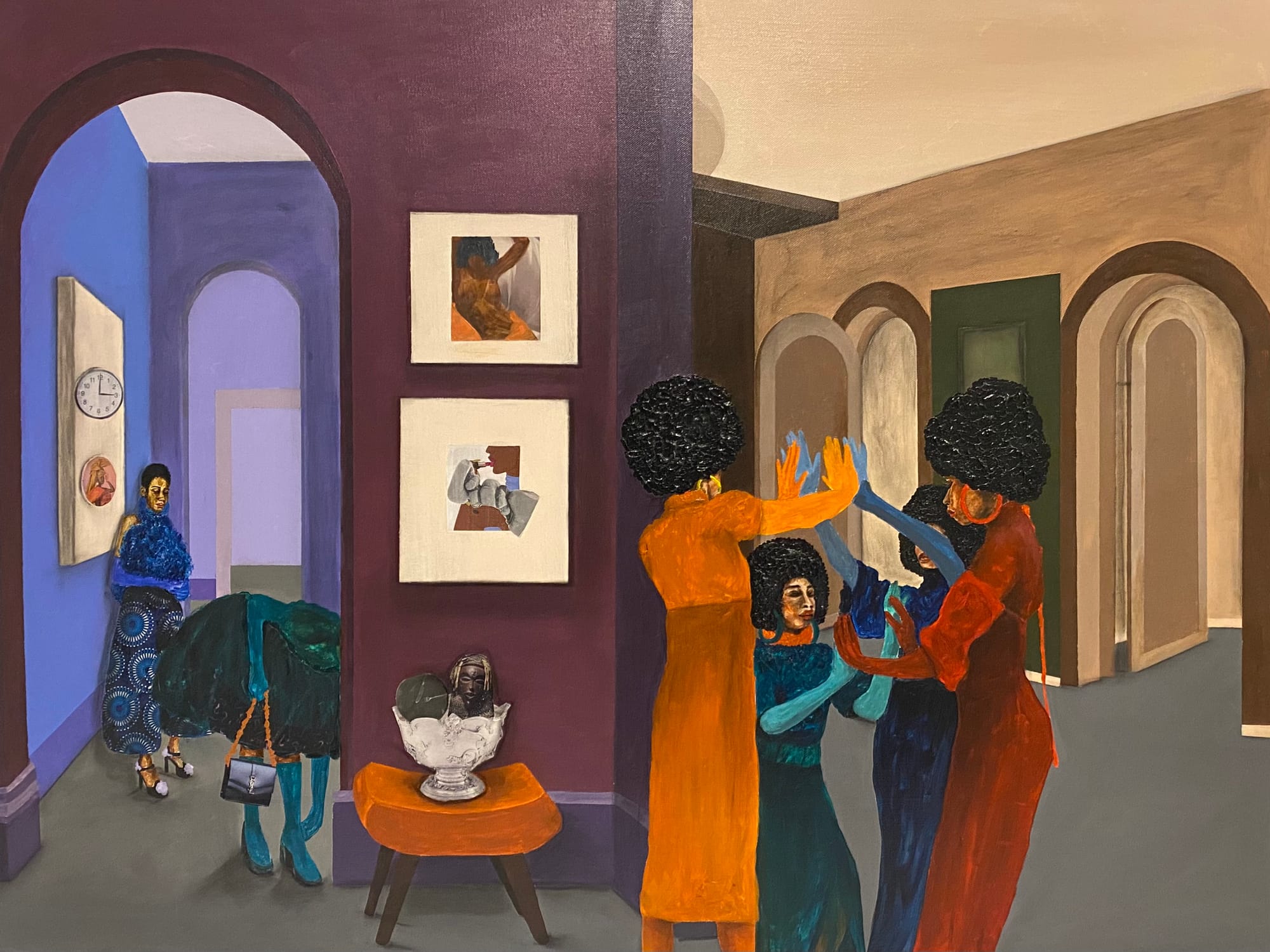
Moving from Congo to South Africa meant certain things got forgotten, because you adapt to survive where you are. When I pull from African history more broadly, it helps me find my way back to my Congolese roots. Growing up in South Africa, language plays a huge part in identity: Zulu, Xhosa, Sotho, English, and somewhere in there, you can forget your own, Kikongo, Lingala. When I draw on other African histories and stories, even ones from Mali, Kenya, Senegal, and Togo, I always find myself somewhere within them, and it reminds me of my own. It helps me stay grounded in who I am rather than dissolving into the cultures, like American culture, that have heavily influenced South Africa.
That makes sense. How does it feel mixing traditional mediums with more modern ones, painting alongside collage or digital tools?
It keeps me up to date with the times. I know there's a whole conversation right now about whether AI is destroying or benefiting creative work. I'm a believer in using what's available to say what you need to say; that's how I started, using whatever materials were around rather than waiting to afford anything specific. There's no version of the 90s without the 80s, no 2000s without the 90s. Generations build on each other. I also believe in working smart rather than just hard. The older generation believed in hardship as proof of worth; this generation is asking what's possible without unnecessary struggle. That's not a dismissal of what came before; it's evolution.
That said, I don't like fast production for its own sake. In printmaking school, we were taught to paint quickly, against the clock, and at the time, I thought it was a useful skill. Now that I have the privilege of not needing to produce on demand, I've realised speed without process strips the humanity out of the work. If I can finish in a week what used to take months, that's because I've put in years building the skill to get there, honestly. But when collectors or galleries expect work instantly, it turns the artist into a machine, and that integrity question, how something was made, matters more to me than how fast.
Integrity and Efficiency. I would also like to understand how architecture plays an important role in your work, beyond simply being a setting. What does it let you say that a plain background wouldn't?
It has its own meaning, separate from just framing the figures. When my family moved to South Africa, we weren't stable; we moved often, living with people from different cultures, and I became fascinated by how they lived, cooked, spoke, the objects they kept, and the structure of their homes. You don't notice the structure of a house until you've moved through several, and then you realise it's not just about colour or decoration, it's about how the space itself is built.
That ties into belonging; you either make a place yours, or you're constantly questioning whether you belong there at all. I enjoy architecture as both a visual and psychological structure, the same way I think about form in fashion. It's a setting, but it's also where the psychological weight of the work lives.
Speaking of which, you also use fashion and symbolism to contextualise your work. What role does that play?
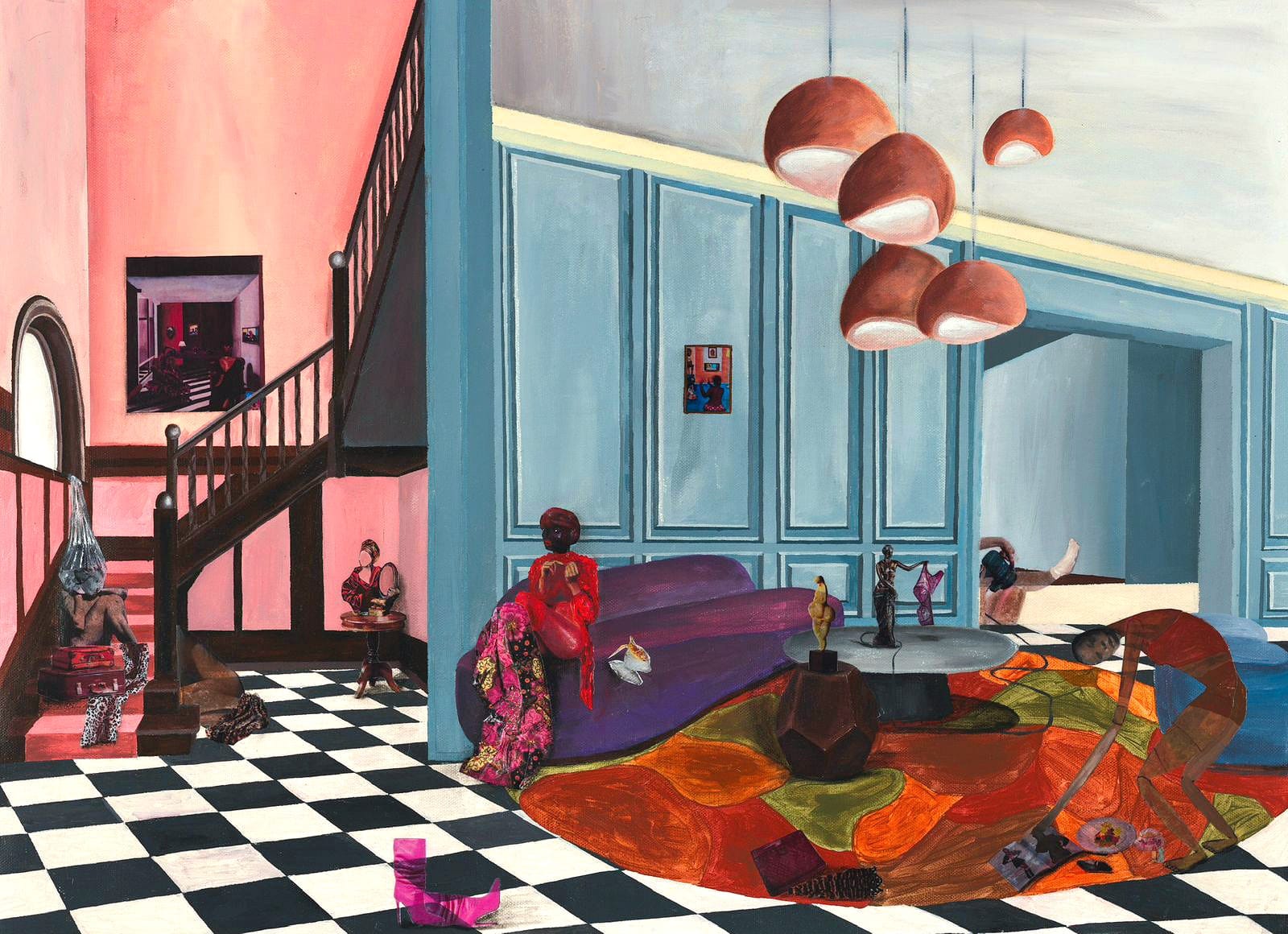
A huge one. Fashion is functional the way architecture is; it's an extension of identity, what someone wants to say about themselves and where they come from. With African wax fabric, certain patterns tell you a piece is from a specific tribe or country in Kenya, in Congo, and so on. Historically, markings and patterns also communicated status, whether someone was royalty or married. I bring those old forms of communication into a contemporary context. What used to signal a way of life is now more often a trend, but it still carries that older meaning underneath. It all ties back to identity, where someone comes from, where they'd like to be, who they are.
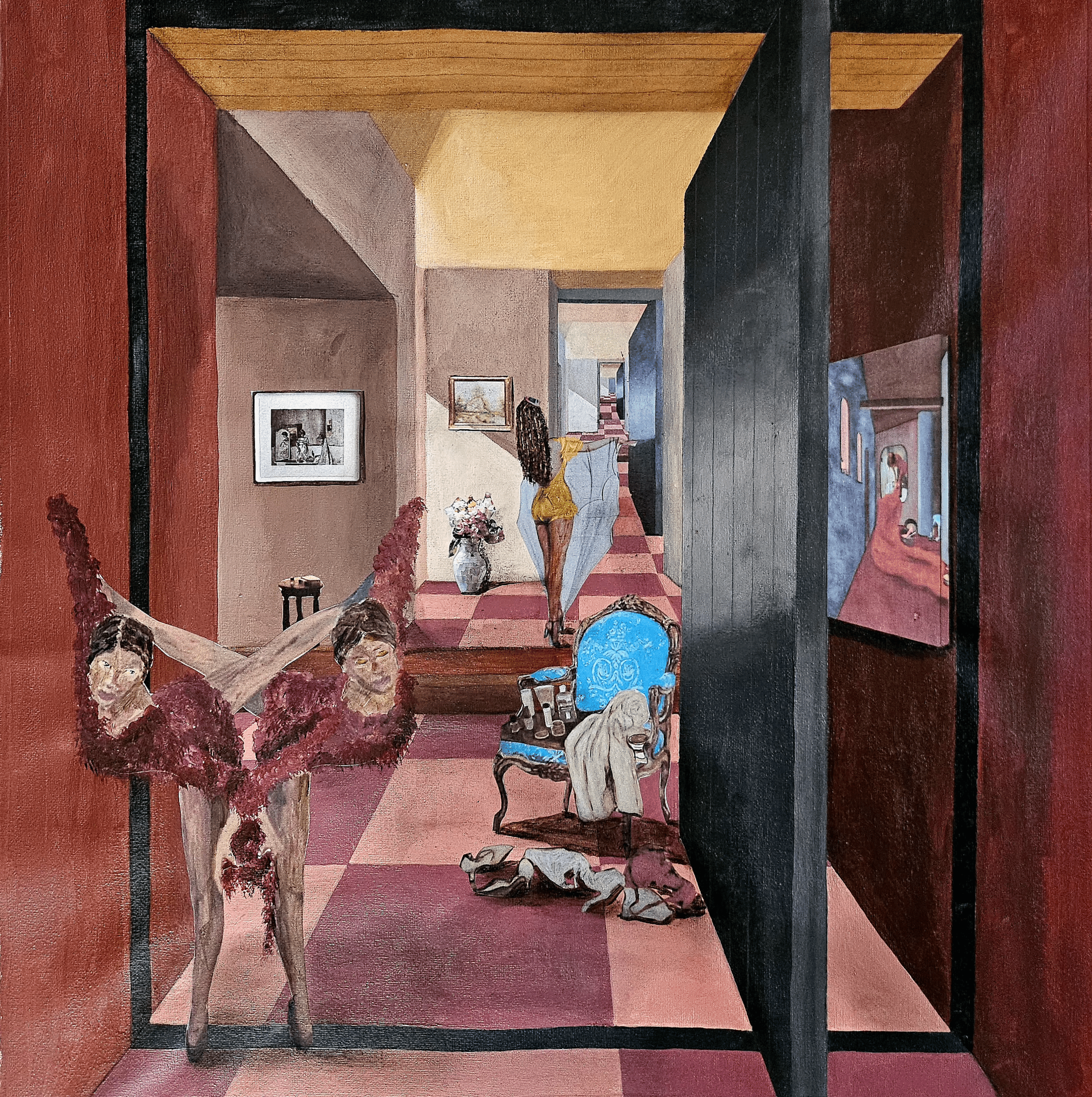
In terms of colour, I've been drawn for a while now to warm tones, reds, oranges, and deep yellows. For me, they represent passion, something brewing within a person that needs to be communicated visually. I've also been returning to African wax-print patterns lately, some of which are carved before they're printed onto fabric, as part of a new body of work.
There's a strong sense of world-building in your work. Are there worlds you're imagining, preserving, or challenging?
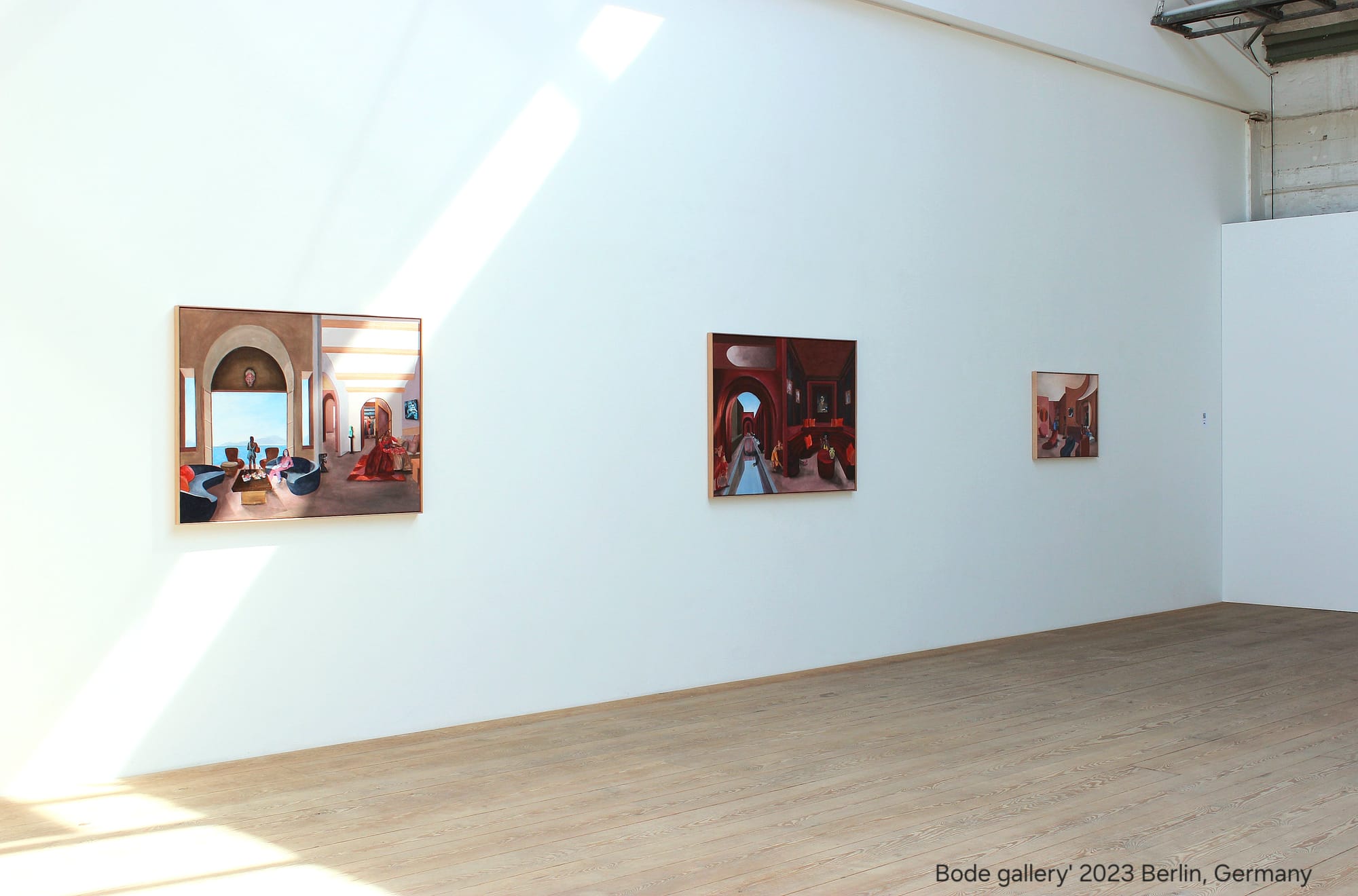
There are a lot of possibilities I'm interested in. Early on, the windows and doors in my paintings were blank, just a flat colour. A few years later, I started adding exteriors, trees, nature, and now those spaces are becoming almost infinite, a room within a room. That shift speaks to endless possibility, the idea that what you're looking for is closer than you think. There's always more happening within the work; sometimes the art on the walls within the painting is its own commentary on history, or on a current conversation like the idea that women are "too emotional" for certain spaces, but the core idea is that you're never out of reach of what you want. The windows and doors always lead somewhere else.
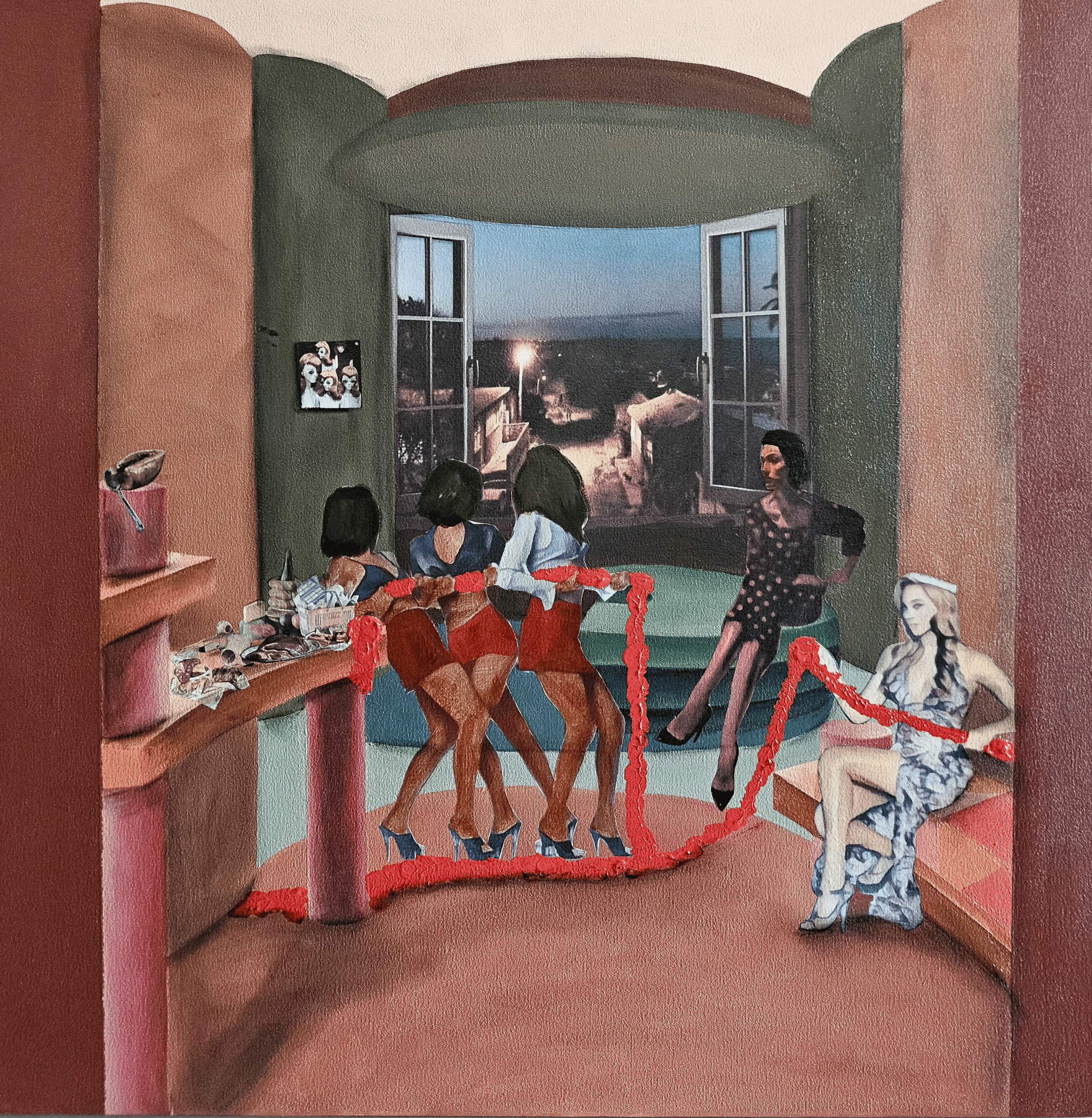
That matters especially for women, who are often discouraged from imagining beyond their current circumstances. Just because you trained as an engineer doesn't mean you're confined to engineering; it shows up in art, beauty, technology, and music. I want the work to say that where you are right now isn't necessarily where you're meant to stay.
That’s beautiful. Looking at the broader conversation in contemporary African art right now, are there questions you think artists should be asking each other more?
There's been a lot of discourse recently, especially online, about visibility and representation, and whether we've started using those words as catchphrases without really interrogating what we mean by them. I understand the importance of visibility. If a Black woman with braids or an afro walks through an Asian country, for instance, people stare, not necessarily out of malice, but because their communities have stayed closed in ways that prioritise preserving their own identity over engaging with the wider world. It's a kind of paradox; it's not entirely anyone's fault, but it does shape how visibility lands.
Representation matters most, I think, because it shows young people that anyone can do this, regardless of background. It shows them that someone who studied engineering can end up in beauty, music, or art. But visibility isn't one-size-fits-all; someone from the same background as you can hold a completely different opinion, and that's fine; that nuance is necessary too. I think we need to keep questioning the integrity behind calls for representation. Is it about genuine inclusion, or is it aesthetic, a way for a brand to look good? And representation comes with responsibility. People will celebrate you until you express a slightly different opinion, and then drop you. That's worth being honest about.
That’s something important to think about. Looking ahead, what excites you most about your work right now?
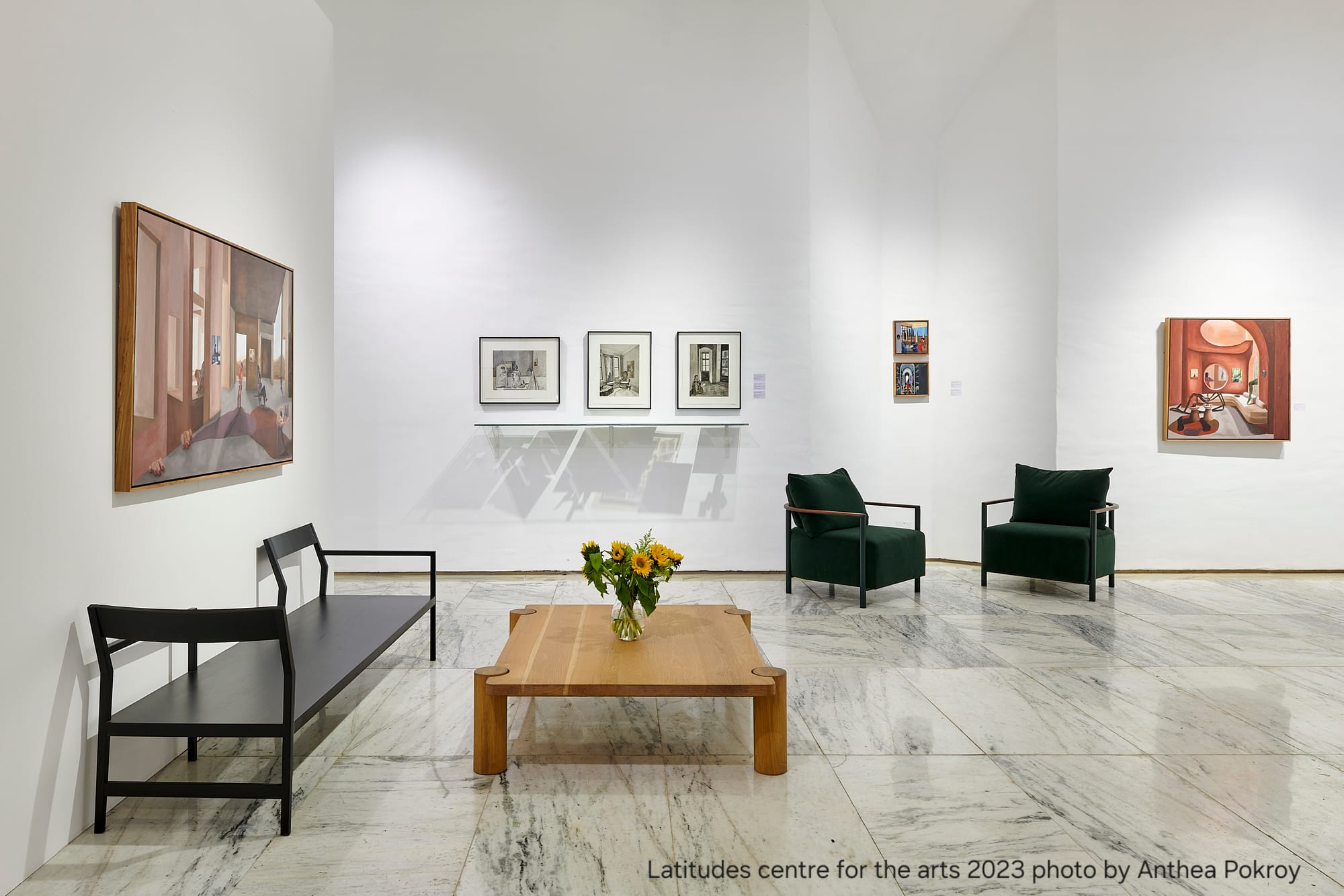
A lot. I have two solo exhibitions in development for later this year. One in particular I've been eager to share, it sits in the space between my more colourful work and my black-and-white drawings, which I'd felt pressure to choose between in the past. I wanted to give that black-and-white workroom to exist fully, on its own terms. I'm also excited about moving into three-dimensional spatial design and installation; it's a new category for me, and I've enjoyed exploring what that means for the work.



Member discussion